By Business Insider Reporter
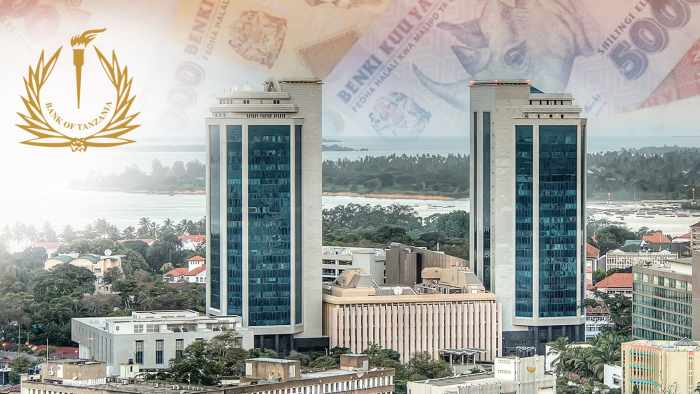
Tanzania’s economy closed 2025 on a strong footing, setting a cautiously optimistic tone for 2026, according to the latest Monthly Economic Review (MER) by the Bank of Tanzania (BoT).
Released on February 18, 2026, the new report underscores Tanzania’s economic resilience, showing that robust growth, stable inflation, and strengthening external balances position the country strongly amid a turbulent global landscape.
The January 2026 MER highlights that Tanzania weathered a year of international uncertainty, including trade policy shifts and geopolitical tensions.
Globally, growth exceeded earlier expectations, with the International Monetary Fund (IMF) revising 2025 world growth to 3.3 percent, underpinned by private consumption and technology-driven investment. Easing commodity prices, particularly oil, helped moderate inflation pressures worldwide.
“Consistent with the stronger-than-anticipated momentum observed toward end-2025, the International Monetary Fund’s (IMF) January 2026 World Economic Outlook (WEO) Update revised global growth for 2025 toc3.3 percent, up from the 3.2 percent projection in the October 2025 WEO, reflecting a modest improvement in the near-term outlook,” notes the central bank.
The global economy impact
Domestically, Tanzania leveraged favourable external conditions. Lower global fuel prices eased domestic energy costs, while strong gold prices boosted export earnings, strengthening the external sector and supporting stable inflation – giving policymakers space to sustain growth.
As a result, BoT reports that the economy maintained robust momentum, with real GDP rising to 6.4 percent in Q3 2025, up from 6.1 percent a year earlier.
“The domestic economy sustained strong growth momentum in the third quarter of 2025, supported by continued investment from both the public and private sectors,” the new MER states.
It adds: “Real GDP in mainland Tanzania grew to 6.4 percent, driven primarily by agriculture, mining and quarrying, construction, and financial and insurance services.”

In her end-of-year address, President Dr. Samia Suluhu Hassan hailed 2025 as a year of resilient economic performance, with Tanzania’s GDP expanding around 5.8 per cent despite global and domestic headwinds.
IFIs echo Dr. Samia Suluhu Hassan’s optimism
Looking to 2026, she expressed optimism, linking past achievements to a foundation for continued growth. She highlighted Dira 2050, medium-term financial planning, and strengthened public-private partnerships as pillars for investment, resilience, and inclusive progress.
Emphasizing unity and participation, she affirmed: “As we enter 2026, our aim is a Tanzania with a strong economy and good life for all.”
International financial institutions (IFIs) broadly echo the optimism. The World Bank forecasts a robust 6.2 percent growth in 2026, ranking Tanzania among the fastest-growing economies in the EAC bloc amid sustained investment and solid domestic demand.
The IMF projects Tanzania’s GDP expanding about 6.0 percent in 2025 and 6.3 percent in 2026, with inflation remaining moderate and public debt gradually easing, reflecting continued macro-fiscal discipline and reform momentum.
Inflation
BoT says that inflation remained well within the national target of 3–5 percent, ending the year at 3.6 per cent. While slightly higher than a year earlier, this increase was largely seasonal, linked to festive demand and rising food prices.
Food inflation rose to 6.7 percent, driven by staples such as rice, maize flour, and wheat flour. Core inflation, however, eased to 2.5 percent, suggesting underlying price pressures are contained.
Adequate food supplies from the National Food Reserve Agency helped moderate price spikes, and Tanzania’s inflation stayed within EAC and SADC convergence criteria, underscoring regional macroeconomic stability.
“With overall inflation comfortably within the 3–5 percent target, families planned their spending with greater confidence in 2025,” financial analyst Godwin Petro told Business Insider, noting that for businesses, stable core inflation of 2.5 percent meant non-food input costs were predictable, making investment and pricing decisions easier.
“At the national level, inflation within the target range reflects sound macroeconomic management and strengthens investor confidence. It also gives the Bank of Tanzania room to maintain accommodative monetary policy that supports growth without stoking overheating,” he added.
Supportive monetary policy
During the year, monetary policy remained supportive, with BoT keeping its policy rate at 5.75 percent in Q4 2025. Improved liquidity, accelerated money supply growth, and a 23.5 percent year-on-year expansion in private sector credit-particularly to mining, trade, and agriculture-reflected rising investor confidence.
Fiscal operations showed stability. Tax revenues slightly exceeded targets due to administrative gains, even as non-tax revenue lagged. Spending continued to prioritise development projects alongside recurrent needs, while public debt remained manageable, largely directed toward infrastructure and development-linked activities.
The external sector stood out as a bright spot. The current account deficit narrowed to US$ 2 billion, supported by a 10.2 percent rise in goods and services exports.
Gold, accounting for nearly half of merchandise exports, performed strongly, while tourism and transport services further boosted receipts.
Foreign exchange reserves rose to US$ 6.3 billion, equivalent to 4.9 months of import cover, surpassing both national and regional benchmarks.
The year ahead
Looking ahead, the BoT’s review paints a broadly positive picture for 2026. Steady growth, anchored inflation, stronger exports, and adequate reserves suggest Tanzania enters the year with solid macroeconomic buffers. While global uncertainties and food price volatility remain risks, the economy is well-positioned to continue its expansion trajectory.