By Correspondent Saidina Msangi, Morogoro
Tanzania is sharpening its focus on public financial accountability, placing internal auditors at the centre of a wider reform agenda aimed at strengthening governance, reducing waste and improving the efficiency of government spending.
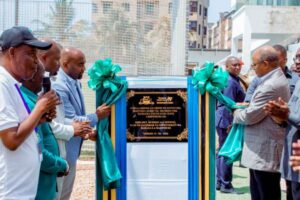
Speaking on behalf of Finance Minister Ambassador Khamis Mussa Omar when opening the Fourth Internal Auditors Conference in Morogoro, the Deputy Minister for Finance, Laurent Deogratius Luswetula (pictured above), urged auditors to uphold the highest standards of integrity, professionalism and ethical conduct in safeguarding public resources.
His message underscored a broader shift in Tanzania’s governance approach.
Integrity, he noted, is not merely a moral expectation but a functional necessity in building credible institutions capable of delivering services efficiently while closing loopholes that enable financial leakages.
Under the Sixth Phase Government, led by President Samia Suluhu Hassan, deliberate efforts have been made to strengthen transparency, build public trust and enforce accountability in the use of public funds.
At its core, the government’s message is that public value is realised when resources are used effectively, corruption is minimised and citizens gain confidence in state institutions. Internal auditors, Luswetula emphasised, are central to this equation through their role in strengthening governance systems, improving risk management and providing independent assurance that institutions are operating as intended.
Beyond the formal remarks, the conference reflects a deeper transformation within Tanzania’s public financial management architecture. Internal audit functions are gradually evolving from traditional compliance roles into strategic instruments of institutional performance.
Rather than focusing solely on identifying irregularities, auditors are increasingly expected to anticipate risks, guide decision-making and contribute to organisational efficiency.
This transition, however, is taking place against a backdrop of persistent structural challenges.
While reforms have improved oversight, weaknesses in internal control systems continue to expose public resources to inefficiencies and, in some cases, misallocation.
Equally significant is the longstanding gap between audit findings and implementation, where recommendations are not always acted upon fully, limiting the overall impact of audit processes.
Capacity constraints remain another critical issue. As public financial systems become more complex, the demand for specialised audit skills continues to grow, particularly in areas such as forensic auditing, risk analytics and sector-specific assessments.
The Deputy Minister’s call for auditors to embrace data analytics, artificial intelligence and digital audit tools reflects an acknowledgement that traditional methods are no longer sufficient in a rapidly evolving financial environment.
Technology is emerging as both a challenge and an opportunity. The integration of digital systems into public finance management has the potential to enhance audit accuracy, enable real-time monitoring and improve the speed of decision-making.
However, without adequate investment in skills and systems, the benefits of this transformation may remain unevenly distributed.
For the private sector, the implications of stronger internal audit systems extend beyond government operations.
Improved fiscal discipline and greater transparency reduce uncertainty in the broader economic environment, while more efficient public spending can translate into better infrastructure and service delivery.

In turn, this creates a more predictable and competitive landscape for businesses.
The emphasis on strengthening audit functions also signals a recognition that economic transformation is not solely about increasing revenues, but about how effectively those resources are managed.
In this sense, audit reform becomes a foundational element of Tanzania’s development strategy.
Earlier, the Acting Government Chief Internal Auditor, Mr. Kenneth Nindie, highlighted the importance of continuous capacity building to ensure auditors remain effective in a changing technological and regulatory landscape.
Meanwhile, the President of the Institute of Internal Auditors Tanzania, Mr. Jonathan Ngoma, noted that the conference was designed to bring together stakeholders to reflect on governance challenges and explore practical ways to strengthen internal audit systems.
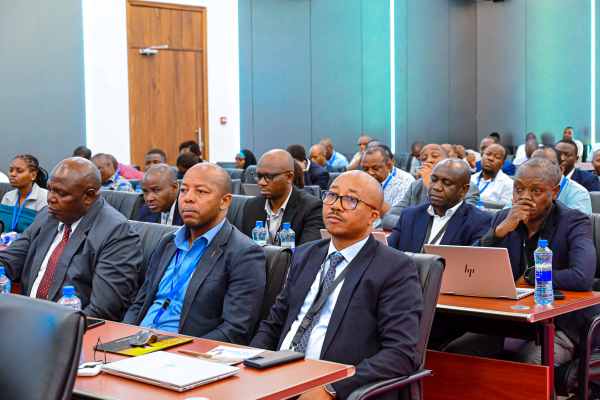
The gathering drew participants from across government, including senior officials, board members, accountants and financial experts, underscoring the cross-cutting role of internal audit in institutional performance.
As Tanzania advances its reform agenda, the effectiveness of internal auditors will increasingly be judged not only by their ability to identify risks, but by their contribution to measurable improvements in governance outcomes. The real test lies in execution—ensuring that recommendations translate into action and that systems evolve in line with emerging challenges. If sustained, the current momentum could position internal audit as a cornerstone of accountability, reinforcing public trust and supporting a more resilient and efficient economic system.