

By Correspondents Josephine Majura and Asia Singano
Tanzania is seeking stronger professional accountability among accountants and auditors, with the Government calling for tougher disciplinary action against practitioners who breach ethical standards and contribute to financial mismanagement.
Deputy Minister for Finance Laurent Deagratius Luswetula said the National Board of Accountants and Auditors (NBAA) must strengthen its enforcement mechanisms to protect public resources, improve the credibility of financial statements and prevent revenue leakages.
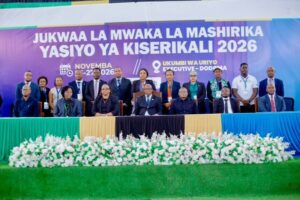
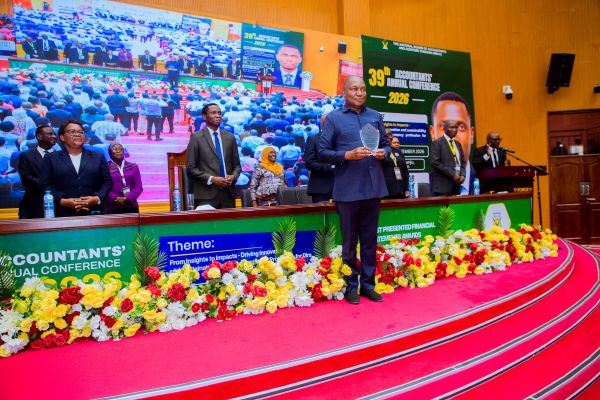
He made the call in Dar es Salaam when opening the 39th Annual Accountants Conference at APC Hotel in Bunju on behalf of Finance Minister Khamis Mussa Omar.
Luswetula said the regulator should thoroughly investigate allegations of professional misconduct and impose penalties proportionate to established offences, while ensuring that disciplinary proceedings are fair and evidence-based.
The Government’s position reflects the importance of professional integrity in managing public finances and maintaining confidence in financial information used by businesses, lenders, investors and public institutions.
“I urge accountants to resist pressure to conceal liabilities, alter document dates or certify work that has not been properly verified. An auditor’s signature on financial statements must be supported by sufficient evidence,” he said.
He also challenged employers and audit firm managers to create working environments that allow professionals to perform their duties independently, listen to their concerns and address technical disagreements using evidence rather than pressure.
Financial verification takes centre stage
One of the key developments highlighted at the conference was NBAA’s introduction of the NBAA Verification Number (NBAAVN), a system designed to enable verification of audited financial statements.
Luswetula urged audit firms to submit financial statements promptly and encouraged banks, financial institutions and public authorities to use the platform to establish the authenticity of audited reports before making important decisions.
The system could strengthen confidence in financial information used in credit assessments, public procurement, regulatory compliance and other business transactions.
For financial institutions, the ability to verify audit reports provides an additional layer of protection against unreliable information when assessing borrowers and making lending decisions.
For companies, credible financial statements are increasingly important in accessing finance, attracting investors and building relationships with business partners.
However, the effectiveness of the system will depend on compliance by audit firms, timely submission of reports and consistent adoption by institutions that rely on audited financial information.
Technology changes the auditing landscape
The Deputy Minister also called on accountants and auditors to embrace digital technologies, data analytics and artificial intelligence to improve the quality and efficiency of their work.
He said these tools could help identify unusual transactions, detect financial irregularities and strengthen audit procedures.
However, he cautioned that technology should complement rather than replace professional judgement.
Accountants and auditors must remain responsible for verifying evidence, protecting confidential information and ensuring that conclusions are based on sound professional assessment.
The growing use of digital financial systems is changing the way organisations manage transactions and report their financial positions. This is creating new opportunities for auditors to identify risks, but also increasing the need for professionals with appropriate technological skills.
Luswetula said the Government would continue working with NBAA to strengthen public financial management, improve financial reporting standards and support professional development.
He linked these priorities to the implementation of Tanzania’s Development Vision 2050, arguing that the country’s economic ambitions would require stronger systems for managing public resources.
He further stressed that monitoring development projects should go beyond assessing how much money has been spent.
Authorities must also establish whether projects have been completed, whether the resulting infrastructure and assets can be maintained and whether citizens are receiving the services those investments were intended to provide.
This approach places greater emphasis on value for money, long-term asset management and measurable development outcomes.
NBAA links professional credibility to Dira 2050
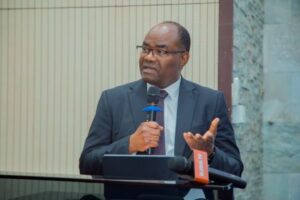
Earlier, NBAA Executive Director CPA Professor Siasa Mzenzi said public trust remained the foundation of the accounting and auditing profession.
He said that trust was built through the quality, integrity and reliability of work delivered by accountants and auditors.
Mzenzi argued that Tanzania’s ambition to implement Vision 2050 would depend partly on how effectively public and private institutions manage their financial resources.
He urged accounting professionals, accounting officers and executives across both sectors to strengthen internal controls, prepare accurate financial statements on time and act on audit recommendations.
“Implementation of Dira 2050 cannot succeed without effective management of public resources,” he said.
The remarks point to a wider responsibility for accountants beyond preparing financial statements. Their work is also central to identifying weaknesses in institutional controls, improving expenditure management and ensuring that public investments deliver the intended results.
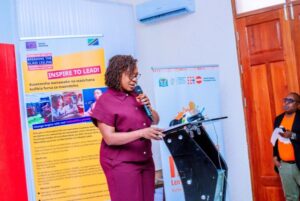
NBAA Board Chairperson CPA Professor Sylvia Shayo Temu called on professionals to rethink how they contribute to economic development by applying knowledge, technology and innovation to produce measurable results.
She said the profession needed to move beyond traditional financial reporting and become a strategic partner in economic transformation, good governance and institutional accountability.
“Accounting should go beyond preparing financial statements and instead become an important partner in economic transformation, strengthening good governance and increasing accountability in institutions,” she said.
Sustainability becomes part of the profession
The conference also highlighted the growing relationship between accounting, sustainability and social development.
Luswetula commended NBAA for organising CPA Sustainability Day on November 24, 2026, at CCBRT Hospital and Mwananyamala Regional Referral Hospital.

He said the initiative demonstrated how accounting professionals could contribute to community welfare beyond their conventional responsibilities.
The three-day conference, running from November 25 to 27, 2026, is being held under the theme “From Insights to Impacts: Driving Innovation and Sustainability in the Accountancy Profession for Dira 2050.”
Discussions are centred on innovation, technology, sustainability, audit quality and public financial management. The event has brought together accountants, auditors, government representatives, private-sector players, audit firms and professional institutions from Tanzania and other East African Community countries, including Kenya, Uganda, Rwanda and Burundi.