

By Business Insider Reporter
The government is stepping up pressure on mining companies to honour the terms of their operating licences while accelerating efforts to attract investment in domestic mineral processing as part of a broader strategy to capture more value from its mineral resources.
Vice-President Deogratius Ndejembi has warned mining licence holders against failing to implement their approved work programmes, saying the Government will take action against companies that do not comply with the conditions attached to their licences.
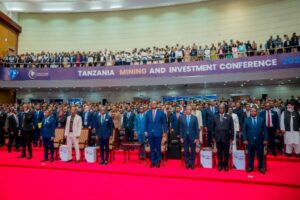
He issued the warning while representing President Samia Suluhu Hassan at the opening of the Tanzania Mining and Investment Conference (TMIC 2026), held at the Julius Nyerere International Convention Centre (JNICC) in Dar es Salaam.
The warning comes as Tanzania seeks to transform its mining industry from one largely associated with mineral extraction and exports into a stronger industrial sector capable of generating greater domestic economic benefits through processing, manufacturing and expanded participation by local businesses.
Ndejembi said the Government would continue enforcing its restrictions on the export of unprocessed minerals, urging both domestic and international investors to establish processing industries within the country.
He said investment in mineral processing would create employment, supply raw materials to local industries and increase government revenue, while strengthening the country’s position in regional and international mineral value chains.
The Government’s position reflects a growing policy emphasis on ensuring that Tanzania captures more economic value from its mineral wealth rather than relying predominantly on royalties, taxes and foreign exchange generated through the export of raw materials.
For investors, the message is increasingly clear: opportunities in Tanzania’s mining sector will extend beyond securing exploration and extraction rights to include investments in smelting, refining, mineral beneficiation and the manufacture of finished products.
The shift could open new opportunities for industrial investors, technology providers, engineering companies and financial institutions willing to support the development of processing infrastructure.
More than 1,700 participants from Tanzania and abroad are attending TMIC 2026, where discussions are focusing on expanding domestic mineral processing, attracting investment and strengthening the contribution of mining to industrial development, employment and national income.
The conference has been organised by the Ministry of Minerals in partnership with the Tanzania Chamber of Mines, bringing together government officials, mining companies, investors, industry experts and other stakeholders.
Among the minerals attracting investment interest are gold, graphite, nickel, copper, rare earth elements and niobium, all of which offer opportunities for exploration, extraction and downstream industrial development.
A key issue on the conference agenda is how to increase the participation of small-scale miners and Tanzanian-owned companies in the mining industry’s value chain.
This is particularly important given the economic potential of linking large mining operations with local suppliers, mineral traders, equipment manufacturers, transport companies and processing businesses.

Greater local participation could help retain more mining-related expenditure within the domestic economy, while creating opportunities for small and medium-sized enterprises to expand their operations and capabilities.
However, turning the Government’s mineral value-addition ambitions into commercially viable investments will require more than policy declarations. Investors will need reliable energy supplies, adequate transport infrastructure, access to financing, modern processing technology and predictable regulatory arrangements.
The availability of skills and technical expertise will also be important, particularly as Tanzania seeks to move into more sophisticated stages of mineral processing and manufacturing.
For the Government, the challenge will be to strike a balance between enforcing licence conditions and maintaining an investment environment capable of attracting the capital, technology and expertise required to develop the sector.
The TMIC 2026 discussions therefore come at an important moment for Tanzania’s mining industry, with the Government seeking to make mineral wealth a stronger foundation for industrialisation. Ultimately, the success of this ambition will be measured not simply by the volume of minerals extracted, but by how much processing, manufacturing, employment and business activity the industry generates within the country.