
By Correspondent Benny Mwaipaja, Antalya
Tanzania is in the final stages of negotiations with Turkey’s Exim Bank for a US$280 million financing package to complete the third and fourth sections of its Standard Gauge Railway (SGR), in a move that could unlock the remaining funds needed for more than 700 kilometres of railway infrastructure.
The proposed financing would close the outstanding funding gap in the two sections, whose combined cost is estimated at US$1.6 billion. Tanzania has already secured US$1.32 billion, leaving US$280 million to complete the financing requirement.
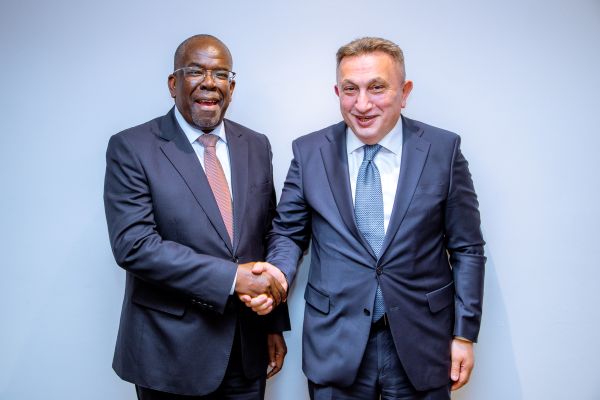
The negotiations took place in Antalya, Turkey, on the sidelines of the 31st Conference of the Parties to the United Nations Framework Convention on Climate Change (COP31). The Tanzanian delegation was led by Finance Minister Ambassador Khamis Mussa Omar, while the Turkish delegation was headed by Exim Bank Chief Executive Officer Ali Guney.
Ambassador Omar said the two railway sections were critical components of Tanzania’s wider ambition to establish a modern transport network connecting the country’s commercial centres with regional markets.
“The SGR is a major infrastructure project extending over 2,000 kilometres, designed to connect the port city of Dar es Salaam on the eastern coast with the western regions of Mwanza and Kigoma, and neighbouring countries, including Rwanda, Uganda, Burundi and the Democratic Republic of Congo,” he said.
The railway has been divided into six sections, or lots, with the first two, connecting Dar es Salaam and the Government’s administrative capital, Dodoma, already completed and operational.
The third and fourth sections represent another major investment phase, extending the network towards the country’s central and western regions.
A regional trade and logistics corridor
Beyond passenger transportation, the SGR is expected to reshape Tanzania’s position in regional trade by providing a more efficient route for moving goods between the Indian Ocean and landlocked markets in East and Central Africa.
For businesses, the economic significance lies in the potential reduction of transport costs, shorter cargo transit times and improved reliability in moving agricultural produce, minerals, manufactured goods and other commodities.
The connection to Mwanza and Kigoma is particularly important because these regions provide access to neighbouring markets and established trade routes across the Great Lakes region.
Tanzania’s railway investment therefore has implications beyond domestic transport. It is part of a broader strategy to strengthen the country’s role as a regional logistics and trade hub.
Ambassador Omar also highlighted the railway’s electric-powered technology, contrasting it with many regional railway systems that rely on diesel locomotives.
He said the use of electricity was consistent with the climate agenda being discussed at COP31, particularly the push for cleaner energy and environmentally sustainable transport systems.
Electric rail transport can help reduce direct emissions compared with diesel-powered alternatives, although its overall climate benefits also depend on the energy sources used to generate electricity.
Turkey signals wider infrastructure financing interest
Guney said his bank recognised the importance of the SGR to Tanzania’s economic development and its potential benefits for neighbouring countries.
He disclosed that the bank’s board of directors was scheduled to meet during November to consider Tanzania’s financing application.
The board’s consideration will be an important step towards determining whether the proposed $280 million facility can be secured and the outstanding financing gap closed.
However, the discussions are not limited to railway infrastructure.
Guney said Exim Bank was also exploring other areas of economic and commercial cooperation with Tanzania, including financing future infrastructure investments in roads and bridges.
This broader interest could create additional opportunities for Turkish companies to participate in Tanzania’s infrastructure development, while strengthening economic links between the two countries.
The proposed cooperation also reflects the trade ambitions established by President Samia Suluhu Hassan of Tanzania and President Recep Tayyip Erdogan of Turkey, who have set a target of increasing bilateral trade to at least $1 billion.
Financing remains critical
For Tanzania, securing the remaining SGR financing is an important step towards maintaining the momentum of a railway programme that requires substantial long-term capital investment.
The proposed Turkish facility would provide a route towards completing the funding package for the third and fourth sections, although final approval and the conclusion of financing agreements remain necessary before the funds can be considered secured.
The wider economic returns will ultimately depend on the railway’s ability to attract sufficient passenger and freight traffic, operate efficiently and connect effectively with ports, roads and regional transport networks. If completed and fully integrated with neighbouring markets, the SGR could become a significant asset in Tanzania’s efforts to expand regional trade, attract investment and strengthen its position as a gateway to East and Central Africa.