
By A Correspondent, Antalya
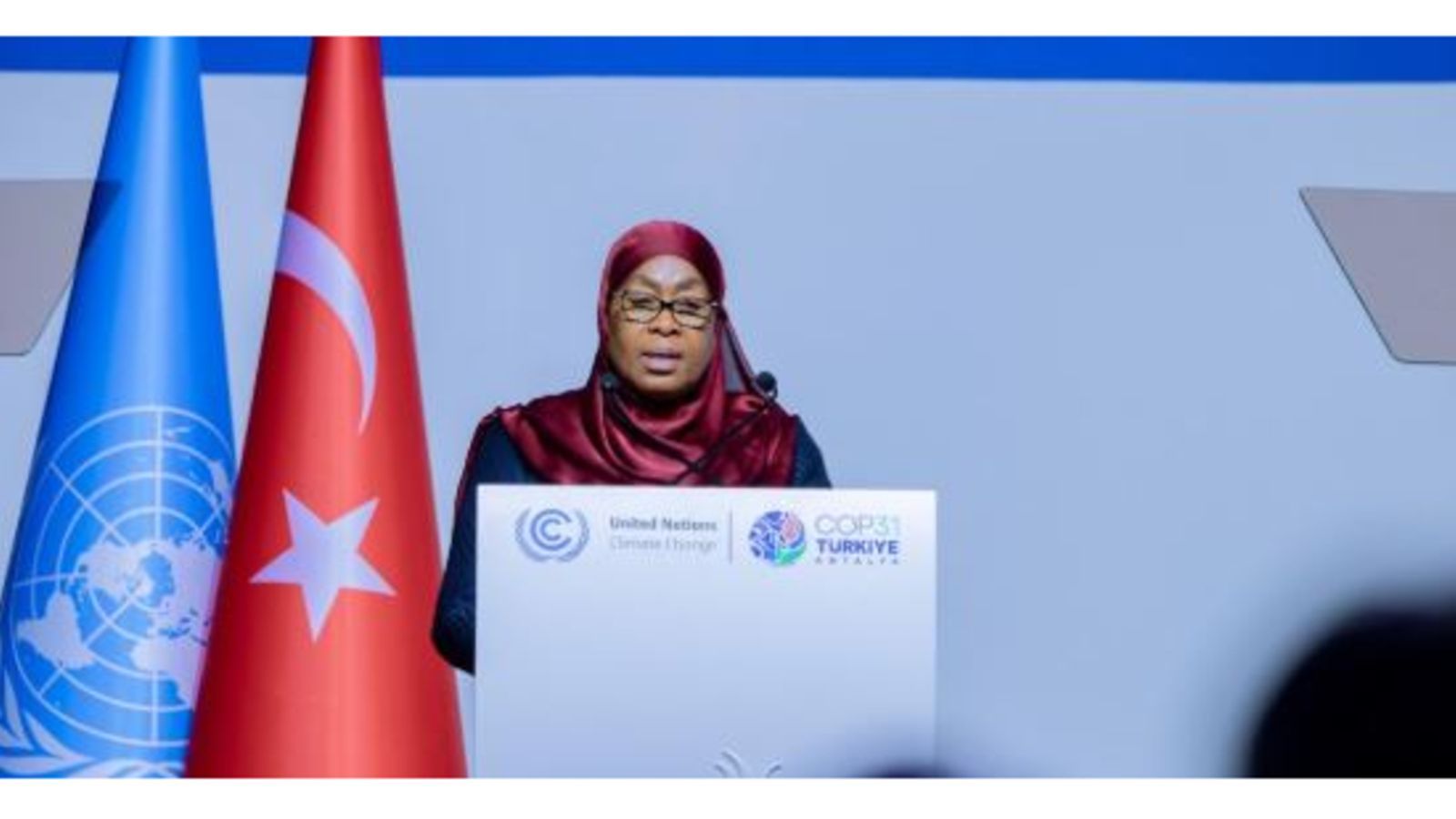
President Samia Suluhu Hassan has called for increased climate financing, fair carbon markets and affordable energy access, warning that climate change is costing Tanzania an estimated 2 to 3 per cent of its Gross Domestic Product (GDP) annually.
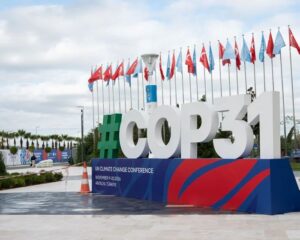
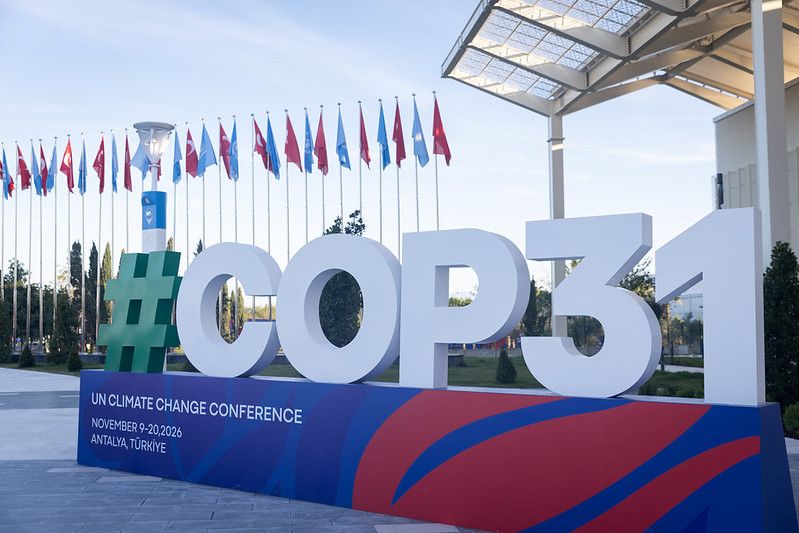
Addressing world leaders at the 31st United Nations Climate Change Conference (COP31) in Antalya, Turkey, President Samia said prolonged droughts, unpredictable rainfall and rising sea levels were increasingly threatening Tanzania’s development, underscoring the need for stronger international support for vulnerable developing economies.
She argued that climate action must be guided by equity, climate justice and the principle of common but differentiated responsibilities, taking into account the different circumstances and capacities of individual countries.
Her message placed climate finance and energy access at the centre of Tanzania’s climate diplomacy, while challenging developed economies and international partners to move beyond pledges towards practical delivery.
“Climate-related shocks are estimated to cost approximately 2 to 3 per cent of our GDP annually,” she told the conference.
The President identified three priority areas Tanzania considers essential to accelerating implementation of the Paris Agreement: predictable climate financing, energy justice and inclusive, climate-resilient development.
Climate finance tops Tanzania’s demands
President Samia said developing countries needed adequate, predictable and accessible climate financing, particularly grants and concessional loans to support adaptation programmes.
She also called for increased technology transfer and capacity building, arguing that financial commitments must translate into practical interventions that help vulnerable countries respond to climate impacts.
For Tanzania, the financing question is particularly important because climate-related shocks are increasingly affecting economic activities, livelihoods and development priorities.
She also drew attention to the country’s potential in carbon markets, pointing to opportunities in transport, waste management, renewable energy and forest conservation.
Tanzania has approximately 48.1 million hectares of forest, which President Samia said represented significant potential for carbon-related investments.
However, she emphasised that unlocking this opportunity requires transparent carbon market mechanisms under Article 6 of the Paris Agreement.
Such mechanisms, she argued, should guarantee fair carbon pricing, equitable sharing of benefits and environmental integrity while ensuring that local communities receive meaningful benefits from carbon-related activities.
The position highlights Tanzania’s interest in turning its natural resources into an additional source of climate financing and sustainable development.
For communities involved in conservation and carbon projects, equitable benefit-sharing is particularly important in ensuring that the economic gains from environmental protection reach those responsible for safeguarding natural resources.
Energy transition must not leave Africa behind
The second priority raised by the President was energy justice, which she described as ensuring equitable access to affordable, reliable and sustainable energy.
She cautioned against treating the global energy transition as a uniform process, arguing that African countries have different development needs and national circumstances.
For Tanzania, expanding access to electricity, particularly in rural areas, remains central to its national energy agenda.
President Samia said the country was implementing its National Energy Compact to expand electricity access across the country.
She called for greater private sector investment, affordable financing and technology transfer to accelerate the expansion of energy infrastructure and ensure that the transition delivers tangible development benefits.
Her argument reflects a broader challenge facing African economies: balancing the shift towards cleaner energy with the need to expand electricity access, support industrialisation and improve living standards.
For Tanzania, affordable and reliable energy is also important for attracting investment, supporting manufacturing, improving agricultural productivity and creating employment.
The President’s position suggests that climate policies should not undermine the development aspirations of countries that are still working to expand basic energy services.
Green jobs and youth in development agenda
The third priority focused on inclusive and climate-resilient development, particularly the role of young people in the emerging green economy.
President Samia said Tanzania’s development vision for the next 25 years prioritised innovation, industrialisation and sustainable economic transformation.
She stressed the need to equip young people with green skills, climate technologies and employment opportunities in renewable energy, sustainable agriculture and climate-friendly industries.
The emphasis on green jobs points to an opportunity for climate action to become an engine of economic transformation rather than simply a response to environmental threats.
Investment in renewable energy, for example, can create opportunities in engineering, installation, maintenance, technology development and related services.
Similarly, sustainable agriculture and climate-friendly industries can open new employment opportunities while helping communities adapt to changing environmental conditions.
For Tanzania, connecting climate investment with skills development and industrial growth could help ensure that young people benefit directly from the transition to a low-carbon economy.
Tanzania wants COP31 to move beyond promises
In her concluding remarks, President Samia reaffirmed Tanzania’s commitment to the objectives of the United Nations Framework Convention on Climate Change and the Paris Agreement.
However, she urged COP31 to strengthen international cooperation through adequate financing, technology transfer and capacity building to support implementation.
Her appeal was for climate negotiations to produce measurable outcomes rather than another round of political commitments.
“Let COP31 mark a turning point from promises to delivery, from ambition to action, and from commitments to measurable results,” she told delegates.
The statement captures the central message of Tanzania’s intervention: developing countries need more than ambitious international climate targets. They need accessible resources, appropriate technologies and partnerships that translate commitments into development outcomes.
For Tanzania, the test will be whether international climate cooperation can mobilise sufficient financing to protect its natural resources, expand affordable energy access, strengthen economic resilience and create opportunities for future generations. The broader challenge for COP31 is therefore not simply to agree on stronger climate ambitions, but to ensure that the financing and technology needed to implement them reach countries and communities on the front line of climate change.