By Business Insider Reporter
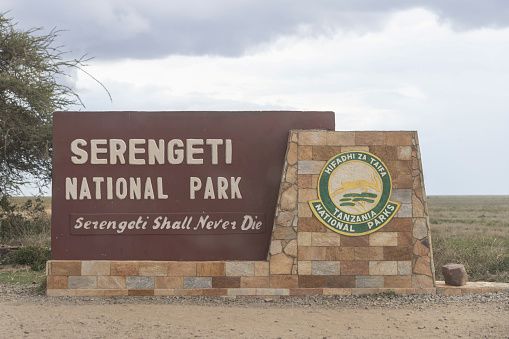
Tanzania National Parks (TANAPA) has cautioned against reopening the Bologonja border gate, arguing that allowing direct tourist access from Kenya to Serengeti National Park could undermine Tanzania’s tourism economy, weaken business opportunities along established tourism routes and expose endangered black rhinos to security risks.
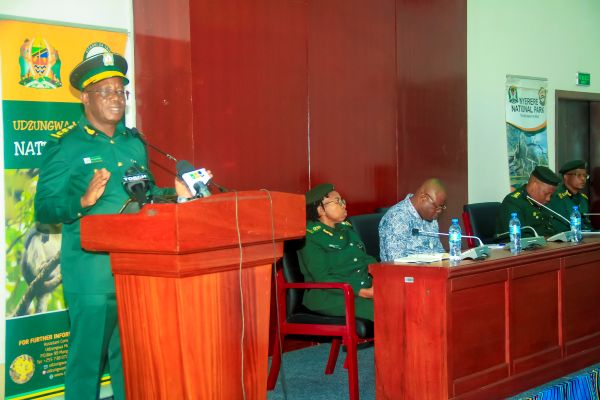
TANAPA Chief Conservation Commissioner Massana Mwishawa said reopening the crossing could divert international visitors arriving through Nairobi directly to Serengeti, bypassing established tourism circuits in Arusha, Moshi and other destinations that benefit economically from visitor spending.
He said the institution’s position, if consulted, would be to recommend keeping the gate closed, although he emphasised that the final decision rests with the relevant government authorities.
“From TANAPA’s perspective, our advice would be that the gate should remain closed because we have to consider all Tanzanians who depend on tourists travelling to Serengeti through existing routes,” Mr. Mwishawa said when addressing editors in Dar es Salaam.
His remarks highlight the economic implications of changing cross-border tourism routes, particularly the extent to which Tanzania’s wildlife tourism industry supports businesses beyond national parks.
According to the commissioner, tourists arriving through Nairobi could use Bologonja as a shorter route into Serengeti, potentially reducing the need to travel through Arusha, Moshi, Namanga and other established tourism gateways.
Under such an arrangement, some visitors could enter Serengeti for game drives and return to Kenya to spend the night, while others might stay in accommodation facilities within or around the park.
Although this could offer convenience to international visitors, Mr. Mwishawa warned that Tanzania risked losing a significant share of the economic benefits generated by the wider tourism value chain.
Tourism economy at risk
The commissioner said Tanzania’s tourism model was designed to generate economic opportunities across multiple sectors, including transport, hospitality, banking, food supply and foreign exchange services.
He explained that tourists travelling through established routes often spend nights in Arusha or Moshi before proceeding to Serengeti, creating business for hotels, taxi operators, tour companies, restaurants, entertainment establishments and currency exchange services.
Banks and food markets also benefit from the spending generated by international visitors.
Reopening Bologonja could therefore disrupt an economic chain that supports businesses and employment in several destinations, particularly Arusha, which serves as one of the country’s principal tourism hubs.
The transport industry could be among the first to feel the impact.
Mr Mwishawa noted that tour vehicles, buses and aircraft operating from Arusha and Kilimanjaro to Serengeti could lose business if a significant proportion of tourists opted for direct access from Nairobi.
Such a shift could affect transport operators and other tourism service providers whose businesses depend on the movement of visitors through Tanzania’s established circuits.
His argument is that the economic value of tourism should not be measured exclusively by the number of visitors entering national parks, but also by how much of their spending circulates through the domestic economy.
Black rhino conservation concerns
Beyond the commercial implications, TANAPA has raised concerns about the potential conservation and security consequences of reopening the crossing.
Mr. Mwishawa said the Bologonja area is particularly sensitive because it is associated with black rhino conservation programmes on both the Kenyan and Tanzanian sides of the border.
He warned that increased human movement through the area could complicate efforts to protect the endangered animals, whose survival depends on effective monitoring and carefully managed habitats.
The commissioner also cautioned that opening the route could generate additional pressure for tourism infrastructure development, including hotels and camps, potentially affecting sensitive wildlife habitats.
He said increased investment and human activity in the area would require careful consideration because of the need to protect the rhino populations and maintain the ecological integrity of their habitats.
For TANAPA, the issue is therefore not simply about improving access for tourists, but balancing tourism development with the protection of wildlife resources that underpin Tanzania’s long-term tourism competitiveness.
Historical background
The Bologonja border crossing, located in the northern Serengeti near Kenya’s Maasai Mara National Reserve, has remained closed since 1977, when Tanzania shut its border crossings with Kenya following the collapse of the first East African Community.
Although the two countries later restored normal border operations and reopened major crossing points, Bologonja was not included among the authorised entry and exit routes. Its continued closure has since become a recurring issue in discussions about cross-border tourism, regional integration and conservation.
Tanzania has consistently defended the decision on conservation grounds, arguing that opening the crossing could expose the ecologically sensitive northern Serengeti to increased traffic and pressure from tourism-related infrastructure.
The government has maintained that the Serengeti should be protected from developments that could undermine its ecological integrity, particularly given its importance as part of the wider Serengeti–Maasai Mara ecosystem.
The position was publicly reaffirmed in 2009, when Tanzania rejected calls for the crossing to be reopened, citing the need to safeguard the fragile environment. The dispute also has an economic dimension. Tanzania and Kenya signed a tourism cooperation agreement in 1985, which provided for tourists to use designated border crossings and routes between the two countries. Bologonja was not among the recognised entry points. Tanzania’s tourism industry has consequently developed around established gateways such as Namanga and the northern tourism circuit, linking Arusha, Kilimanjaro and the Serengeti.