By Correspondents Joseph Mahumi and Asia Singano, Tabora
The government has stepped up pressure on contractors building the Standard Gauge Railway (SGR), with the Finance Minister demanding faster construction, improved work quality and stricter compliance with environmental and social safeguards to recover time lost during project implementation.
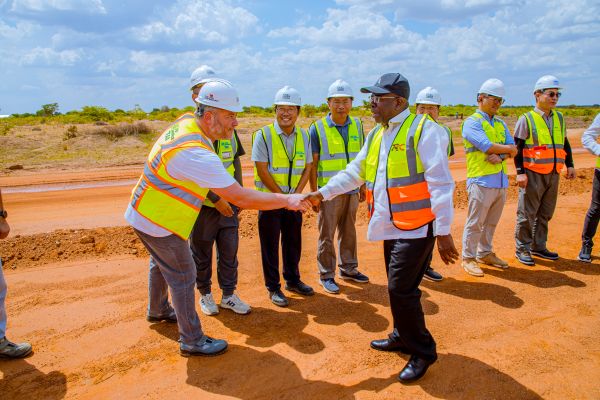
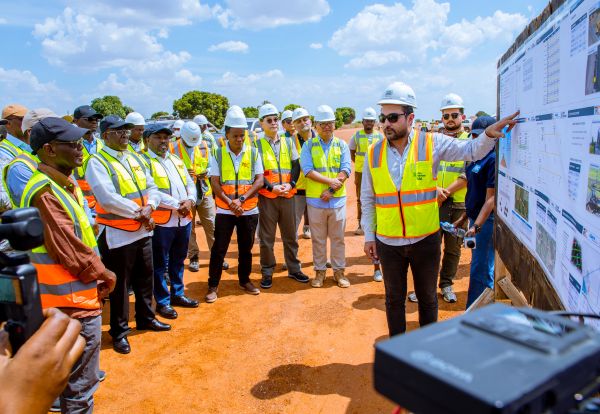
Minister for Finance, Ambassador Khamis Mussa Omar, issued the directive during a tour to inspect construction progress on SGR Lots Three, Four and Five in Tabora Region, emphasising that delays must not undermine the country’s ambition to establish a modern railway network connecting key economic centres.
He said the Government recognised the challenges encountered by contractors, project consultants and the Tanzania Railways Corporation (TRC), but stressed that all parties must intensify efforts to accelerate implementation.
According to the minister, the Government has continued working with relevant stakeholders to address obstacles affecting construction, including developing alternative approaches that have helped remove some implementation bottlenecks.
He commended TRC, the Ministry of Finance and technical experts for their contribution to identifying solutions and improving the pace of project execution.
“According to the reports, construction progress on Lot Three has reached 16.1 percent, while Lot Four stands at 10.08 percent. These are encouraging developments, although more effort is needed to accelerate implementation and ensure the project is completed on time,” Ambassador Omar said.
The Government’s renewed push comes as Tanzania seeks to complete the railway infrastructure needed to connect the country’s eastern and western regions while improving access to domestic and regional markets.
Closing the critical railway link
The SGR is among Tanzania’s strategic infrastructure investments, designed to transform passenger and freight transportation by connecting Dar es Salaam through Dodoma to Mwanza, with the wider network extending towards Kigoma.
Ambassador Omar said the completion of the first SGR section between Dar es Salaam and Dodoma, alongside construction progress on Lot Five towards Mwanza, represented important milestones.
However, he warned that the economic benefits of the railway would remain constrained unless the connecting sections were completed to create a fully integrated transport network.
Photos: Government Communication Unit, Ministry of Finance
He particularly highlighted Lot Three as a critical link in achieving the project’s broader objective of connecting different parts of the country.
“If we fail to complete the sections connecting these areas, we will not have fully achieved the major objective of this project, which is to connect the country from east to west,” he said.
The minister called on all contractors responsible for different sections to fulfil their contractual obligations within the agreed timelines, stressing that project performance should not be measured by the availability of funding alone.
Instead, he said, implementation must be assessed against three fundamental considerations: completion time, construction quality and adherence to required standards.
For Tanzania’s economy, the railway is expected to provide a more efficient alternative for transporting passengers and cargo, reduce logistics costs and strengthen connections between production centres, commercial hubs and markets.
A fully operational network could also improve the competitiveness of agricultural producers, manufacturers and mining companies by providing more reliable access to domestic and regional transport corridors.
Environmental and social safeguards
Beyond construction speed, Ambassador Omar emphasised the importance of integrating environmental and social safeguards into every stage of project implementation.
He said compliance with these requirements was particularly important because international development financing institutions increasingly attach strict environmental and social conditions to loans supporting major infrastructure investments.
The minister urged project authorities, contractors and development partners to address potential environmental and community concerns early rather than waiting for problems to emerge during construction or after project funds had been disbursed.
His remarks underline the need to balance infrastructure expansion with responsible project management, particularly where large construction projects affect communities, land use and the surrounding environment.
He called for closer coordination between the Ministry of Finance, TRC, contractors, consultants and other technical stakeholders to ensure that implementation challenges were addressed promptly and that construction met contractual and international standards.
Strengthening financial oversight
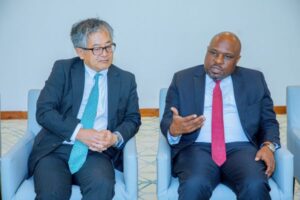
Meanwhile, Minister for Transport Prof. Makame Mbarawa said the joint inspection by the two ministers was intended to strengthen cooperation between their ministries and improve oversight of public resources invested in the railway project.
He explained that while the Ministry of Finance was responsible for ensuring the availability of funds, it was equally important for its officials to assess the actual progress of projects receiving government financing.
The Ministry of Transport, meanwhile, continues to oversee implementation through the relevant institutions and technical teams.
The arrangement, he said, would help strengthen accountability and ensure that government resources were translated into measurable progress on the ground.
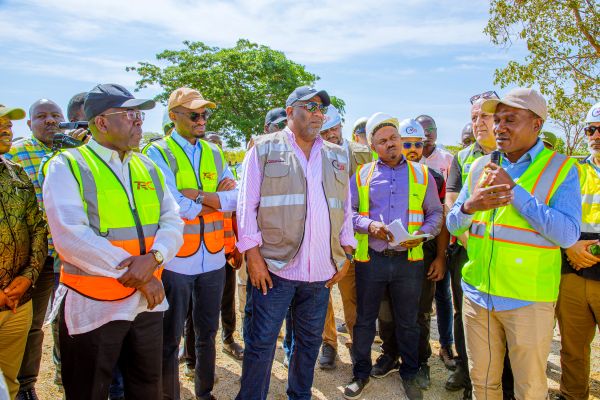
TRC Director General Eng. Machibya Shiwa and project consulting engineer Salim Omary Salim briefed the ministers on measures being undertaken to resolve implementation challenges.
They said TRC and project supervisors were working to ensure that construction continued in accordance with contractual obligations, quality standards and environmental requirements. Their assurance comes as the Government seeks to maintain momentum across the different SGR sections, recognising that delays on connecting routes could affect the overall performance and economic returns of the railway network.