
By Correspondents Joseph Mahumi and Peter Haule
Tanzania’s progress in strengthening public financial management has earned praise from development partners, who say reforms implemented under the Sixth Phase of the Public Financial Management Reform Programme (PFMRP VI) have improved efficiency, transparency and accountability in the management of public resources.
The recognition comes as the government prepares to consolidate the gains under the programme and build a stronger financial management framework to support the country’s long-term development ambitions, particularly Development Vision 2050.
Speaking at a Joint Steering Committee Meeting between the government and development partners in Dar es Salaam, Development Partners’ Co-Chair for Public Financial Management (PFM), Mr Paul Welton, attributed the progress to strong government commitment, professional leadership and close collaboration between implementing institutions and development partners.
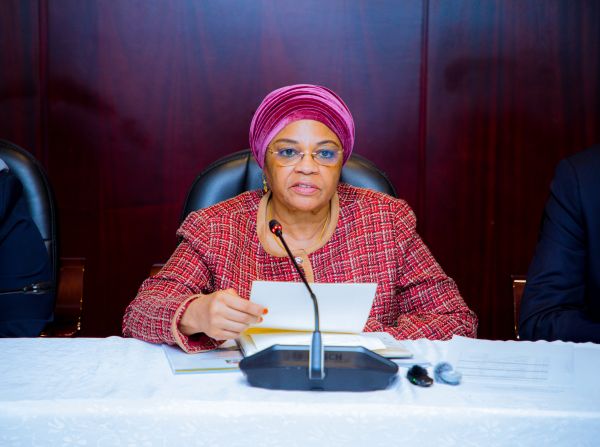
The meeting was officially opened by the Permanent Secretary in the Ministry of Finance, Dr. Natu El-Maamry Mwamba.
Mr. Welton said the World Bank’s Mid-Term Review of the Public Financial Management and Procurement Systems for Service Delivery Programme had identified significant achievements across several critical areas.
These include domestic revenue mobilisation, public procurement efficiency, public investment management, budget transparency, external auditing and oversight of public expenditure.
He said the improvements were beginning to translate into better outcomes from public spending, more efficient service delivery and stronger prospects for mobilising resources to finance development and expand employment opportunities.
“These achievements have contributed to improving the outcomes of public resource utilisation for citizens, enhancing service delivery efficiency and creating a better environment for mobilising resources to support development and employment expansion,” Mr Welton said.
He stressed that effective public financial management would be central to achieving Tanzania’s Development Vision 2050, particularly by ensuring that public resources are efficiently managed and channelled into productive activities capable of accelerating economic growth and improving living standards.
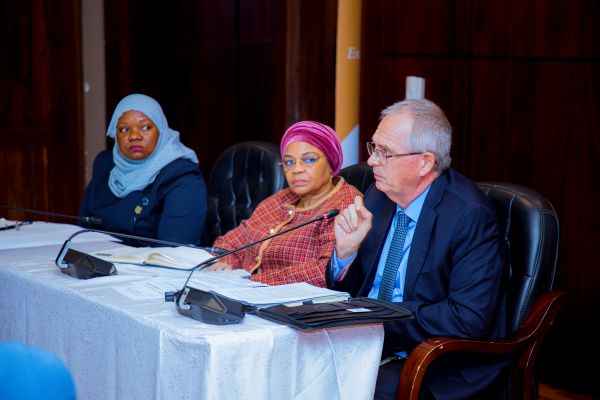
His remarks underline the growing importance of financial governance in Tanzania’s development agenda, where the ability to mobilise revenue, control expenditure and ensure value for money is increasingly critical to financing infrastructure, social services and private-sector-led growth.
Revenue mobilisation gains
For her part, Dr. Mwamba said the government remained committed to strengthening the country’s public financial management systems and ensuring that achievements recorded under PFMRP VI were sustained and expanded during the programme’s seventh phase.
She said the sixth phase had delivered tangible improvements in government revenue and expenditure management, accountability, efficiency and transparency.
One of the notable achievements has been the introduction of the National e-Procurement System of Tanzania (NeST), which has helped reduce procurement processing time and improve value for money in public purchasing.
The system represents an important step towards modernising public procurement, an area that accounts for a significant share of government expenditure and has considerable implications for private-sector participation in the economy.
By digitising procurement processes, the government is seeking to improve transparency, reduce administrative delays and strengthen competition among suppliers, while ensuring that public institutions obtain better value from available resources.
Another significant achievement has been the expansion of the country’s tax base.
Dr. Mwamba revealed that the number of registered taxpayers increased from 1.6 million in 2023 to 2.5 million by June 2026.
The increase, she said, had enabled the Tanzania Revenue Authority (TRA) to strengthen domestic revenue collection and improve its ability to meet tax revenue targets.
Among the strategies contributing to this progress are intensified taxpayer registration initiatives, including door-to-door campaigns aimed at bringing more individuals and businesses into the formal tax system.
The expansion of the taxpayer base is particularly important as Tanzania seeks to reduce dependence on external financing and increase domestic resources available for development expenditure.
Digital systems transform public administration
Beyond tax collection and procurement, PFMRP VI has supported a range of institutional and technological reforms intended to improve the management of public resources.
Dr. Mwamba cited the development and approval of the National Supply Chain Management Policy 2025 as another important milestone in strengthening government procurement and supply chain operations.
The policy is expected to provide a framework for improving the coordination, efficiency and accountability of supply chain management across public institutions.
Other initiatives include the construction of a Ministry of Finance office building in Geita Region to improve access to government financial services, as well as the integration of non-tax revenue collection systems into the TAUSI platform used by Local Government Authorities.
The integration of revenue collection systems into TAUSI is intended to strengthen the administration of non-tax revenues, improve collection efficiency and enhance oversight of funds generated by local authorities.
The government has also introduced the Treasury Pensioners Payment System to improve the identification and payment of retired public servants.
Another initiative is the Universal Billing System, designed to standardise billing procedures, while the Fleet Management System seeks to strengthen the monitoring and control of government vehicles.

These systems are part of a broader effort to use technology to reduce inefficiencies, improve institutional coordination and ensure that public assets are managed responsibly.
Looking towards the next phase
Dr. Mwamba thanked development partners for their continued support and urged them to maintain their cooperation with the government during the implementation of the next phase of the reform programme.
She said the priority was to strengthen transparency, accountability, efficiency and productivity in public financial management for the benefit of the country. The transition to PFMRP VII will provide an opportunity to consolidate existing achievements while addressing remaining weaknesses in revenue mobilisation, expenditure control, procurement and public investment management.