

By Correspondent Peter Haule
Tanzania is seeking to increase the participation of local contractors in public procurement by reviewing its laws, policies and guidelines, with the Government calling on domestic businesses to identify barriers that prevent them from securing and executing public contracts.
The review is intended to make public procurement a stronger driver of domestic production, business growth and employment as the country works towards the ambitions of Development Vision 2050.
Acting Commissioner of the Public Procurement Policy Department in the Ministry of Finance, Alex Haraba, made the call during a meeting with contractors in Dar es Salaam to gather views on the review of the Public Procurement Act, Cap. 410.
Haraba said public procurement was an important instrument for stimulating local production, expanding businesses, creating jobs and widening economic opportunities for citizens. He said improving the procurement framework was therefore necessary to align it with the country’s long-term development objectives.
He urged local contractors to submit practical recommendations on the difficulties they encounter when competing for and implementing public contracts, saying their contributions would help the Government identify weaknesses in the existing framework and determine where reforms were needed.
Turning local preference into business opportunities
Tanzania’s procurement framework already provides for national and exclusive preferences for local firms, preference for goods manufactured in the country, and opportunities for domestic companies through joint ventures and subcontracting arrangements.

However, Haraba said the existence of these provisions did not remove the need to assess how effectively they were being implemented.
The review will examine whether the available preference mechanisms are delivering meaningful opportunities for local businesses and identify obstacles that may be limiting their benefits.
This is particularly important for small and medium-sized enterprises, which often face difficulties competing for large public tenders or meeting the requirements associated with contract execution.
Haraba said the reforms also sought to strengthen opportunities for local contractors and SMEs, remove unnecessary barriers in tendering procedures, improve contract management and address payment systems affecting contractors and service providers.
For domestic firms, access to public procurement can provide more than a single contract. Consistent opportunities can help businesses build financial capacity, acquire equipment, develop technical expertise and establish a track record that enables them to compete for larger projects.
But the benefits depend on whether procurement opportunities are accessible and whether successful bidders can execute contracts under workable conditions.
The contractors’ feedback is therefore expected to inform reforms covering not only access to tenders but also the practical challenges that arise after contracts have been awarded.
Development partners back reforms
Germany, Switzerland, the European Union and the German Development Agency (GIZ) are supporting the review through the Good Financial Governance Programme (GFG III).
GIZ Adviser in Tanzania, Umehani Khatri, said the programme supported the Government in strengthening domestic revenue mobilisation, controlling public expenditure, improving transparency in fiscal policies and enhancing public financial management.
She said procurement and supply chain reforms were an important part of these efforts because they determine how public resources are spent.
Khatri emphasised the importance of ensuring that procurement processes are transparent, efficient and accountable.
The involvement of development partners provides technical and institutional support to a reform process that has direct implications for public spending and the private sector’s role in delivering government projects.
Contractors want their concerns reflected in the law
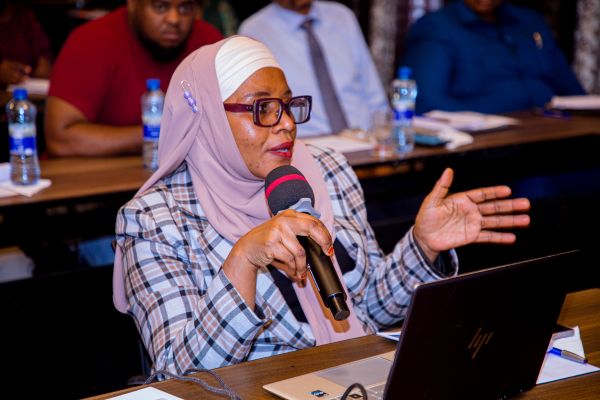
Contractors who attended the meeting welcomed the Ministry of Finance’s decision to provide a platform for them to explain the challenges they face under the public procurement system.
They acknowledged the Government’s intention to enable local contractors to benefit from public tenders but said difficulties remained in translating the existing provisions into practical business opportunities.
They called for their recommendations to be taken into account when the relevant laws, policies and guidelines are amended.
In their view, effective reforms would increase the participation of domestic contractors in strategic projects, support the growth of local companies, create employment and strengthen professional and technical capacity.
These outcomes would also contribute to wider economic growth and the implementation of Development Vision 2050.
A test of implementation
The review presents an opportunity to assess whether Tanzania’s local preference provisions are working as intended and whether domestic firms can compete effectively for public contracts.
The central challenge is to move beyond formal recognition of local participation towards a procurement system that gives capable Tanzanian businesses a realistic opportunity to win contracts, deliver projects and grow.
For the Government, the task will be to balance wider access for local firms with transparency, value for money, quality and accountability in the use of public funds.
The success of the reforms will ultimately depend on how contractors’ concerns are translated into practical changes in tendering, contract management and payment arrangements. As Tanzania pursues its Vision 2050 ambitions, stronger domestic participation in public procurement could help ensure that a greater share of public investment also builds local business capacity, skills and jobs.