

By Correspondent Benny Mwaipaja, Dar es Salaam
Tanzania is set to establish an advanced information and communications technology (ICT) university in Dodoma through a concessional loan of more than TSh441 billion from South Korea, in a major investment aimed at developing highly skilled digital professionals and strengthening the country’s technology sector.
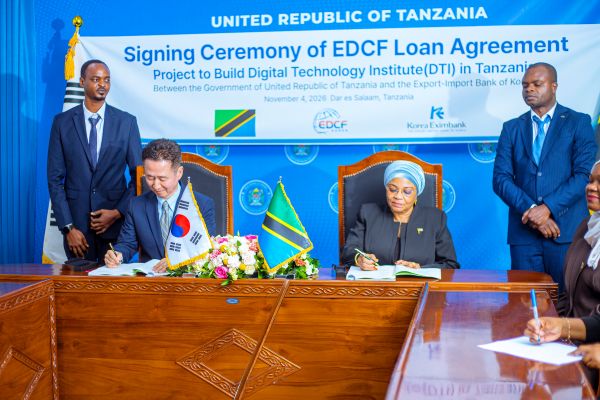
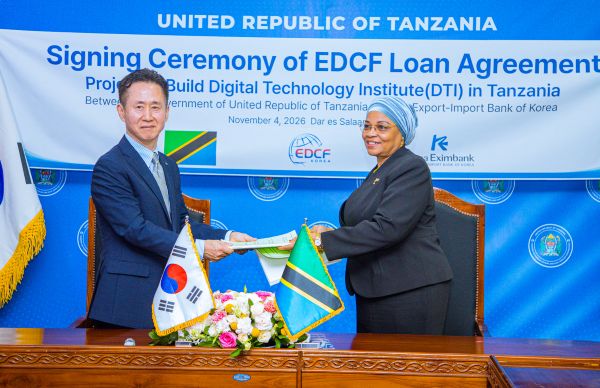
The project will be financed through a US$167.4 million (TSh441.12 billion) concessional loan agreement signed on 3 November between the Tanzanian government and the Export-Import Bank of Korea (Korea Eximbank), under the Korea Economic Development Cooperation Fund (EDCF).
The proposed Dodoma Technology Institute (DTI) is expected to provide advanced training in specialised technology fields, including artificial intelligence (AI), while supporting Tanzania’s ambition to build the human capital and institutional capacity required for a competitive digital economy.
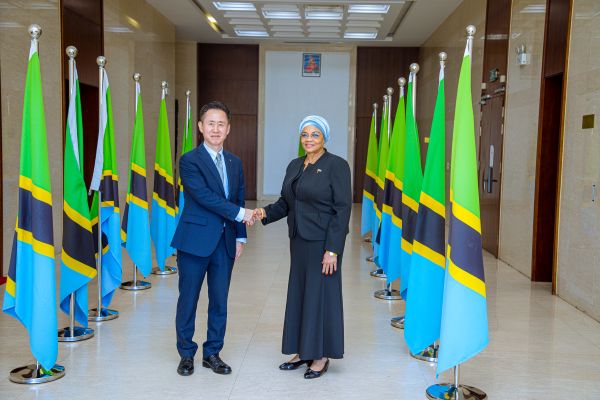
Speaking at the signing ceremony in Dar es Salaam, Permanent Secretary in the Ministry of Finance, Dr Natu El-Maamry Mwamba, said the institution would play an important role in producing highly skilled technical professionals and strengthening the country’s ICT sector.
She said the university would be equipped with modern training facilities, laboratories, digital infrastructure and research capabilities. It would also strengthen links between educational institutions and industry, helping to address skills gaps and accelerate technological development.
“The project comes at an opportune time as Tanzania continues to implement its digital transformation agenda and build the human resources and institutional capacity needed to participate fully in the digital economy,” Dr Mwamba said.
The investment comes as countries increasingly compete to develop expertise in emerging technologies, particularly AI, data systems and advanced digital services. For Tanzania, the availability of specialised skills will be important in supporting businesses, improving public services and expanding opportunities in the technology industry.
Building skills for a digital economy
A key objective of the institute will be to bridge the gap between academic training and the practical skills demanded by employers.
Modern laboratories, research facilities and industry partnerships are expected to provide students with opportunities to develop technical capabilities relevant to the changing needs of the economy.
The proposed focus on AI is particularly significant as businesses and public institutions increasingly explore how intelligent technologies can improve productivity, automate processes and support decision-making.
However, the institute’s economic contribution will depend not only on its infrastructure but also on the quality of its academic programmes, the availability of qualified instructors, industry collaboration and the ability to translate research into practical solutions.
Dr Mwamba said the Ministry of Finance would work closely with the Ministry of Communication and Information Technology and other institutions involved in implementing the project.
The government would also provide the required local contribution to support effective implementation, she said.
South Korea strengthens development partnership
Senior Executive Director of Korea Eximbank, Dong-Hoon Lee, described the project as significant for both countries, noting that it was the first EDCF project approved in 2026 and the first to include support in the field of artificial intelligence.
According to Lee, discussions on the project’s approval began in April, followed by the issuance of a government support policy in August before the signing of the financing agreement in November.
He attributed the progress to strong cooperation from the Tanzanian government and reaffirmed South Korea’s commitment to supporting the country’s development through various joint projects.
South Korea has been involved in development cooperation with Tanzania across several sectors, including roads, energy and healthcare.
“This cooperation will strengthen mutual growth and the friendship between the two countries,” Lee said.
Part of a wider US$1.12bn project portfolio
The Dodoma ICT institute will add to a portfolio of projects being implemented in Tanzania with support from Korea Eximbank, whose combined value exceeds US$1.12 billion.
The existing cooperation covers energy, agriculture, water supply and sanitation, railways and other sectors.
The new financing therefore extends the partnership into advanced digital skills and artificial intelligence, areas increasingly viewed as important to economic competitiveness.
For Tanzania, the long-term test will be whether the TSh441.12 billion investment produces a steady pipeline of skilled professionals, supports local innovation and helps businesses adopt emerging technologies. As the country pursues its digital transformation ambitions, the proposed institute could become an important part of the infrastructure needed to connect education, industry and technological innovation. Its success, however, will ultimately be measured by the skills it produces and the contribution those skills make to the wider economy.