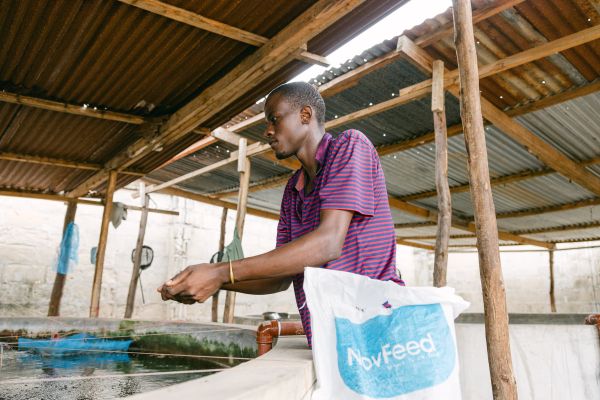
A 12-month programme will help the organic-waste processor strengthen its business and attract investment alongside four other African enterprises.
By A Correspondent
Tanzanian biotechnology company, NovFeed, has been selected for a new African investment accelerator targeting US$10 million in funding for five businesses whose commercial models support environmental conservation and the sustainable use of natural resources.
NovFeed converts organic waste into fish feed and fertiliser, offering a business model that links waste recovery with resource efficiency and agricultural production. Its selection for the first cohort of the Nature-First Innovation Lab (NFIL) gives the company access to a 12-month programme designed to strengthen its investment readiness and support the expansion of nature-positive businesses.
The accelerator is run by FSD Africa in partnership with Systemiq and the African Natural Capital Alliance (ANCA), with support from UK International Development and the Norwegian Agency for Development Cooperation (Norad). Its target is to prepare the five participating enterprises to raise a combined $10 million in investment.
The organisers have not disclosed how much funding NovFeed is expected to raise individually or whether any investment has already been committed.
Turning waste into commercial value
NovFeed’s business model centres on converting organic waste into useful products, including fish feed and fertiliser. This approach can create commercial value from materials that might otherwise be discarded, while potentially reducing waste and improving the efficiency of resource use.
For Tanzania, the company’s selection highlights the potential of businesses that combine environmental objectives with revenue generation. Such enterprises may offer opportunities across waste management, agriculture, aquaculture and the wider circular economy.
However, expanding these operations requires more than a technically workable production process. Businesses also need reliable financial records, effective governance, clear growth strategies and evidence that their environmental benefits can be measured.
These are among the challenges the NFIL programme is designed to address.
According to Dorothy Maseke, head of the ANCA Secretariat and lead for Nature Finance and the Taskforce on Nature-related Financial Disclosures (TNFD) at FSD Africa, many African enterprises struggle to secure commercial financing even after demonstrating that their business models are technically feasible.
She said some businesses stall because their revenue streams are not sufficiently established, governance arrangements fall short of investor expectations and documentation is incomplete.
The accelerator seeks to bridge the gap between grant-funded support and the point at which businesses can attract commercial capital.
Support beyond conventional grants
Under the programme, each participating enterprise will receive grants and technical assistance covering financial planning, corporate governance and the measurement of nature-related impacts. The businesses will also be introduced to potential investors.
The accelerator will not take equity in the participating companies. Instead, it aims to help them develop the financial and institutional structures investors need to assess their operations and make informed funding decisions.
For NovFeed, the support could help strengthen its financial management, demonstrate the environmental value of its waste-processing model and prepare the business to seek capital for expansion. The programme announcement, however, does not specify the company’s investment requirements, planned expansion projects or current production capacity.
The other selected enterprises are Savanna Agri Chains of Ghana, Acacia EPZ of Kenya, Forested, which operates in Ethiopia, Kenya and Uganda, and ForestFoods of Kenya.
Their activities range from regenerative agriculture and sustainable forestry to natural-product processing and agroforestry.
Savanna Agri Chains sources and exports shea butter and baobab products while supporting land restoration and the livelihoods of rural women in northern Ghana. Acacia EPZ exports gum arabic, while Forested works with smallholder farmers to supply regenerative honey, beeswax, shea butter and oils to international beauty brands. ForestFoods uses a Brazilian agroforestry approach in its nature-based business model.
Together, the five enterprises illustrate how environmental protection can be incorporated into businesses supplying agricultural, food, personal-care and other markets.
A growing case for nature finance
The initiative comes amid increasing recognition of Africa’s dependence on natural resources and the need to mobilise investment in businesses that protect or restore ecosystems.
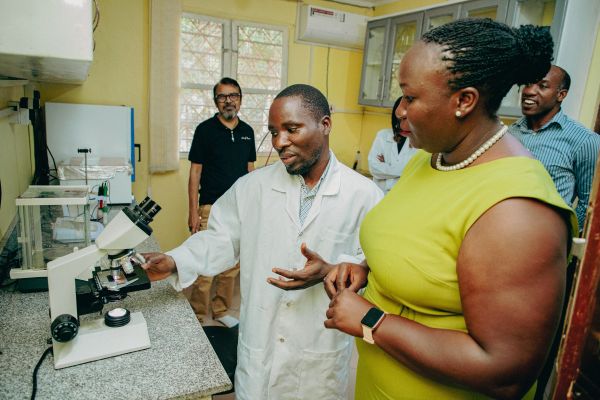
Research cited by FSD Africa and McKinsey Sustainability estimates that approximately 62 per cent of Africa’s gross domestic product depends on nature. This underlines the economic importance of healthy ecosystems to sectors including agriculture, tourism and natural-resource-based industries.
Yet businesses that integrate biodiversity conservation, land restoration and sustainable resource management into their operations often face difficulties securing the capital needed to grow.
A 2025 estimate by Boston Consulting Group puts the potential investment opportunity associated with regenerating the world’s 30 most valuable landscapes at US$310 billion for commercial investors.
The NFIL’s first cohort focuses on regenerative supply chains, where businesses can potentially generate financial returns while improving landscapes and supporting local livelihoods.
For Tanzania, NovFeed’s selection offers an opportunity to strengthen a business operating at the intersection of waste management, agriculture and environmental sustainability. The programme’s eventual impact will depend on whether the company can use the support to attract investment, expand operations and demonstrate commercially viable environmental benefits. The US$10 million target applies to all five enterprises collectively; the amount ultimately raised, and NovFeed’s individual share, remain to be determined.