By Correspondent Benny Mwaipaja, Zanzibar
Tanzania’s revenue authority collected TSh216.3 billion in Zanzibar during the first quarter of the financial year, falling more than TSh29 billion short of its target and prompting the Finance Minister to call for tighter customs controls, better use of data and stronger cooperation with trade stakeholders.
Finance Minister Ambassador Khamis Mussa Omar said the Tanzania Revenue Authority (TRA) needed to improve revenue collection strategies to support government development programmes, particularly by strengthening customs administration and ensuring that taxes due on imported and exported goods are assessed and collected accurately.
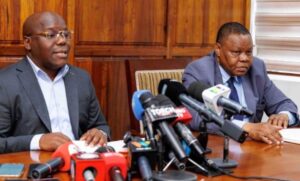
During a visit to TRA’s Zanzibar offices, Omar said the authority had collected TSh216.3 billion against a target of TSh245.6 billion in the first quarter, representing 88 per cent performance.
The shortfall highlights the pressure on the authority to improve collection during the remainder of the financial year, as the Zanzibar government depends on tax and non-tax revenue to finance public services and development projects.
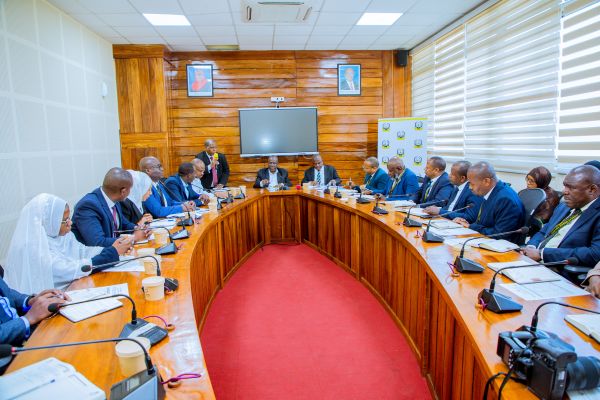
Omar said the visit was intended to review collection performance, discuss operational challenges and identify opportunities to improve efficiency before the financial year ends.
Customs data under scrutiny
The minister called for deeper analysis of revenue statistics to identify changes in trade activity and the factors driving increases or declines in collections.
He said assessments should consider the type, volume and value of goods entering Zanzibar, alongside changes in economic activity and the implementation of development projects.
Reliable data, he argued, would help the authority distinguish between changes caused by trading patterns and those arising from weaknesses in tax administration.
Omar also stressed the need for closer cooperation between TRA and the Zanzibar Ports Corporation (ZPC), particularly in reconciling cargo statistics with revenue trends.
Such coordination could help government officials obtain more accurate information about goods passing through the ports and make decisions based on actual trade activity.
He urged the customs department to strengthen inspection procedures, goods valuation and verification of import and export documentation to ensure that the correct taxes are collected on time.
For businesses, more effective customs administration could improve compliance and reduce opportunities for under-declaration or inaccurate valuation. However, the effectiveness of tighter controls will also depend on efficient clearance procedures that avoid unnecessary delays and costs for legitimate traders.
Accountability across the tax system
Omar proposed introducing performance indicators for tax consultants and clearing and forwarding agents, recognising their role in the tax administration process.
He also called for faster resolution of long-standing tax disputes, saying delays could complicate tax payments and undermine service delivery to taxpayers.
The approach points to a broader effort to improve compliance across the revenue system rather than relying solely on enforcement by TRA.
Tax consultants advise businesses on their tax obligations, while clearing and forwarding agents help traders process cargo through ports and customs. Their work can affect the accuracy of declarations, the speed of cargo clearance and the collection of duties and other taxes.
Performance indicators could help strengthen accountability, although their practical impact would depend on how they are designed and implemented.
The minister said government revenue was essential for financing healthcare, public-sector salaries and other development needs. He urged TRA to make greater use of data, technology and stakeholder cooperation to improve collection efficiency.
TRA pledges to pursue annual target
TRA Deputy Commissioner General Mcha Hassan Mcha said the authority would continue implementing government directives to strengthen tax collection and support national development objectives.
He said the TRA office in Zanzibar had been assigned a collection target of TSh1.144 trillion, equivalent to 34 per cent of the Zanzibar government’s budgeted tax and non-tax revenue.
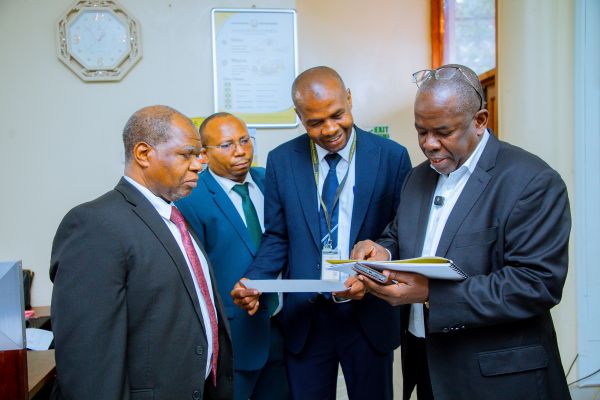
The funds are expected to support development activities under the Zanzibar government’s budget, making the authority’s performance important to the financing of public programmes.
The first-quarter collection of TSh216.3 billion against the TSh245.6 billion target leaves TRA with ground to recover if it is to meet its annual objective.
The challenge will be to improve collection without creating unnecessary barriers to trade. Stronger customs controls, accurate cargo data, efficient dispute resolution and greater accountability among tax-service providers could all contribute to better performance.
For Zanzibar, where port activity is closely connected to trade and revenue generation, the ability to reconcile cargo movements with tax collections will be particularly important. The immediate task for TRA is to narrow the first-quarter gap while ensuring that customs administration remains efficient, transparent and responsive to taxpayers. Its performance over the coming quarters will show whether the proposed measures can translate into higher collections and more predictable financing for public services and development.