
By Business Insider Reporter
The Tanzania Bureau of Standards (TBS) is positioning quality infrastructure as a pillar of Tanzania’s ambition to become a US$1 trillion economy by 2050, building on six years of investment in laboratories, business facilitation, digital services and product certification.
The Bureau’s achievements between 2021 and 2026 reflect a broader effort to strengthen domestic production, improve consumer protection and enable Tanzanian businesses to compete in regional and international markets.
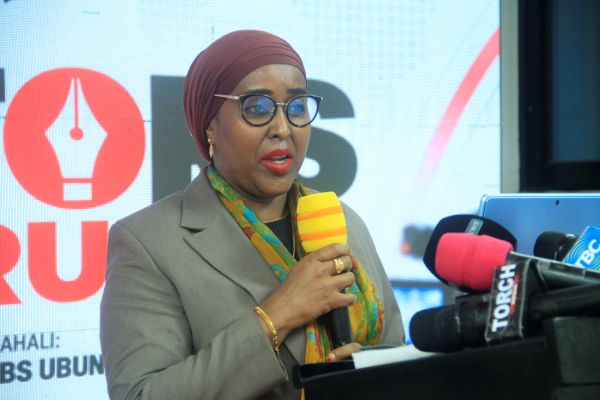
Presenting the institution’s performance to editors and journalists in Dar es Salaam on October 27, 2026, Director General Dr. Ashura Katunzi (pictured above) said TBS had made significant progress in fulfilling its mandate during the sixth-phase government, with its work increasingly aligned with the country’s long-term development ambitions.
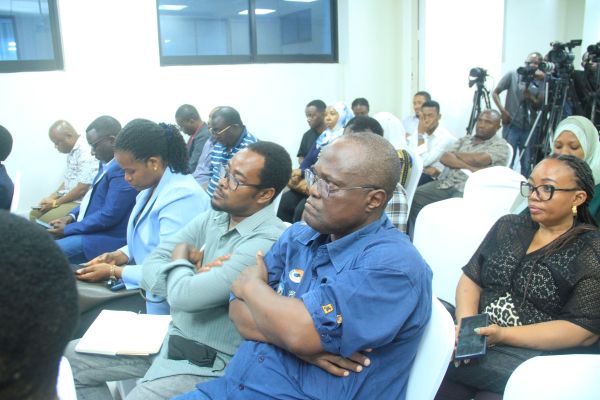
The meeting was organised by the Treasury Registrar’s Office (OTR) to provide media representatives with an overview of the performance of public institutions and their contribution to national development.
Standards as a foundation for business growth
One of TBS’s most significant contributions has been the development of standards to guide manufacturers, entrepreneurs and service providers in producing goods that meet recognised quality and safety requirements.
According to Dr. Katunzi, the Bureau developed 3,901 standards across various sectors during the six-year period, covering areas including food, chemicals, engineering, construction, textiles, leather, mining and environmental management.
These standards are intended to improve production processes, protect consumers and give businesses a clearer framework for meeting market requirements.
TBS also issued 3,940 quality certificates and licences to producers, including 1,683 small-scale entrepreneurs. The Government allocated more than TSh300 million annually to provide services to small businesses free of charge.
The initiative is particularly important for smaller manufacturers, which often face financial and technical constraints when attempting to formalise production and meet quality requirements.
By reducing certification costs and improving access to technical guidance, Dr. Katunzi noted, TBS is helping these businesses develop products that can compete more effectively in domestic and export markets.
The Bureau also registered 9,731 food and cosmetic products and 80,836 premises associated with their production, sale, distribution and storage.
Its import-control operations included inspections of 183,186 consignments before shipment and 426,842 consignments after arrival in Tanzania. In addition, 249,386 used vehicles were inspected.
The inspections are intended to prevent substandard goods from entering the domestic market while protecting consumers, public safety and the environment.
TBS also trained 6,824 stakeholders, including industrial manufacturers and processors, in standards and quality management.
Regional expansion brings services closer
Expanding its physical presence is another important part of TBS’s strategy to support businesses and improve service delivery.
The Government invested more than TSh9.8 billion in strengthening nine zonal offices and offices at border crossings, ports and airports. The investment included additional facilities, personnel and equipment to improve inspection services and market surveillance.
The Bureau is also completing the construction and handover stages of Viwango House in Njedengwa, Dodoma, a project valued at TSh24.7 billion.
In Mwanza, construction of Viwango House at Kiseke, Ilemela District, is under way, with the project estimated to cost TSh12.1 billion. Preparations have also begun for a similar facility in Arusha.
The Dodoma laboratories are expected to serve neighbouring regions, particularly Singida and Tabora, while the Mwanza facility is intended to serve Mwanza, Kagera, Mara, Geita, Shinyanga and Simiyu.
The expansion should reduce the distance businesses travel to access testing and certification services, while helping shorten the time required to obtain laboratory results.
Dr. katunzi said for manufacturers operating outside Dar es Salaam, improved regional access could lower logistical costs and make compliance with product standards more convenient.
Modern laboratories strengthen market confidence
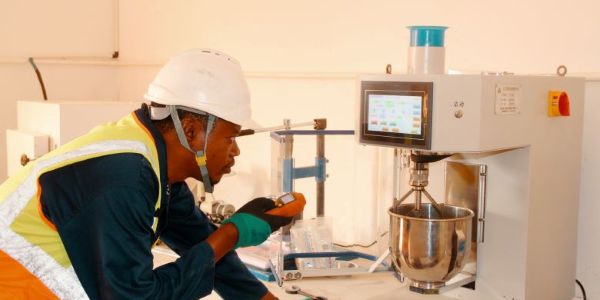
Laboratory capacity is central to the Bureau’s ability to verify whether products meet prescribed specifications.
Dr, Katunzi said TBS had 14 laboratories, all of which had obtained international accreditation for their competence.
During the period under review, the laboratories tested more than 188,952 samples and calibrated 54,396 items of equipment.
The Government invested at least TSh12.9 billion in modern laboratory equipment to improve the speed and accuracy of testing.
Among the specialised facilities are a hydrostatic pressure-testing machine for water pipes, capable of testing 120 samples simultaneously, and a digital instrument for measuring electrical cable resistance.
TBS also operates a solar simulator that can test different types of solar panels without depending on the availability of sunlight. According to the Bureau, the equipment is unique in East and Central Africa.
Internationally recognised laboratory competence can help businesses demonstrate that their products meet required specifications, supporting trade and strengthening confidence in Tanzania’s quality-control system.
Digital services cut business procedures
TBS has also expanded its use of information and communication technology to improve access to regulatory services.
Its digital systems support quality licensing, inspection of imported consignments and registration of food and cosmetic products, among other functions.
A key development has been the integration of its Online Application System with Tanzania’s Electronic Single Window System.
The integration allows importers to submit applications and access services from participating institutions through a common platform, reducing the need to navigate separate administrative processes.
Clean cooking creates another standards frontier
Beyond conventional industrial regulation, TBS is contributing to the implementation of the National Clean Cooking Energy Strategy.
Working with development partners and the Ministry of Energy, the Bureau has begun developing energy-efficiency standards for household electrical appliances.
It is also acquiring modern laboratory equipment to verify whether products entering the market meet established requirements.
The initiative is intended to reduce energy losses, lower household costs and help cut carbon emissions, while supporting the transition towards cleaner energy solutions.
The work illustrates how standards regulation can contribute to objectives beyond manufacturing and trade, including environmental protection and the adoption of more efficient household technologies.
As demand for clean cooking solutions grows, reliable testing and certification will be important in ensuring that consumers have access to products that meet appropriate safety and performance requirements.
Treasury Registrar: TBS is critical to Dira 2050

Representing the Treasury Registrar, Sabato Kosuri said TBS occupies a strategic position in Tanzania’s pursuit of Development Vision 2050, particularly in building a competitive economy driven by a strong private sector. He said the Bureau’s responsibility for overseeing product and service standards makes it an essential institution in ensuring that the country’s economic ambitions translate into tangible development outcomes for businesses and citizens.
Kosuri said achieving a competitive economy by 2050 would require Tanzania to build stronger value chains linking producers and businesses across the country, the East African region and international markets. Harmonised standards and reliable quality infrastructure, he noted, were essential to this ambition because differences in product requirements and quality benchmarks could constrain trade and limit the ability of Tanzanian businesses to compete beyond domestic borders.
He emphasised that TBS should therefore be viewed not merely as a regulatory institution, but as a strategic partner in the country’s economic transformation. Reliable standards infrastructure can help businesses improve production quality, strengthen consumer confidence and meet the requirements of regional and international markets. This makes the Bureau’s investments in laboratories, certification systems and business services particularly important as Tanzania seeks to expand industrial production and increase the competitiveness of locally manufactured goods. Kosuri said the meeting between TBS and media editors, organised by the Treasury Registrar’s Office, was part of a broader effort to strengthen accountability, good governance and cooperation between public institutions and citizens through the media.