

By Business Insider Reporter
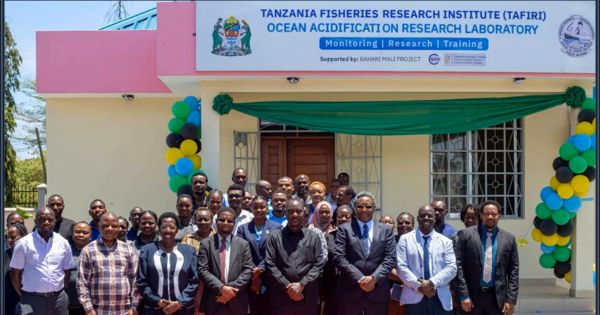
Tanzania has opened a dedicated ocean acidification research laboratory in Dar es Salaam, strengthening the country’s capacity to investigate how climate change threatens marine ecosystems, fisheries and businesses that depend on a healthy ocean.
The facility, established at the Tanzania Fisheries Research Institute (TAFIRI) headquarters in Kunduchi, is the first laboratory dedicated to ocean acidification research in the Western Indian Ocean region, according to the project partners.
Supported by the Embassy of Ireland through the International Union for Conservation of Nature’s (IUCN) Bahari Mali project, the laboratory will enable scientists to examine how rising ocean temperatures, increasing acidity and declining oxygen levels affect marine organisms, both individually and in combination.
The investment comes as Tanzania seeks to develop its blue economy, with coastal communities and businesses relying on marine resources for fishing, seaweed farming, aquaculture and other economic activities.
Climate risks carry economic consequences
Ocean acidification occurs when seawater absorbs carbon dioxide from the atmosphere, triggering chemical reactions that lower its pH and reduce carbonate ions needed by some marine organisms to build shells and skeletons.
The average pH of surface ocean waters has fallen by approximately 0.1 units since the beginning of the industrial era, representing an increase in acidity of about 30 percent.
Oysters, crabs, prawns, corals and some plankton are particularly vulnerable to these changes. Because marine species are connected through food webs, damage to individual organisms can have wider consequences for fisheries and the communities that depend on them.
For Tanzania, the risks extend beyond environmental degradation. Changes in the abundance, growth or survival of commercially important species could affect fishers’ incomes, seafood supplies and investment opportunities in aquaculture and mariculture.
The new laboratory is intended to help scientists establish which species and life stages face the greatest risks, identify those better able to tolerate changing conditions, and test practical measures to improve resilience.
From monitoring to practical solutions
TAFIRI began monitoring ocean acidification in 2019 using equipment that tracks changes in seawater chemistry. However, measuring changes in the ocean alone cannot fully explain how those changes affect living organisms.
The new facility addresses that gap by allowing researchers to expose marine organisms to controlled changes in acidity, temperature and oxygen levels, recreating conditions that occur in nature or are projected in the future.
Initial research will focus on commercially and ecologically important species, including crabs, prawns, oysters and seaweed.
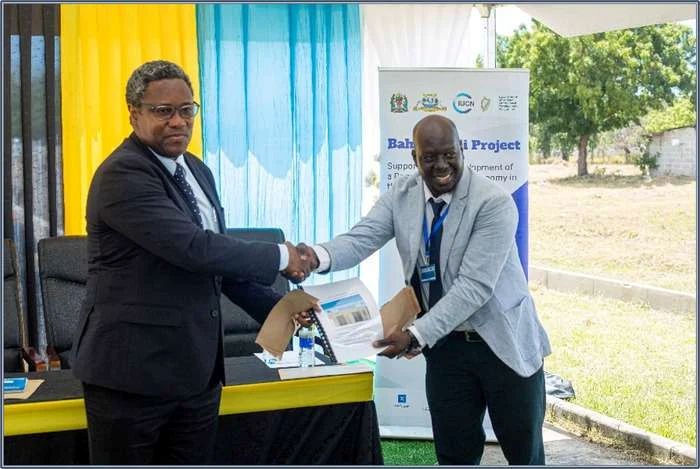
The laboratory builds on support provided through the Bahari Mali project, launched in 2022 by IUCN in collaboration with the Western Indian Ocean Marine Science Association (WIOMSA), with funding from the Embassy of Ireland in Tanzania.
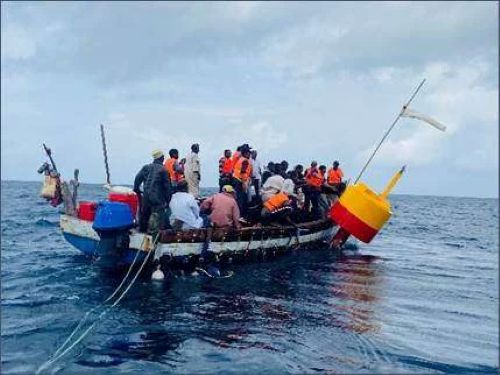
The project supported the deployment of an ocean-monitoring buoy off Pemba in September 2024 and invested approximately Sh151 million in constructing and equipping the laboratory.
It will also provide an estimated Sh60 million annually through a multi-year Climate and Ocean Acidification Research Grant Programme to support monitoring, research and training.
Joseph Olila, IUCN Tanzania Country Office’s programme manager for coastal and ocean resilience, said the facility would help scientists investigate the combined effects of ocean acidification, warming and declining oxygen levels.
He said the resulting evidence could help communities, resource managers and policymakers make better decisions about adapting to changing ocean conditions.
Turning science into economic resilience
The laboratory’s value will ultimately depend on how effectively its findings reach the people and businesses affected by ocean change.
TAFIRI expects the research to strengthen its ability to advise fishers, aquaculture farmers and other value-chain participants on suitable species and production practices. The findings could also inform fisheries management, marine conservation and aquaculture policy.
Minister for Livestock and Fisheries Bashiru Ally Kakurwa said the government remained committed to strengthening research institutions and ensuring scientific evidence informs sustainable marine resource management.
The laboratory is also expected to support collaboration between Tanzanian universities, research institutions and regional scientific partners, helping build local expertise in experimental marine research.
For businesses operating in the blue economy, better information on climate-related risks could improve planning and support more informed investment decisions. However, the facility’s opening does not itself guarantee reduced losses or higher productivity; those benefits will depend on research quality, the practical use of findings and sustained investment in scientific capacity.
Maintaining equipment, training researchers and linking laboratory experiments with long-term monitoring data will therefore be critical. As Tanzania seeks to expand the economic value of its marine resources, the new laboratory offers a stronger scientific foundation for balancing commercial opportunities with the protection of the ecosystems on which coastal livelihoods depend.