
By Costantine Muganyizi
Tanzania is seeking private-sector partners to finance projects in transport, energy, mining and other productive sectors as the Government works to mobilise about TZS477 trillion in investment by 2030.
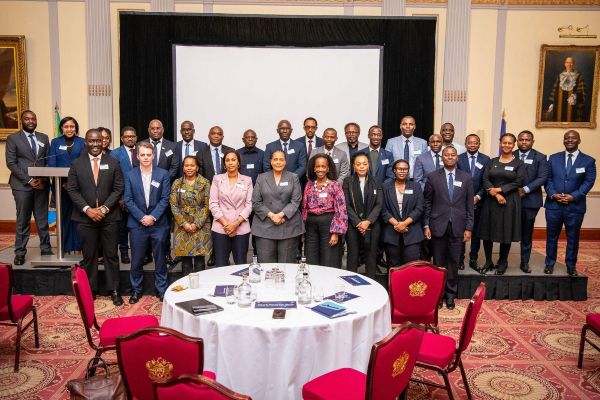
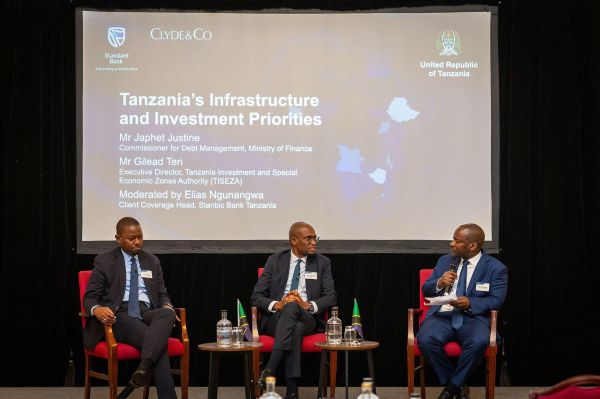
Public institutions presented investment opportunities to international investors at a showcase in London ahead of the Tanzania Investment Forum 2026, held on October 8. The showcase was convened by Stanbic Bank Tanzania in collaboration with law firm Clyde & Co on behalf of the Government.
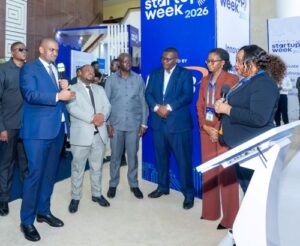
Planning and Investment Minister Prof. Kitila Mkumbo led a delegation that included ministers responsible for finance, minerals, and communication and information technology, Zanzibar’s finance minister, commissioners for public-private partnerships and debt management, and heads of investment authorities for Mainland Tanzania and Zanzibar.
“Vision 2050 asks us to build a US$1 trillion economy, and Government cannot and should not do that alone. We expect the private sector to provide most of the investment. We have come to London with projects that are ready for partners, and with the people who can answer investors’ questions today,” Prof. Mkumbo said.
Dira 2050 targets an upper-middle-income economy worth US$1 trillion, with per capita income of US$7,000. The Government estimates that Tanzania needs about TSh477 trillion in investment by 2030, with about 70 percent expected from the private sector.
Investment opportunities
The country registered 915 investment projects worth US$10.95 billion in 2025, according to the Tanzania Investment and Special Economic Zones Authority (TISEZA). A further 243 projects valued at US$1.88 billion were registered between April and June 2026.
Elias Ngunangwa, Stanbic Bank’s Head of Client Coverage, Corporate and Investment Banking, said investors wanted a credible pipeline of projects and clear opportunities for participation.
“Tanzania has become one of the most compelling places to invest in Africa, because reform, stability and a long-term plan now point in the same direction. Our clients around the world ask us for a credible pipeline of projects and a clear way to take part. We have brought both to London today,” he said.
Mr Ngunangwa said Tanzania’s investment proposition was supported by resilient macroeconomic fundamentals, sustained growth and Dira 2050.
“The Government’s focus on maintaining fiscal discipline, strengthening the investment climate and accelerating private-sector participation provides a strong foundation for the country’s next phase of growth,” he said.
He identified infrastructure and logistics, energy, mining and critical minerals, telecommunications and digital infrastructure as key opportunities.
“Tanzania presents a compelling investment proposition, underpinned by resilient macroeconomic fundamentals, sustained economic growth and a clear long-term development agenda under Vision 2050. The Government’s focus on maintaining fiscal discipline, strengthening the investment climate and accelerating private-sector participation provides a strong foundation for the country’s next phase of growth.
“Significant opportunities exist across infrastructure and logistics, energy, mining and critical minerals, telecommunications and digital infrastructure, as well as other productive sectors. The message to international investors is clear: Tanzania is moving from potential to execution, with a growing pipeline of investable opportunities and an increasing openness to global capital, expertise and long-term partnerships. This is an opportune time for investors seeking to participate in Tanzania’s transformation and its ambition to become a globally competitive, industrialised economy,” Mr Ngunangwa said.
Transport, energy and mining
Transport and logistics featured prominently as Tanzania seeks to strengthen its position as a regional trade gateway.
The Tanzania Ports Authority reported that the Port of Dar es Salaam handled a record 33.71 million tonnes of cargo in the 2025/26 financial year, up 21.5 percent. Transit cargo rose 17 percent to 14.61 million tonnes, more than half destined for the Democratic Republic of Congo. The ports and airports authorities presented projects to potential investors.
In energy, installed electricity generation capacity reached approximately 4,646 megawatts following the inauguration of the 2,115-megawatt Julius Nyerere Hydropower Project in August, according to the Ministry of Energy. Tanzania also holds more than 57 trillion cubic feet of natural gas.
The Tanzania Electric Supply Company (TANESCO) and the Tanzania Petroleum Development Corporation outlined opportunities in electricity transmission, distribution and gas.
Mining contributed 11.9 percent of national output in the first nine months of 2025, while mineral exports rose 31.1 percent to US$5.4 billion during the year, according to the Ministry of Minerals.
The Government has issued 454 licences for critical minerals, including graphite and nickel, since July 2025, while seeking to expand domestic mineral processing and value addition.
Financing the projects
The showcase allowed participating institutions to present projects directly to investors, answer questions and register interest in specific opportunities.
Sarah Mkiramweni, Stanbic Bank Tanzania’s Head of Investment Banking, said the bank could connect projects with commercial lenders, capital markets, development finance institutions, insurers and export credit agencies.
“Stanbic is well positioned to connect Tanzania’s priority projects to diverse pools of capital, spanning commercial lending, capital markets, development finance institutions, insurers and export credit agencies. The London showcase provided a long-awaited platform for investors and broader market participants to hear directly from project owners on specific opportunities, while gaining greater visibility of the wider pipeline of investable projects emerging across Tanzania. This direct engagement is critical in bridging the gap between strategic national priorities and the capital required to bring them to fruition,” she said.
Stanbic said it had deployed more than US$1 billion in development finance in Tanzania over the preceding five years, supporting infrastructure, energy and trade. The bank is part of Standard Bank Group.
Mr Ngunangwa said the bank would continue facilitating partnerships between investors and public institutions. “We serve investors who are entering Tanzania, and we work with Government and public institutions to bring the right partners to their projects. Today we did both in one room, and we will keep doing so until these projects are built. Tanzania is our home, and we drive her growth,” he said.