
By A Correspondent, Arusha
Tanzania has called on boards and management of public institutions and enterprises to make bold and timely decisions as implementation of Dira 2050 gathers pace, warning that slow execution could undermine the country’s long-term development ambitions.
Chief Secretary Ambassador Dr. Moses Kusiluka said the early years of implementing Dira 2050 would be critical because decisions, investments and institutional reforms undertaken now would shape Tanzania’s development trajectory for decades.
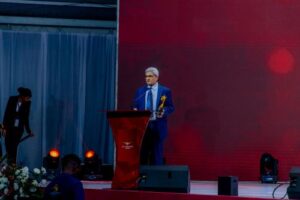
Closing the C-CEOs Forum 2026 in Arusha, Kusiluka said Dira 2050 had moved from planning to implementation, requiring leaders to match the scale of the country’s ambitions with decisive action.
“This Working Session is taking place at a very important moment in the history of our nation. Dira 2050 is no longer something for the future. Its implementation has begun,” he said.
He said investments being initiated, institutions being strengthened and leaders being prepared today would significantly influence Tanzania’s journey towards 2050.
“Let us not come up with easy resolutions,” Kusiluka said, urging leaders to make consequential decisions and act on them quickly.
However, he cautioned that speed should not come at the expense of the law, accountability and good governance.
“We want our institutions to have the courage to make decisions and move forward, but they must do so within strong foundations of the law, accountability and good governance,” he said.
Institutions, he added, should use existing government systems to obtain legal clarification promptly rather than allowing uncertainty to unnecessarily delay decisions.
Measure results, not activities
Dr. Kusiluka directed the Office of the Treasury Registrar (OTR) to strengthen performance assessment of public institutions using indicators that demonstrate tangible results.
He warned against comparing poorly performing institutions with equally weak peers, saying Tanzanian organisations should increasingly benchmark themselves against high-performing counterparts internationally.
“Our benchmark should not be other institutions that are not performing well. Let us benchmark ourselves against our counterparts elsewhere in the world who are performing better,” he said.
Treasury Registrar Nehemiah Mchechu echoed the call, saying public enterprises must shift from measuring success through activities undertaken to evaluating outcomes and value created for the country.

That means putting greater emphasis on productivity, efficiency, innovation and technology while ensuring public resources are managed prudently and investments produce measurable returns.
For commercial public enterprises, Mr. Mchechu said performance should be reflected in productivity, sustainability and profitability. Public service institutions, meanwhile, should be assessed on the quality, accessibility and efficiency of their services.
Public enterprises occupy a strategic position in Dira 2050 because of their involvement in production, trade, transport, energy, investment and delivery of essential services.
Opening doors for young talent
Kusiluka also signalled greater willingness to bring younger professionals into leadership and strategic positions within public institutions.
He said the Office of the Chief Secretary was prepared to approve recruitment of young people, particularly into innovation units, even where candidates lacked extensive experience, provided they possessed rare skills capable of raising institutional and national productivity.
The approach reflects the wider push to equip public institutions with skills needed to respond to technological and economic changes.
Kusiluka also called for stronger cooperation between the public and private sectors and urged institutions to align their plans with Dira 2050.
On audit findings, he said recommendations by the Controller and Auditor General (CAG) should not merely be treated as issues requiring responses to satisfy auditors.
Instead, institutions should use them to strengthen internal systems, manage risks and prevent recurring weaknesses.
From resolutions to implementation
Kusiluka said the resolutions adopted at the C-CEOs Forum should mark the beginning of implementation rather than the end of discussions.
He said he had received updates on all nine resolutions adopted at the previous forum and was encouraged by progress made in several areas.
“Do not regard these resolutions as the conclusion of this Working Session; regard them as the beginning of the work,” he said.
Each institution should determine what changes it needs to make, what results are expected and how relevant forum resolutions will be incorporated into its implementation plans.
Dr. Kusiluka said the success of Dira 2050 would also depend on peace, security, stability and strong institutions, which provide the conditions for investment, business expansion and long-term economic planning.

Ultimately, he said, the success of the forum would be judged not by discussions in Arusha but by the quality and speed of decisions made afterwards, collaboration between institutions, solutions to existing challenges and value generated from public resources.
Permanent Secretary responsible for Investment Dr. Fred Msemwa commended reforms being undertaken by OTR but said more remained to be done given rising public expectations.
The C-CEOs Forum 2026, coordinated by OTR, ran from September 28 to 30 and brought together more than 700 participants from 320 public institutions and enterprises, alongside other stakeholders. It was held under the theme: “High-Performing Public Enterprises for a Competitive, Inclusive and Resilient Economy: Advancing Vision 2050.”