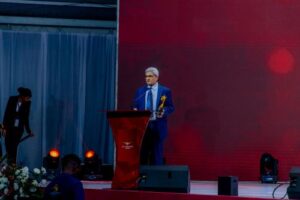

Double taxation agreement targets a more predictable investment climate as Dar es Salaam courts Qatari capital for infrastructure, energy, tourism, logistics, agriculture and financial services
By Correspondent Benny Mwaipaja, Doha
Tanzania and Qatar have signed a double taxation agreement aimed at lowering barriers to cross-border business and creating a more predictable tax environment as the two countries seek to deepen investment and trade ties.
The Double Taxation Agreement (DTA), signed in Doha on September 29, 2026, is designed to prevent the same income from being taxed twice while strengthening cooperation between the two countries in combating tax evasion and avoidance.
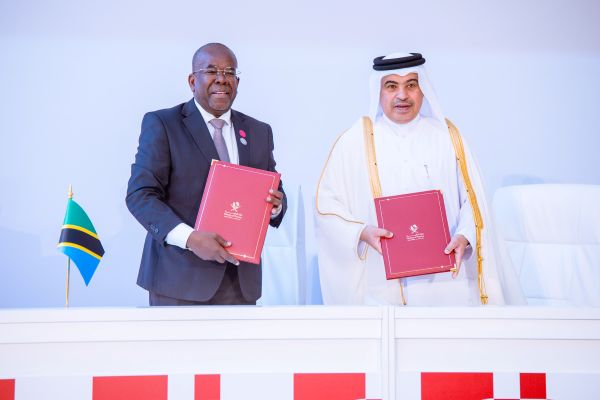
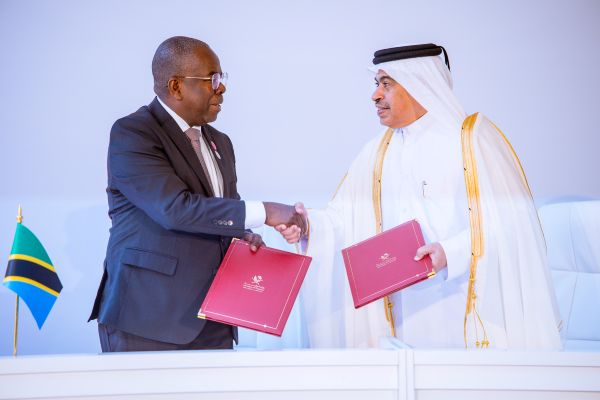
Tanzania’s Finance Minister, Ambassador Khamis Mussa Omar, and his Qatari counterpart, Ali Bin Ahmed Al Kuwari, signed the agreement on the sidelines of the 11th Annual Meeting of the Board of Governors of the Asian Infrastructure Investment Bank (AIIB) in Doha.
For businesses and investors operating across the two jurisdictions, the agreement is expected to reduce tax uncertainty and operating costs associated with cross-border transactions, potentially making investment between Tanzania and Qatar more attractive.
“This agreement reflects the strong friendship between our two nations, as well as our commitment to building a modern, fair and investor-friendly framework that is aligned with international standards,” Omar said.
“By eliminating double taxation, this agreement will facilitate international trade, investment and business activities. It will also create a more transparent and predictable environment for investors.”
Tanzania targets Qatari capital
The agreement comes as Tanzania seeks new investment across several capital-intensive sectors, with the government identifying infrastructure, energy, tourism, transport and logistics, agriculture and financial services among areas where Qatari investors could play a greater role.
“Tanzania views this agreement as an opportunity to attract new investment across various sectors,” Omar said.
By clarifying the taxation of income generated through cross-border activities, the agreement is expected to provide greater certainty to companies considering establishing or expanding operations between the two countries.
Double taxation can become an additional cost and investment consideration for companies earning income outside their home jurisdiction. The new agreement is intended to establish a clearer framework governing those tax obligations between Tanzania and Qatar.
Omar said the deal would also strengthen cooperation between the two countries’ tax authorities, supporting international efforts against tax evasion and avoidance while safeguarding their respective tax interests.
He credited technical teams, tax specialists, legal advisers and government officials from both countries for completing the negotiations.
The two governments will now turn their attention to implementing the agreement and using it as a platform for broader economic cooperation.
Qatar sees Tanzania as key partner
Qatar’s Finance Minister Ali Bin Ahmed Al Kuwari described Tanzania as an important economic partner and said removing double taxation barriers could encourage greater flows of investment and capital between the two countries.
He reaffirmed Qatar’s interest in strengthening economic cooperation with Tanzania, noting that the Qatar Investment Authority (QIA) and the Qatar Fund for Development (QFFD) are already involved in projects in the country.
Al Kuwari also highlighted opportunities for cooperation that go beyond capital, including the exchange of expertise and knowledge between the two countries.
Energy could emerge as a particularly important area.
The Qatari minister pointed to the potential for deeper cooperation in oil and gas, saying double taxation agreements are important both for projects already implemented in Tanzania and for prospective investments involving businesses from the two countries.
Lowering the cost of doing business
From a business perspective, the significance of the agreement lies in its potential to reduce one layer of uncertainty facing companies investing across borders.
The Tanzanian government expects the removal of double taxation on qualifying income to reduce operating costs for companies doing business in both markets and provide greater certainty to investors considering expansion.
That could be particularly important for large, long-term projects in sectors such as infrastructure and energy, where tax treatment forms part of investment planning.
The agreement also adds a tax-policy dimension to the growing economic relationship between Tanzania and Qatar: rather than relying solely on individual investment projects, the two governments are seeking to establish a framework within which future capital can move with greater predictability.
For Tanzania, the next test will be turning that framework into actual investment commitments in the sectors it has identified. With Qatar home to major pools of investment capital and Tanzania seeking financing for its next phase of infrastructure and economic development, the DTA could provide an important building block for a broader investment relationship – reducing tax friction while giving businesses on both sides greater clarity on the rules governing cross-border investment.