
By Correspondent Benny Mwaipaja, Seoul
Tanzania is seeking to deepen its technology and innovation partnership with South Korea by forging closer ties with Hanyang University ERICA, with a focus on artificial intelligence (AI), digital skills, research and technology-driven entrepreneurship.
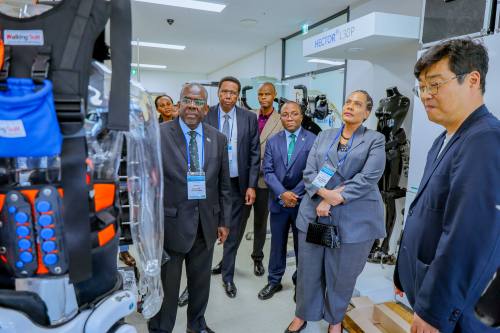
Finance Minister Khamis Mussa Omar led a Tanzanian delegation to Hanyang ERICA in Seoul on the sidelines of the Korea-Africa Economic Cooperation (KOAFEC) Ministerial Conference, accompanied by Information and Communication Technology Minister Angellah Kairuki.
Omar said Tanzania was committed to strengthening cooperation with the university, signalling growing government interest in leveraging South Korean expertise to support the country’s digital transformation and industrial development.
Ms. Kairuki described the visit as a strategic step towards building a long-term institutional partnership, following previous high-level engagements between Tanzania and South Korea.
She said Hanyang ERICA’s expertise in AI and digital transformation was particularly relevant to Tanzania’s development priorities, including strengthening youth skills, data infrastructure and innovation systems under the country’s National Development Vision 2050 (Dira 2050).
Nine-point cooperation agenda
Ms. Kairuki presented nine proposals for cooperation, ranging from signing a memorandum of understanding and student exchanges to training academic staff and establishing a joint Korea-Tanzania Digital Innovation Lab.
The proposed partnership is also expected to support practical technology development, including laboratories, human-resource training and the creation of startups.
Kairuki urged Hanyang ERICA to move quickly from discussions to implementation, arguing that early results would help demonstrate the commercial and developmental value of the partnership.
“We want to see practical results, including human-resource training, laboratory development and the establishment of startups,” she said.
She also invited Hanyang ERICA Vice President Prof Dong Baek and his delegation to visit Tanzania, including Dodoma, Dar es Salaam and Zanzibar, to assess investment opportunities and explore areas where the university and Korean companies could support Tanzania’s technology ambitions.
From classrooms to industry
Baek described Tanzania’s proposals as both important and practical, saying some could be implemented relatively quickly because the Korean government had already allocated funding for cooperation with Tanzania.
He said the university would examine the proposals in detail and identify the most effective mechanisms for taking them forward.
The potential partnership comes as Tanzania seeks to build a stronger technology ecosystem capable of supporting digital businesses, innovation and higher-value economic activity.
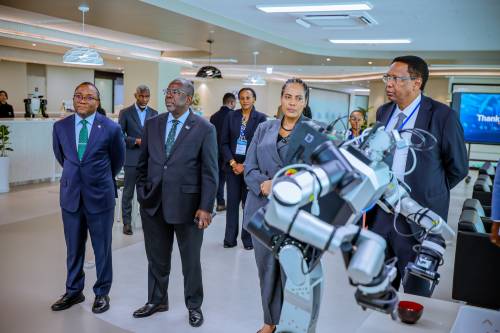
Hanyang ERICA has a strong focus on research and technology, with expertise spanning AI, data science, robotics, cybersecurity and semiconductors. Its industry-linked approach to education, including Industry-Coupled Problem-Based Learning (ICPBL), connects academic training with real-world industrial challenges.
The university also operates within an ecosystem that includes the Campus Innovation Park and Ansan Science Valley, providing links between education, research and industry.
For Tanzania, the proposed cooperation could therefore go beyond academic exchanges to address a broader business challenge: building the skills, research capacity and innovation infrastructure needed to attract technology investment and create locally driven startups. The partnership also fits into the wider expansion of Tanzania-South Korea economic relations, as both countries seek to translate diplomatic and development cooperation into investment, technology transfer and private-sector opportunities.