

By Peter Nyanje
Tanzania’s inflation is rising again, raising fresh concerns about the cost of living even as the rate remains within the Government’s target range and regional convergence benchmarks.
The latest Bank of Tanzania (BoT) Monthly Economic Review (MER) shows annual headline inflation on Mainland Tanzania increased to 4.2 percent in July 2026, up from 4.0 percent in June and 3.3 percent in July 2025.
The rate remains comfortably below the upper end of the national 3–5 percent target range, but the direction is increasingly important for businesses, households and policymakers.
The Bank itself describes inflation as having remained within the national target and the EAC and SADC convergence benchmarks.
Nevertheless, the rate is becoming alarming as even the BoT itself has noted that it is now above its historical average.
The more revealing change is beneath the headline figure.
Core inflation, which excludes unprocessed food and energy, rose to 3.9 per cent in July, from 3.7 percent in June and just 1.9 percent a year earlier.
It accounted for 2.9 percentage points of the 4.2 percent headline rate.
That means the current inflation story is no longer simply about food or temporary shocks. Price pressures are becoming more broadly embedded in the economy.
Transport is driving the pressure
Transport has emerged as the clearest source of pressure.
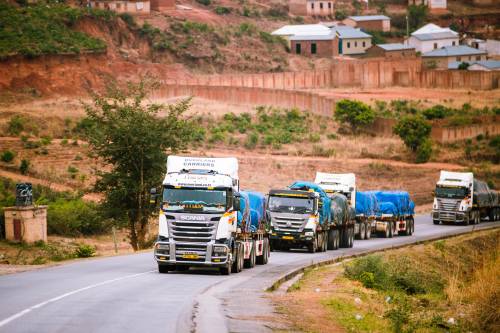
Transport inflation reached 13.8 percent in July, compared with 13.6 per cent in June and only 1.2 per cent a year earlier.
Energy, fuel and utilities inflation also rose to 6.9 percent, from 6.3 percent in June and 1.0 percent in July 2025.
The BoT attributes the increase in headline inflation primarily to the pass-through of fuel prices into transport costs.
That distinction matters for businesses because transport costs do not remain confined to the transport sector. They feed into the cost of moving agricultural produce, manufactured goods, construction materials and people.
In effect, a higher transport bill can gradually become a higher cost of doing business across the economy.
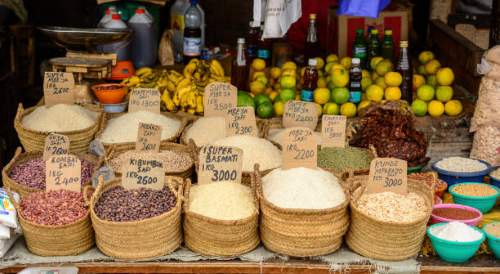
Yet there is one important cushion: food inflation on Mainland Tanzania has actually fallen sharply compared with a year earlier.
Food and non-alcoholic beverages inflation stood at 4.1 per cent in July, down from 7.6 percent in July 2025.
The BoT says relatively low food prices, supported by adequate domestic supply, are helping to contain broader price pressures.
That is why Tanzania is experiencing a relatively unusual combination: headline inflation is rising even while food inflation is easing.
Zanzibar presents a sharper problem
The inflation picture is considerably more pronounced in Zanzibar.
Annual headline inflation reached 6.0 percent in July 2026, unchanged from June but sharply higher than the 4.1 percent recorded in July 2025.
Unlike Mainland Tanzania, where food inflation has moderated, Zanzibar’s food and non-alcoholic beverages inflation climbed to 10.9 percent, from 4.9 percent a year earlier.
The broader food measure was even higher at 11.1 percent.

The BoT attributes Zanzibar’s increase mainly to higher food prices, compounded by rising transport costs following increases in fuel prices.
The contrast with Mainland Tanzania is striking;
Mainland: 4.2 percent
Zanzibar: 6.0 percent
That is a gap of 1.8 percentage points.
And while Zanzibar’s headline inflation is above the national Mainland target range, the pressure is concentrated in food. Non-food inflation actually fell to 1.9 percent, from 3.9 per cent a year earlier.
This makes Zanzibar’s inflation problem different from that of Mainland Tanzania.
On the Mainland, transport and other underlying price pressures are becoming increasingly important.
In Zanzibar, food is the much bigger problem.
Still within the target – but moving in the wrong direction
The significance of the latest numbers therefore lies less in whether Tanzania has breached its inflation target – it has not – and more in the trajectory.
Mainland headline inflation has moved:
3.3% → 4.0% → 4.2%
between July 2025, June 2026 and July 2026.
At the same time, core inflation has moved:
1.9% → 3.7% → 3.9%.
That second series is arguably the more important warning signal because it indicates that price pressures are spreading beyond volatile food and energy components.
The BoT has already responded.
The Central Bank Rate was raised to 6.25 percent in July 2026 from 5.75 percent, signalling a tighter monetary policy stance intended to contain emerging inflationary pressures.
But the response will take time to work through the economy. At the same time, private-sector credit growth accelerated to 31.2 percent in July, from 28.1 percent in June, suggesting demand for financing remains exceptionally strong.
That creates an important policy balancing act.
The authorities want to preserve economic growth and investment while preventing stronger demand, fuel costs and other supply pressures from pushing inflation beyond the target range.
The business question
For businesses, inflation at 4.2 percent may not sound alarming.
It is nowhere near the double-digit inflation episodes experienced by Tanzania in earlier periods, and it remains within the BoT’s preferred range.
But businesses do not experience the headline rate equally.
A manufacturer heavily dependent on transport and fuel faces a very different cost environment from a business whose main expenses are digital services or professional fees.
Similarly, households in Zanzibar facing food inflation above 10 percent are experiencing a very different reality from what the national headline figure suggests.
That is the real significance of the latest numbers.
It is worthwhile to note that Tanzania does not yet have an inflation crisis. But it is beginning to face an inflation-management challenge.
The immediate question is whether the recent rise is temporary, driven largely by fuel and transport costs, or whether higher core inflation signals the beginning of a more persistent phase of price pressure.
For now, the BoT still has room within its 3–5 percent framework. But with headline inflation rising, core inflation nearly doubling from a year earlier and Zanzibar already at 6 percent, the margin for complacency is becoming smaller.