
By Business Insider Reporter
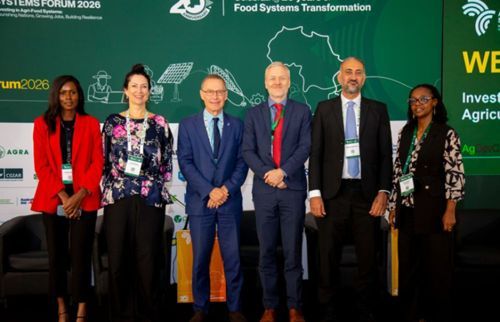
Tanzania is set to gain access to a new pool of patient capital for early-stage agribusinesses under a US$10 million financing initiative launched by the International Fund for Agricultural Development (IFAD) and AgDevCo Ventures Limited, potentially giving local agricultural enterprises the funding they need to move from small-scale operations to commercially viable businesses.
The financing agreement, signed on September 3, targets five East African markets – Tanzania, Kenya, Ethiopia, Rwanda and Uganda – and is expected to support up to 15 young agribusinesses operating across agricultural value chains.
For Tanzania, where limited access to affordable and appropriately structured finance remains one of the obstacles to expanding agricultural businesses, the initiative could be significant.
The programme combines IFAD financing with long-term, risk-tolerant capital and technical assistance from AgDevCo, an approach designed to support businesses that may be too young or considered too risky for conventional commercial lending.
That distinction matters for Tanzania’s agricultural sector.
Many businesses operating in areas such as input distribution, aggregation, food processing, logistics and market linkages require substantial capital before they generate the scale and cash flows needed to qualify for traditional bank financing.
The new facility is designed to fill part of that gap by providing capital alongside business-development support, enabling enterprises to increase productivity, reach new markets and strengthen their environmental and social practices.
Opportunity for Tanzanian agribusiness
Tanzania’s potential gains extend beyond the companies that receive financing directly.
Agribusinesses occupy an important position between farmers and consumers. A processor that expands its factory, for example, may need more raw materials from farmers. An aggregator that receives financing can potentially purchase larger volumes from smallholders, while an agricultural logistics company can connect producers to markets that were previously difficult to reach.
This means investment in one agribusiness can generate economic activity across an entire value chain.
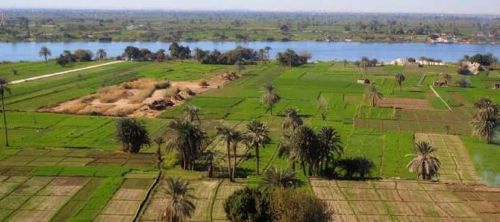
The IFAD-AgDevCo initiative is expected to benefit nearly 128,000 farmers indirectly across the participating countries and create almost 2,900 full-time jobs over 12 years.
For Tanzania, the potential impact therefore lies not only in attracting foreign capital but also in strengthening the businesses that connect the country’s farmers to markets.
The programme will also prioritise locally owned enterprises and businesses led by women, while seeking to expand opportunities for young people and smallholder farmers.
This is particularly relevant as Tanzania seeks to shift agriculture from predominantly smallholder production towards more productive and commercially integrated value chains.
Why patient capital matters
One of the most important features of the facility is its focus on risk-tolerant, longer-term financing.
Agriculture rarely follows the same financial timetable as sectors such as telecommunications or conventional services. Businesses can face seasonal production cycles, weather risks, fluctuating commodity prices and long periods before investments generate returns.
Conventional loans, particularly where repayment schedules do not match agricultural cash flows, can therefore constrain expansion.
Blended finance offers another model.
By combining development finance, commercial investment and technical assistance, the IFAD-AgDevCo partnership seeks to reduce some of the risks associated with investing in young agricultural companies.
For Tanzania, this could help unlock investment in businesses that sit in the middle of agricultural value chains – precisely the segment that is often critical to moving farmers from production to reliable markets.
A wider financing problem
The initiative is being launched against a much larger financing challenge facing African agriculture.
IFAD cites estimates from AGRA putting Africa’s annual agricultural financing gap at around US$180 billion, including approximately US$65 billion for small and medium-sized agribusinesses.
The shortage has implications beyond individual companies. Without adequate working capital and investment finance, processors struggle to expand capacity, aggregators cannot buy sufficient volumes, logistics companies cannot scale and farmers can remain disconnected from higher-value markets.
For Tanzania, closing that gap could become increasingly important as the country seeks to expand agricultural exports, strengthen domestic food processing and create more employment outside the traditional farm.
From finance to stronger value chains
The bigger question for Tanzania is therefore how effectively local businesses can position themselves to benefit from the new financing window.
The opportunity is not simply about securing loans. Businesses will need commercially credible models, strong governance, clear markets and the ability to demonstrate how additional capital can generate sustainable growth.
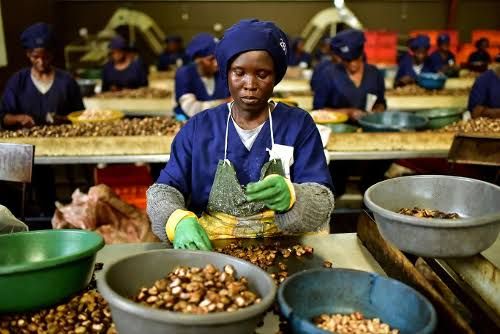
If successful, the programme could help produce a new generation of Tanzanian agribusinesses capable of doing more than buying and selling agricultural commodities.
They could become anchor businesses within value chains, providing farmers with inputs, reliable markets, processing capacity, storage, logistics and access to higher-value customers.
That would make the US$10 million facility relatively small compared with Tanzania’s wider agricultural financing needs – but potentially important as a demonstration of how patient capital can turn promising agribusinesses into engines of rural economic growth. For a country looking to make agriculture a stronger driver of industrialisation, exports and employment, that may ultimately be the most valuable dividend.