
By Our Correspondent, Nzega
Tanzania is stepping up efforts to strengthen the production and distribution of improved seeds as the government moves to raise agricultural productivity and unlock greater economic value from the sector.
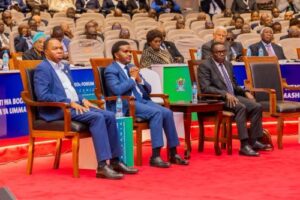
The push was highlighted on August 17, 2026, when Minister of State in the Prime Minister’s Office responsible for Policy, Parliament, Coordination and Persons with Disabilities, Prof. Palamagamba Kabudi, visited and inspected projects being implemented under the Agriculture and Fisheries Development Programme (AFDP) at the Tanzania Agricultural Seed Agency (ASA)’s Kilimi Seed Farm in Nzega District, Tabora Region.
The programme is funded by the International Fund for Agricultural Development (IFAD) and is designed to improve agricultural productivity, expand the production of quality seeds and support the wider development of Tanzania’s agricultural sector.
Speaking during the visit, Prof. Kabudi described agriculture as a cornerstone of Tanzania’s economic development, given its contribution to national output, food security, employment and export earnings.
He said the AFDP was particularly important because of its focus on raising productivity in a sector that remains central to the livelihoods of millions of Tanzanians.
“The Agriculture and Fisheries Development Programme is important to the agricultural sector because it seeks to increase productivity in a sector that is a pillar of economic development,” Prof. Kabudi said.
He added that agriculture contributes about half of the country’s gross domestic product, accounts for roughly three-quarters of exports and provides food and employment opportunities for more than 75 per cent of Tanzanians.
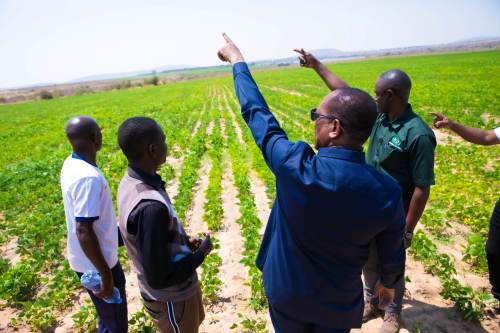
During the visit, Prof. Kabudi officially handed over several newly completed facilities to the Ministry of Agriculture, including an office building, a workshop and a seed-drying facility. The projects were delivered under the AFDP with IFAD financing.
Before the handover, the minister inspected a range of infrastructure and facilities at Kilimi Seed Farm, including the workshop, crop-drying shade, offices, a training hall and newly constructed staff houses.
The investment also extends beyond buildings.
Through the programme, the seed farm has gained access to modern agricultural machinery and equipment intended to improve efficiency in seed production and handling. The equipment includes boom sprayers, disc harrows, tractors, maize shellers, tillers and workshop equipment, alongside vehicles for project management and seed distribution.
For Tanzania’s agricultural sector, the investment comes at a time when improving access to quality seed is increasingly important to raising yields, strengthening food security and creating a more commercially productive farming system.
Better seed varieties, however, need to be matched with reliable production systems, modern farm machinery, appropriate storage and efficient distribution. The infrastructure and equipment delivered through the AFDP are therefore expected to strengthen several links in that chain at Kilimi.
Prof. Kabudi also placed emphasis on implementation discipline, calling for projects to be completed on time and to the required standards.
He stressed that public and development-partner investments must deliver tangible results, urging project managers to ensure that the country receives full value for the money invested.
The minister further called for a strong strategic implementation plan to ensure that the AFDP meets its targets within the agreed timeframe.
His message underscores a broader challenge facing development programmes: securing funding is only the first step; converting that investment into productive capacity is what ultimately determines its economic impact.
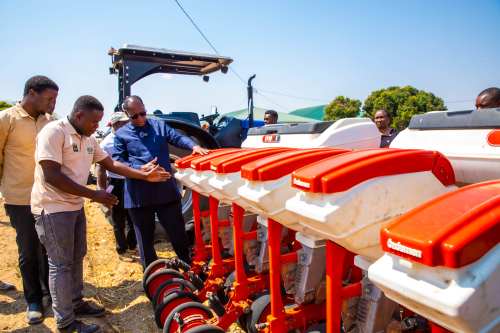
Prof. Kabudi was accompanied by Deputy Minister for Agriculture David Silinde, Deputy Permanent Secretary responsible for Irrigation and Agricultural Machinery Engineer Athumani Kilundumya, Director of Policy and Coordination in the Prime Minister’s Office Paul Sangawe, and AFDP Coordinator in the Prime Minister’s Office Salimu Mwinjaka. The Kilimi investment adds to Tanzania’s efforts to build a stronger agricultural production base, with improved seed availability and modern farming infrastructure increasingly viewed as essential to raising productivity and turning agriculture into a more competitive engine of economic growth.