

By Correspondent Benny Mwaipaja, Zanzibar
Tanzania’s economic transformation agenda is gathering momentum, with the country’s development debate increasingly shifting towards the investments and institutions needed to deliver the ambitions of Dira 2050.
The debate was brought into sharp focus at the Kizimkazi Festival 2026 in southern Unguja, which brought together senior government officials, development institutions, businesses, political leaders and members of the public to discuss issues shaping Tanzania’s economic future.
President Samia Suluhu Hassan attended the festival alongside Vice-President Emmanuel John Nchimbi and Zanzibar President Hussein Ali Mwinyi. Other senior officials included Finance Minister Khamis Mussa Omar, as well as representatives of public and private institutions and political parties.
But beyond the political gathering, the festival provided an important platform for a more practical question: how will Tanzania finance the transition to a more productive, greener and more inclusive economy?
For the Tanzania Investment Bank (TIB), the answer lies partly in putting development finance behind sectors capable of transforming the economy – including clean energy.
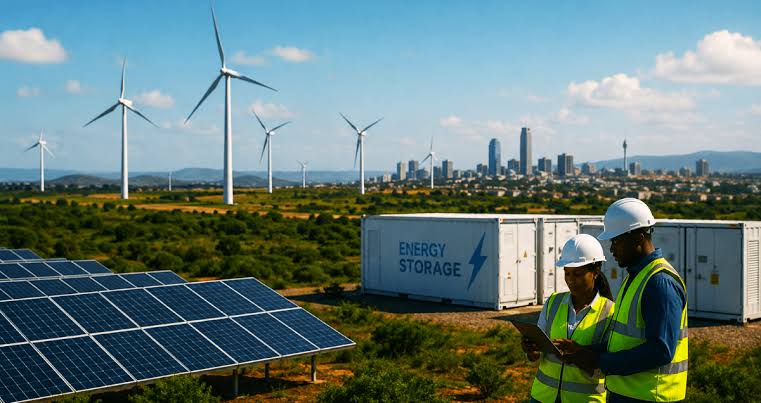
TIB Managing Director Deogratius Kwiyukwa told journalists on the sidelines of the festival that the development bank was preparing to increase financing for clean-energy projects as part of the country’s drive towards the objectives of Dira 2050.
The bank has set aside financing for renewable-energy projects, including solar, wind, natural gas and hydropower, with a focus on making capital more affordable for projects that can contribute to the country’s energy transition.
“Clean energy is the key to unlocking the potential of industry, agriculture and households across Tanzania. Through this financing, we aim to reduce dependence on polluting energy sources and accelerate the green economy,” Kwiyukwa said.

The move comes as clean cooking and environmental sustainability take on greater importance in Tanzania’s development agenda.
The Kizimkazi Festival was also used as a national platform to discuss clean cooking energy, with senior leaders highlighting the need to accelerate the shift away from traditional fuels.
That agenda is closely linked to the environmental pillar of Vision 2050, under which Tanzania seeks to strengthen conservation, promote sustainable use of natural resources and build resilience against climate change.
Financing the energy transition
For TIB, the opportunity extends beyond financing individual renewable-energy projects.
Kwiyukwa said the bank wanted to attract both domestic and international investors into major energy infrastructure projects, arguing that greater investment could help lower production costs while creating jobs, particularly for young people.
“TIB has made a significant contribution to positive change and the growth of various sectors in Tanzania. Through the Kizimkazi Festival, we are joining the President and other stakeholders to demonstrate how different sectors can contribute to achieving the objectives of Vision 2050,” he said.
The bank’s financing focus extends across infrastructure, energy, tourism, the blue economy, youth and women-led enterprises, as well as environmental initiatives.
TIB also manages a number of development funds on behalf of the Government and other institutions, covering areas such as water, rural electrification and clean energy across Mainland Tanzania and Zanzibar.
The rationale is straightforward: development finance institutions are expected to take on some of the risks associated with projects that commercial banks may find difficult to finance.
“Our main objective is to take development closer to the people and reduce the risks in areas that commercial banks may not be able to reach,” Kwiyukwa said.
Beyond government funding
TIB’s strategy also extends beyond conventional lending.
Through its subsidiary, TIB Rasilimali, the bank is seeking to widen access to alternative sources of capital and investment.
The company is among the major players in the Dar es Salaam Stock Exchange market, providing share trading services on behalf of institutions and individuals. It also offers financial literacy, investment advisory and insurance agency services.
Kwiyukwa said TIB Rasilimali was helping businesses and individuals understand that building wealth and raising capital did not have to depend exclusively on government funding or conventional bank loans.
The company has been conducting weekly financial education sessions, particularly for young people, through its Dar es Salaam offices and online platforms. The sessions focus on helping participants understand safer and more structured investment opportunities.
The push fits squarely into the broader ambitions of Vision 2050, which seeks to transform Tanzania into a high-value economy, raise average annual income and place the private sector at the centre of economic expansion.
“The efforts support the broader objectives of Vision 2050, which seeks to build a US$1 trillion economy, raise average income per Tanzanian to US$7,000 a year and ensure that the private sector plays a much greater role in driving national economic growth,” Kwiyukwa said.
A broader role for development finance
TIB’s presence at Kizimkazi was therefore more than a ceremonial appearance. It reflected the growing importance of development finance institutions in funding the infrastructure, energy and productive capacity required to move Tanzania’s long-term economic ambitions from policy documents into commercially viable projects.
The bank was recognised at the festival with an award and certificate presented by President Samia in acknowledgement of its contribution to inclusive economic development and its readiness to support the country’s broader development vision.
Kwiyukwa also commended the Mwanamke Initiative Foundation (MIF) for organising the festival, saying the platform had created space for Tanzanians to debate critical national development issues.
He pledged that TIB would continue participating in similar forums aimed at stimulating investment, strengthening economic opportunities and advancing the country’s development agenda.
The message emerging from Kizimkazi was clear: Vision 2050 will require more than ambitious targets. It will require capital, infrastructure, private-sector participation and institutions capable of financing projects in sectors where the economic returns may take time to materialise.
For TIB, clean energy is one of those sectors—and the bank is positioning itself to help finance the transition. As Tanzania moves towards Vision 2050, the ability to mobilise long-term capital for energy, infrastructure and productive investment could ultimately prove as important as the vision itself.