By Correspondents Farida Ramadhani and Asia Singano, Dodoma
Tanzania and Germany are moving to reshape their long-standing development partnership, with both sides signalling a shift towards larger, more strategic investments capable of delivering tangible economic and social benefits.
The two governments have opened bilateral development cooperation talks in Dodoma, focusing on projects expected to have a direct impact on people’s lives while supporting Tanzania’s wider economic ambitions.
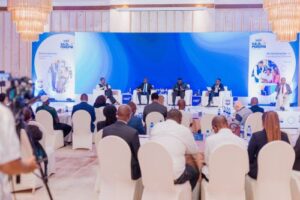
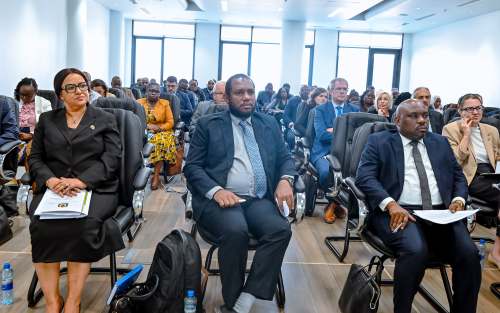
The two-day talks, held at the Ministry of Finance conference centre in Mtumba, brought together officials from both countries to identify priority areas for cooperation over the next two years.
The agenda spans water and sanitation, healthcare, energy, sustainable management of natural resources, environmental protection, access to justice, public financial management and gender equality.
Opening the talks on behalf of the Permanent Secretary of the Ministry of Finance, Dr. Natu El-Maamry Mwamba, Deputy Permanent Secretary Elijah Mwandumbya said the discussions were part of a development relationship that has lasted for more than six decades.
Tanzania and Germany established formal relations in the 1960s, with the two countries later signing a Framework Agreement in 1975 that provided the basis for development cooperation.
“Germany has been an important development partner for Tanzania in various sectors, including water, communications, tourism, human development and social welfare,” Mr. Mwandumbya said.
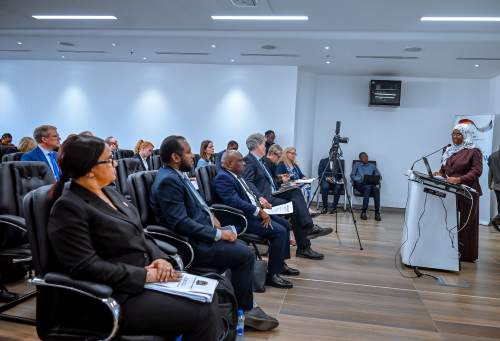
He said the current discussions would allow technical teams from both sides to assess priorities and agree on projects and areas of cooperation for the coming two years.
Once the technical discussions are concluded, the two governments are expected to formalise the agreements, including through a new development cooperation agreement. Further talks are scheduled for November 2026.
Aligning German support with Dira 2050
For Tanzania, the talks come as the country seeks to translate its ambitious Development Vision 2050 (Dira 2050) into investment and economic transformation.
Dr Tausi Kida, Permanent Secretary in the President’s Office – Planning and Executive Secretary of the National Planning Commission, said Tanzania was ready to revitalise its partnership with Germany around the country’s long-term development priorities.
Dira 2050 aims to transform Tanzania into a prosperous, resilient and inclusive upper-middle-income economy, with a stronger and more diversified economic base and significantly improved living standards.
One of its headline ambitions is to build a US$1 trillion economy by 2050 and raise per-capita income to about US$7,000, from an economy currently estimated at around US$90 billion.
Dr. Kida said the strategy also seeks to substantially reduce poverty, eliminate extreme poverty and tackle food insecurity while ensuring that economic growth does not come at the expense of natural resources and the environment.
The Tanzania-Germany partnership, she said, could play an important role in helping deliver those objectives.
Germany seeks bigger economic footprint
Germany, meanwhile, wants the relationship to become more strategic, with greater emphasis on economic growth, jobs, private-sector development and investment.
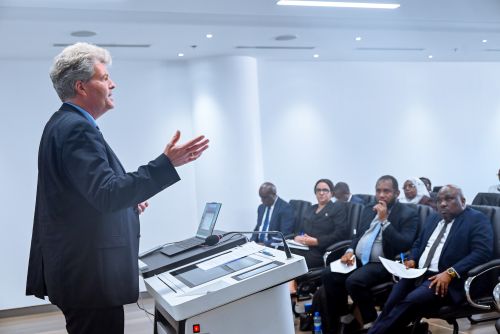
Joachim Schmitt, Head of the East and Central Africa Division at Germany’s Federal Ministry for Economic Cooperation and Development, said Germany would continue working with Tanzania but wanted future cooperation to be more closely aligned with the country’s development priorities.
The focus, he said, would be on areas capable of generating economic growth, creating employment and reducing poverty and inequality.
Germany also highlighted the importance of the rule of law, the role of civil society, peace and security as part of a stable environment for sustainable development.
Mr Schmitt said Berlin wanted to move away from a collection of small, disconnected projects towards a more coherent partnership capable of supporting Tanzania’s broader development strategy.
A key part of the new approach will be economic cooperation, private-sector development and investment, including greater involvement of German and Tanzanian companies in development projects.
That shift could give the partnership a stronger commercial dimension at a time when Tanzania is seeking to mobilise more private capital to finance its long-term transformation.
From aid to investment and partnership
The talks brought together representatives from the Union Government, including the Ministry of Finance, the President’s Office – Planning and Investment, the Ministry of Constitution and Legal Affairs and the Revolutionary Government of Zanzibar.
Germany was represented by its federal government and development cooperation institutions, including KfW and GIZ.
The discussions point to an evolving relationship in which development cooperation is increasingly being tied to investment, private-sector participation and Tanzania’s long-term economic transformation.
For Tanzania, the challenge will be to turn the broad areas identified at the negotiating table into bankable projects that create jobs, expand productive capacity and improve public services. For Germany, the opportunity lies in deepening its economic presence in one of East Africa’s largest and fastest-growing markets while supporting Tanzania’s ambitious Dira 2050 agenda.