By A Special Correspondent
Stanbic Bank Tanzania is using its Biashara na Ajira Kijani (BAK) Programme to help emerging businesses strengthen their financial capacity, improve their readiness for formal finance and contribute to job creation.
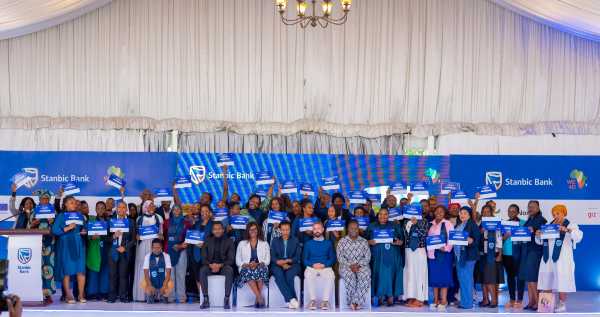
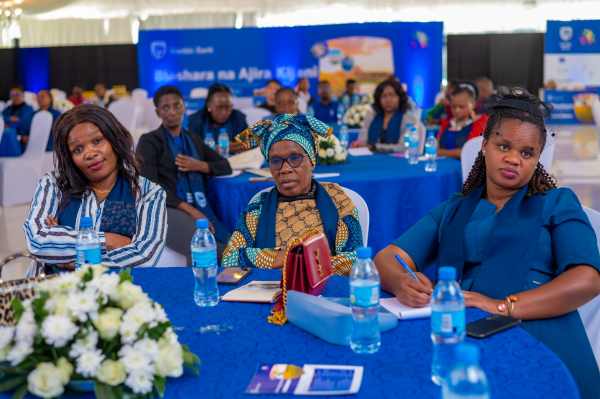
The initiative also supports Tanzania’s transition towards a more sustainable economy, with 261 entrepreneurs from Arusha, Mbeya, Mwanza and Tanga recently graduating from the programme.
Women accounted for 76 percent of the graduating cohort, while all participants operate businesses in one of five sectors central to Tanzania’s green transition: sustainable agriculture, renewable energy, the circular economy, the blue economy and green transport.
BAK is implemented through the Stanbic Biashara Incubator, with support from GIZ, the German development cooperation agency.
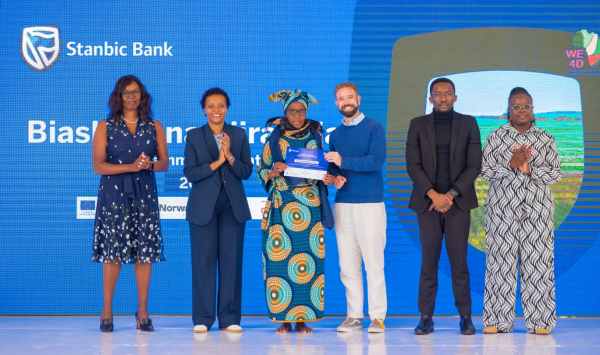
Speaking at the graduation event in Arusha, Kai Mollel, Head of the Biashara Incubator at Stanbic Bank Tanzania, said the programme focused on entrepreneurs already operating in green sectors and on addressing practical weaknesses that can constrain business growth.
“We did not set out to run a programme for one group. We set out to find people already trading in green sectors and give them what the market was not giving them,” Ms Mollel said.
The programme addresses a broader challenge facing Tanzania’s small businesses, many of which struggle to access formal finance despite having commercial potential. Inadequate financial records, unclear pricing structures, limited credit histories and difficulties demonstrating business performance can prevent otherwise viable enterprises from qualifying for formal credit.
BAK seeks to narrow that gap by strengthening the business fundamentals required to engage with formal financial institutions.
Between May and July 2026, the entrepreneurs underwent a classroom bootcamp followed by one-on-one coaching and mentorship. The training covered costing and pricing, financial record-keeping, market access and preparation for formal credit.
The graduating class comprised 77 entrepreneurs from Mbeya, 64 from Tanga, and 60 each from Arusha and Mwanza.
The strong participation of women is particularly notable, with women making up more than three-quarters of the cohort and demonstrating their growing presence in businesses linked to Tanzania’s emerging green economy.
Julian Henseli, Advisor and Technical Team Leader for the WE4D programme at GIZ, said linking enterprise development with finance was central to the initiative.
“Training on its own rarely moves a business into the formal economy. What makes this programme work is that the skills sit alongside a financial institution with a direct interest in seeing these enterprises grow,” Henseli said.
The programme’s focus on sustainable agriculture, renewable energy, the circular economy, the blue economy and green transport also reflects the expanding economic opportunities associated with Tanzania’s green transition.
Beyond their environmental value, the sectors have potential to generate new enterprises, employment and investment as demand grows for sustainable products and services.
For Stanbic, the initiative points to a broader role for financial institutions in enterprise development – helping businesses strengthen their operations and financial discipline so they can become better positioned to access and responsibly use formal finance.
The longer-term significance of BAK will depend on whether participating businesses can translate the training into stronger financial performance, expanded markets and new jobs. Its immediate contribution, however, is to strengthen the link between green entrepreneurship, business capability and access to formal finance.