

By Business Insider Reporter
Tanzania is turning to technology, stronger frontline enforcement and community-focused conservation as it seeks to tackle one of the biggest threats to its tourism economy: the rising number of human-wildlife conflicts affecting communities living alongside protected areas.
The new strategy, unveiled by the Minister for Natural Resources and Tourism, Dr. Ashatu Kijaji (pictured above), marks a shift from reacting to wildlife incidents towards preventing them before they occur. It also reflects growing recognition that the long-term success of Tanzania’s conservation model depends as much on protecting rural livelihoods as it does on safeguarding wildlife.
Speaking during a four-day strategic meeting with senior officials and heads of institutions under her ministry at Nyerere National Park, Dr. Kijaji directed conservation agencies to overhaul their operations and adopt a more results-driven approach in the 2026/27 financial year.
Her message was clear: conservation must deliver measurable benefits to the people who bear its greatest costs.
“For conservation to remain sustainable, the welfare of communities living near protected areas cannot be treated as an afterthought,” she said, calling for greater accountability, operational efficiency and smarter use of public resources.
The policy shift comes at a pivotal moment for Tanzania’s tourism industry. Wildlife tourism remains one of the country’s largest sources of foreign exchange and supports hundreds of thousands of jobs across transport, hospitality and related sectors.
Yet the industry’s success often comes at a heavy price for farmers and pastoralists whose crops, livestock and, in some cases, lives are threatened by wildlife straying beyond protected areas.
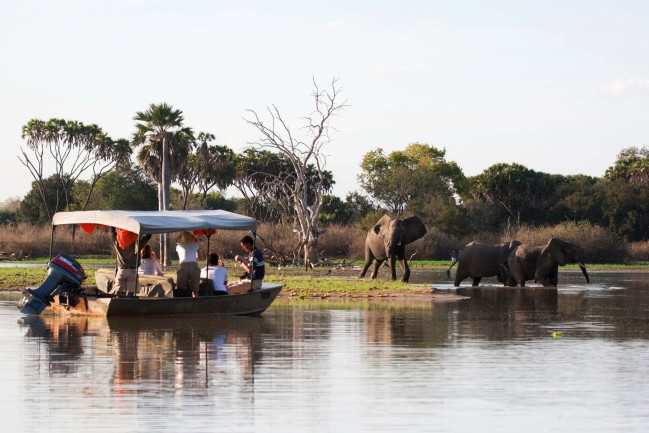
Across many parts of the country, elephant raids can destroy an entire season’s harvest overnight, while predators such as lions and leopards continue to attack livestock, fuelling tensions between conservation authorities and local communities.
Government officials increasingly acknowledge that unless these conflicts are reduced, public support for conservation – and ultimately the tourism economy itself – could weaken.
To address the problem, the ministry plans to expand the use of technology in wildlife management. The programme includes deploying drone surveillance, GPS tracking of elephant herds and other high-risk wildlife, and early-warning systems designed to alert communities before animals reach farms and settlements.
At the same time, ranger patrols will be strengthened, with rapid-response teams expected to intervene before wildlife causes significant damage. The government also plans to expand physical barriers such as reinforced fencing and beehive fences, an environmentally friendly method that has proved effective in discouraging elephants from entering farmland.
Beyond protecting communities, the reforms are intended to strengthen the economic relationship between conservation and local development.
The ministry wants to develop mechanisms that allow communities living near protected areas to receive greater economic benefits from tourism, reinforcing the idea that wildlife should be viewed not as a burden but as a valuable national asset capable of supporting local prosperity.
The choice of Nyerere National Park as the venue for the strategic meeting was significant. Covering vast wilderness areas where wildlife frequently shares boundaries with farming communities, the park illustrates the challenges facing conservation authorities across East Africa as expanding human settlements increase pressure on wildlife habitats.
The reforms also have implications beyond Tanzania’s borders. Across the region, countries are grappling with similar challenges as climate change, prolonged droughts and population growth force wildlife and people into increasingly close contact.
In neighbouring Kenya, for example, authorities continue to spend billions of shillings compensating victims of wildlife attacks, while delays in compensation have triggered protests in several conservation hotspots. Tanzania’s emphasis on prevention rather than compensation reflects a growing belief among policymakers that technology and better land management offer a more sustainable long-term solution.
The strategy also aligns with the government’s broader economic agenda of protecting tourism – one of Tanzania’s leading foreign exchange earners – while ensuring that communities living closest to the country’s wildlife also share in its benefits. If successfully implemented, the reforms could strengthen Tanzania’s reputation as a leader in sustainable conservation, demonstrating that economic growth from tourism and the protection of rural livelihoods need not be competing priorities, but complementary pillars of the country’s development strategy.