By Business Insider Reporter, Dodoma
As Tanzania pursues ambitious economic growth and fiscal reforms, the Ministry of Finance is stepping up efforts to improve public understanding of taxation and economic policy, recognising that informed citizens play a crucial role in supporting sustainable national development.
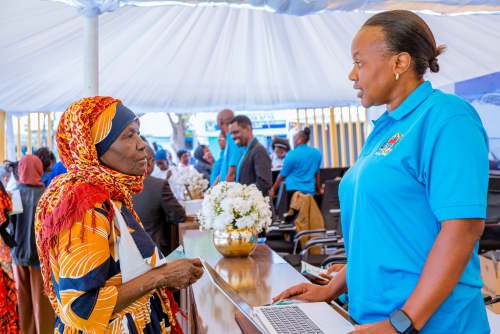
During the ongoing 2026 Public Service Week celebrations at Chinangali Park in Dodoma, officials from the Ministry’s Policy Analysis Department have been engaging directly with members of the public, explaining how tax revenues, economic policies and fiscal decisions influence everyday life and the country’s broader development agenda.
The initiative comes at a time when Tanzania is implementing a range of economic reforms aimed at sustaining growth, strengthening domestic revenue mobilisation and financing major investments in infrastructure, healthcare, education, water and energy.
Speaking during the event, Chief Financial Management Officer Abdul Dachi said the outreach programme seeks to simplify complex economic concepts and enable citizens to better understand the role of taxation and public finance in driving national development.
“We are providing information in simple and accessible language so that citizens can appreciate how tax and economic policies contribute to economic growth, social welfare and the financing of essential public services,” Dachi said.
According to him, the department has been educating visitors on key economic indicators, the performance of the national economy and the role of fiscal and economic policies in controlling inflation, promoting employment and supporting overall economic expansion.
The awareness campaign also highlights how government revenues are collected and managed, as well as the importance of evidence-based policymaking in budget planning and development implementation.
Dachi noted that economic policy formulation increasingly relies on data analysis, research findings and international best practices to ensure government decisions support both short-term economic stability and long-term development objectives.
“We are also explaining how policy research helps government make informed decisions, how international tax issues are managed, and how Tanzania safeguards its interests through bilateral tax agreements and regional economic cooperation,” he said.
The initiative reflects a broader shift towards transparency and citizen engagement in public financial management. As governments worldwide face increasing demands for accountability, public understanding of economic policy is becoming a critical component of effective governance.
Tanzania has in recent years expanded efforts to strengthen domestic revenue collection while maintaining an investment-friendly environment. The government’s 2026/27 budget places significant emphasis on economic transformation, industrialisation, digitalisation and strategic infrastructure development, all of which depend heavily on sustainable public financing.

Economists argue that improving tax literacy can help strengthen voluntary compliance, reduce misconceptions about taxation and foster greater public participation in economic policymaking.
The Ministry is also using the Public Service Week platform to educate citizens on Tanzania’s role within the global economy, the benefits of international economic partnerships and the opportunities arising from regional integration initiatives.
To broaden outreach, officials are distributing educational materials, brochures and publications while conducting one-on-one discussions with visitors at the exhibition grounds.
The approach, Dachi said, is designed to bridge the gap between policymakers and citizens by making economic information more accessible and relevant to everyday life. As Tanzania seeks to accelerate its transition towards a more competitive and resilient economy, initiatives that enhance public understanding of taxation and economic policy could prove instrumental in building trust, strengthening accountability and supporting the successful implementation of national development priorities.