By Agencies
Kenya’s globally renowned Maasai Mara National Reserve is facing a significant downturn in visitor arrivals, raising fresh questions about the sustainability, pricing strategy and competitiveness of one of Africa’s most iconic safari destinations.
New data from the Kenya National Bureau of Statistics Economic Survey 2026 shows that tourist numbers at the reserve nearly halved over the past two years, falling from approximately 420,000 visitors in 2023 to around 213,000 in 2025.
The decline has triggered debate across the East African tourism industry, with stakeholders citing a mix of rising costs, environmental pressures, capacity constraints and intensifying regional competition – including from neighbouring Tanzania’s Serengeti ecosystem.
Rising costs and shifting traveller preferences
Industry players argue that the Maasai Mara is increasingly being priced out of the mid-market safari segment, with seasonal tariff structures introduced by Narok County contributing to higher overall trip costs.
Under the current system, international visitors pay about US$100 during the low season and US$200 during the peak migration period, while Kenyan citizens are charged KSh1,500 and KSh3,000 respectively.
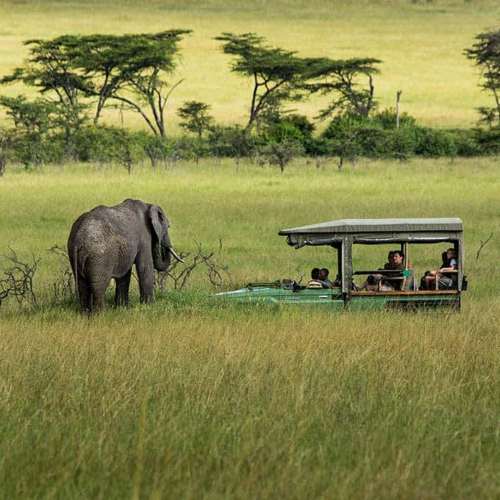
While authorities defend the model as a conservation-driven approach, operators say it has altered demand patterns.
“There has been a noticeable drop in guests to the Mara, and increasing park fees have contributed to this,” said Bainito Musumba of Private Safaris.
He noted that although higher fees have helped sustain revenue levels, they have also made the Mara less competitive compared to alternative destinations offering similar wildlife experiences at lower cost.
Regional competition intensifies
As costs rise, tourists are increasingly diversifying their safari choices across East Africa. Destinations such as Amboseli, Tsavo, northern Kenya and particularly Tanzania’s Serengeti National Park are gaining market share.
Travel agents say Tanzania’s sustained investment in international marketing and product positioning has strengthened its global visibility.
“Tanzania has invested heavily in international marketing and visibility, making the Serengeti product stronger globally,” Musumba observed, adding that travellers are also seeking less congested and more varied safari experiences.
Pressure on ecosystem and communities
Beyond pricing dynamics, stakeholders point to mounting environmental and social pressures within the Maasai Mara ecosystem.
Land subdivision, expansion of conservancies and growing human-wildlife interactions are increasingly affecting key migration corridors, raising concerns about long-term ecological balance.
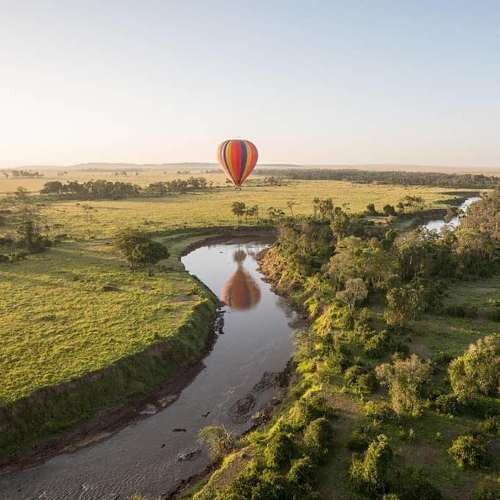
“The ecosystem is steadily being reduced,” Musumba said, warning that community dissatisfaction is also rising where tourism revenues are not sufficiently shared.
In some areas, communities have introduced additional local levies on visitors, further increasing overall travel costs and complicating pricing structures for tour operators.
Strategic shift towards controlled tourism
Narok County officials, however, maintain that the downturn is partly intentional, reflecting a strategic shift towards a low-volume, high-value tourism model designed to protect a fragile ecosystem under growing pressure.
“We intentionally moved towards managing numbers because at one point we were receiving close to 400,000 visitors annually, which places significant pressure on the Mara,” said Marley Saitoti, Assistant Director of Tourism and Wildlife in Narok County.
According to Saitoti, the reserve has historically been over-dependent on the Great Migration season between July and September, resulting in overcrowding during peak months while other periods remain underutilised.
“The Maasai Mara is an all-year-round destination. The goal is better distribution of visitors rather than concentration within a few months,” he said.
Infrastructure and conservation investments
The county government says it has responded with significant investments in infrastructure and conservation systems.
More than 200 kilometres of internal roads have been upgraded, while airstrips, entry gates, sanitation facilities and visitor rest areas have been improved. In addition, digital monitoring tools such as EarthRanger have been introduced to enhance wildlife tracking and ecosystem management, alongside speed control systems to regulate vehicle behaviour.
“We have invested heavily in ranger operations, conservation infrastructure and research facilities,” Saitoti said.
The challenge of diversification
Despite these interventions, analysts argue that the Maasai Mara must broaden its tourism product offering if it is to remain globally competitive.
The reserve’s heavy reliance on the Great Migration is seen as a structural vulnerability in an increasingly diversified safari market.
“There is need to expand into walking safaris, cultural tourism and conservation-based experiences while enforcing stricter zoning and vehicle controls,” said Joseph Kithitu, Chairman of the Kenya Association of Travel Agents.
He added that climate change is emerging as an additional risk factor, with shifting rainfall patterns and prolonged droughts affecting wildlife movement and visitor experience.
Outlook: repositioning a global icon
While the decline in arrivals presents short-term challenges for Kenya’s tourism earnings, stakeholders believe it may also offer an opportunity to reset the Maasai Mara’s positioning in the global market. With the right balance between conservation, pricing and product diversification, industry leaders argue that the reserve can still maintain its status as one of the world’s leading safari destinations – albeit under a more controlled and sustainable model.