By Joseph Mahumi, Washington D.C.
Tanzania has stepped up its global investment drive, positioning itself as a strategic gateway for American capital as it seeks to accelerate growth and deliver on its long-term ambition of becoming a US$1 trillion economy by 2050.
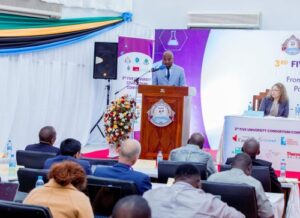
Leading a high-level delegation at an investment forum organised by the Business Council for International Understanding on the sidelines of the IMF/World Bank Spring Meetings 2026 in Washington D.C., Finance Minister Khamis Mussa Omar outlined a broad portfolio of opportunities across key sectors, while signalling a shift towards value-added investment and industrialisation.
The minister said Tanzania’s economy remains on a steady growth trajectory, expanding by 5.5 per cent in 2024 and projected to reach 6.0 percent in 2025, driven by agriculture, manufacturing, mining, construction and financial services.
This macroeconomic stability, he argued, is underpinned by ongoing reforms aimed at improving the business climate and strengthening private sector participation.
“We are focused on creating a competitive and predictable investment environment that supports long-term capital and allows the private sector to play a leading role in economic transformation,” Omar told investors.
From resource extraction to value addition
A central theme of Tanzania’s pitch was its intention to move up the value chain, particularly in the extractive sector. The country holds significant deposits of strategic minerals such as graphite and nickel – critical inputs in global clean energy supply chains – but is increasingly seeking partnerships that extend beyond extraction to processing and manufacturing.

This approach reflects a broader policy shift seen across Africa, where governments are attempting to capture more value domestically amid rising global demand for battery minerals and energy transition inputs. For Tanzania, it also aligns with industrialisation goals embedded in its development frameworks.
Expanding US–Tanzania economic ties
Trade and investment relations between Tanzania and the United States have strengthened in recent years, with bilateral trade reaching US$1.4 billion in 2024. US foreign direct investment has also grown, rising from US$12.3 million in 2020 to US$40 million in 2023 – albeit from a relatively low base compared to other major investors in the region.
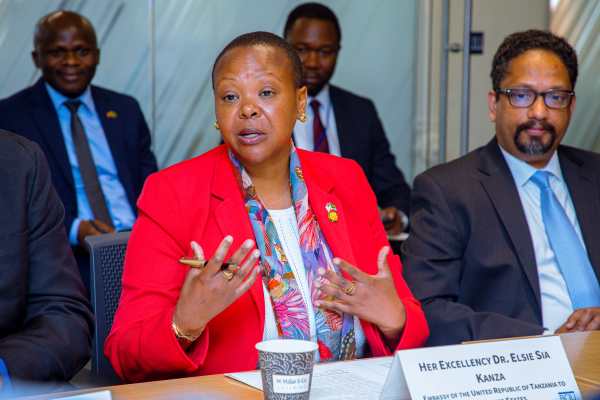
Elsie Sia Kanza, Tanzania’s ambassador to Washington, described the engagement with American investors as part of a wider economic diplomacy strategy aimed at diversifying sources of capital and technology.
She noted that Tanzania’s Development Vision 2050 places the private sector at the centre of economic expansion, particularly in financing large-scale infrastructure and industrial projects.
Sectoral opportunities widen
Beyond mining, Tanzania is pitching opportunities in agriculture, where it aims to position itself as a regional food basket through modern farming and agro-processing investments. With a large arable land base and growing domestic and regional demand, the sector is seen as a critical pillar for inclusive growth.
Investors at the forum also expressed interest in healthcare, logistics infrastructure – particularly ports – and digital technologies, reflecting Tanzania’s expanding consumer market and strategic geographic position linking East and Central Africa.
The digital economy, in particular, is emerging as a new frontier. With a youthful population and rising mobile penetration, demand for digital services is accelerating, creating opportunities for US technology firms.
Additionally, proposals around agricultural insurance and improved seed systems signal growing investor interest in climate resilience and productivity in the farming sector – areas increasingly prioritised by development finance institutions.
Strategic positioning in a competitive region
Tanzania’s renewed investment push comes amid intensifying competition across East Africa, where countries such as Kenya and Rwanda have aggressively marketed themselves as investment hubs.
Dar es Salaam’s strategy, however, is anchored on its scale – both in terms of natural resources and domestic market – as well as major infrastructure investments, including ports, railways and special economic zones.
Crucially, the government is also emphasising regulatory reforms and institutional coordination to address longstanding investor concerns around bureaucracy and policy predictability.
For American investors, Tanzania presents a relatively under-penetrated market with long-term growth potential. For Tanzania, attracting such capital – particularly in high-value sectors – will be key to transitioning from a resource-based economy to a more diversified and industrialised one.
As global capital becomes more selective, the pace at which Tanzania translates investment pledges into bankable projects and executed deals will ultimately determine the success of its ambition to become a leading investment destination on the continent.