
By Business Insider Reporter
A regional agriculture initiative backed by the African Development Bank (AfDB) Group is beginning to reshape food security systems across parts of East Africa, delivering tangible gains in seed production, early warning systems, and institutional resilience at a time of heightened climate and geopolitical pressures.
The Strengthening Emergency Preparedness and Response to Food Crisis (SEPAREF) project – implemented by the Food and Agriculture Organization (FAO) – has so far produced more than 956 tonnes of improved seeds and provided technical support to over 160,000 farmers across Burundi, Comoros, Somalia, and South Sudan.
Launched in response to worsening food shortages linked to global supply chain disruptions and rising geopolitical tensions, the initiative reflects a broader strategic shift among development finance institutions toward building long-term agricultural resilience rather than relying on short-term humanitarian interventions.
From crisis response to structural resilience
The project’s design highlights a growing recognition that East Africa’s food insecurity challenges are increasingly structural – driven by climate variability, weak seed systems, and limited institutional preparedness.
By focusing on early generation seeds (EGS), SEPAREF is addressing one of the most critical bottlenecks in agricultural productivity: access to high-quality, climate-resilient inputs. The seeds produced under the programme are drought- and climate-tolerant, offering farmers improved yields in increasingly unpredictable weather conditions.
In parallel, the initiative has rehabilitated irrigation infrastructure and seed storage facilities while supporting more than 250 seed out-growers – an intervention aimed at strengthening local seed markets and reducing reliance on imports.
Digital early warning systems gain traction
Beyond production, one of the project’s most significant contributions lies in the digitisation of early warning systems. These platforms, now operational across participating countries, provide real-time climate and agricultural advisory information to farmers, enabling more informed decision-making.
More than 160,000 farmers have already been registered on these systems, marking a notable step toward data-driven agriculture in a region where access to timely information has historically been limited.
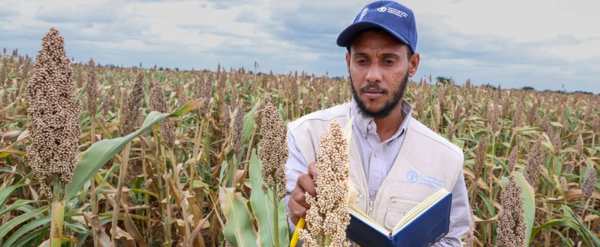
The integration of digital tools into national agricultural systems is particularly critical as climate shocks – ranging from prolonged droughts to erratic rainfall – become more frequent and severe. Early warning systems not only reduce crop losses but also help governments anticipate and respond to food crises more effectively.
Regional coordination and policy alignment
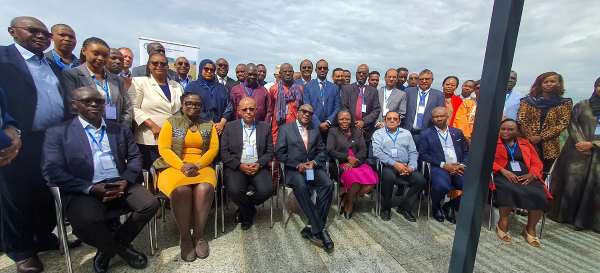
Progress under the programme was reviewed during a high-level validation workshop held in Nairobi in early March 2026, bringing together stakeholders from government ministries, national agricultural research systems, private sector actors, and development partners.
The meeting underscored the importance of regional coordination in addressing food security challenges that transcend national borders.
Institutions such as national seed councils and regulatory frameworks are being strengthened to ensure that improved seed varieties meet quality standards and can be distributed efficiently.
Partnerships with research bodies, including the International Institute of Tropical Agriculture, are also enhancing the capacity of local institutions to develop and disseminate improved agricultural technologies.
Financing constraints and sustainability risks
Despite the progress, stakeholders caution that sustaining and scaling these gains will require significant financial and policy commitments. Limited government budgets, continued dependence on donor funding, and constrained access to capital for seed enterprises remain major hurdles.
Pascal Sanginga, the Bank’s Regional Manager for Agriculture and Agro-Industries, emphasised the need to transition from pilot successes to large-scale implementation.
He noted that scaling up such initiatives could play a critical role in reducing Africa’s grain import bill while creating jobs and strengthening food systems.
Similarly, FAO’s Kenya Representative, Farayi Zimudzi, highlighted the importance of embedding seed certification systems and digital tools into national frameworks, alongside harmonised regional standards and stronger public–private partnerships.
Implications for Tanzania and the wider region
While Tanzania is not among the four countries currently covered under SEPAREF, the programme’s outcomes carry significant implications for the broader East African Community (EAC) region.
Tanzania, which continues to prioritise agricultural transformation under its development agenda, faces similar challenges – particularly in seed quality, climate resilience, and market access. Lessons from SEPAREF could inform ongoing reforms aimed at strengthening Tanzania’s seed systems and expanding the use of digital agricultural solutions.
Moreover, as regional integration deepens, improved seed systems and harmonised standards could facilitate cross-border trade in agricultural inputs, enhancing food security across the bloc.
Forward view
As East Africa grapples with the dual pressures of climate change and global market volatility, initiatives such as SEPAREF signal a shift toward more integrated, technology-driven, and resilience-focused agricultural systems.
The challenge ahead will lie in scaling these interventions beyond pilot countries and ensuring that national governments, private sector actors, and development partners align resources and policies to sustain momentum. If successfully expanded, such programmes could mark a turning point in the region’s long-standing struggle with food insecurity—transforming it from a cycle of crisis response into a model of proactive resilience.