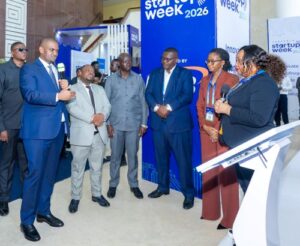
By Correspondent Benny Mwaipaja
Tanzania is intensifying its collaboration with the African Trade and Investment Development Insurance (ATIDI) as part of a broader strategy to improve the investment climate, crowd in private capital, and fast-track large-scale infrastructure projects critical to long-term economic transformation.
Speaking at a high-level investment workshop held at the Hyatt Regency Dar es Salaam, The Kilimanjaro, Finance Minister Khamis Mussa Omar underscored the importance of risk mitigation instruments in unlocking financing for priority sectors such as energy, transport, and industrial development.
“Tanzania is not only a member but a founding partner of ATIDI – an institution designed to deliver African solutions to African challenges,” Omar said, highlighting the agency’s growing role in reshaping investor perceptions of risk across the continent.
De-risking as a catalyst for investment
Despite Africa’s vast investment potential, the continent has historically faced elevated risk premiums due to perceptions around political, credit, and operational risks.
ATIDI – formerly known as the African Trade Insurance Agency – has emerged as a key institution addressing this gap by offering political risk insurance, credit guarantees, and trade facilitation tools.
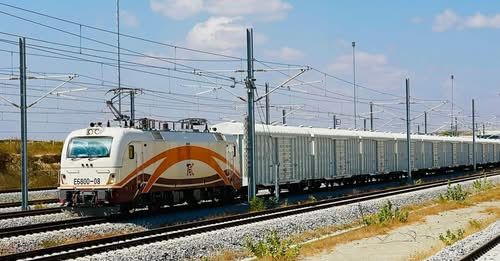
According to Omar, these instruments are already yielding tangible results in Tanzania, where projects valued at approximately US$7.8 billion have benefited from ATIDI-backed risk cover. Notably, this includes components of the Standard Gauge Railway (SGR), one of the country’s flagship infrastructure investments.
“Risk mitigation is central to attracting long-term capital. By strengthening investor confidence, ATIDI is enabling both local and international financiers to participate in transformative projects,” he noted.
Aligning with Dira 2050
The strengthened partnership aligns closely with Tanzania’s Development Vision 2050 (Dira 2050), which seeks to transition the country into a high-income economy through industrialisation, infrastructure expansion, and private sector-led growth.
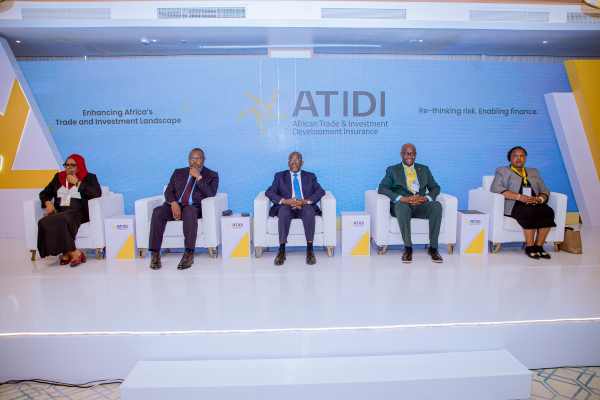
The government aims to significantly scale up GDP – targeting a tenfold increase – amid a rapidly growing population. Achieving this ambition will require sophisticated financial ecosystems capable of mobilising large-scale capital, particularly from private investors.
Omar emphasised that institutions like ATIDI will be instrumental in bridging financing gaps, particularly in capital-intensive sectors such as energy and logistics.
ATIDI’s expanding footprint in Tanzania
ATIDI’s Chief Executive Officer, Manuel Moses, reaffirmed the institution’s commitment to Tanzania, noting that the country remains one of its most strategic markets.
Since its establishment in 2001, ATIDI has supported over US$93 billion in trade and investment across Africa. In Tanzania, its portfolio spans a wide range of sectors, including:
- Transport infrastructure (railways, roads, bridges, airports)
- Energy projects coordinated by TANESCO and the Rural Energy Agency (REA)
- Telecommunications and housing developments
- Financial sector support, including local banks and SMEs
Moses also highlighted ATIDI’s role in financing social and environmental projects, including a US$200 million national grid resilience initiative and a US$150 million sanitation programme across multiple regions.
“These investments are not only improving infrastructure but also enhancing service delivery and supporting inclusive economic growth,” he said.
Strategic implications for Tanzania
The deepening partnership signals a shift in Tanzania’s investment strategy – moving beyond traditional public financing toward blended finance models that leverage private capital.
By integrating de-risking mechanisms into project structuring, Tanzania is positioning itself as a more competitive destination for global investors, particularly in an environment where capital is increasingly selective and risk-sensitive.
For policymakers, the collaboration also underscores the importance of institutional credibility and regulatory predictability in attracting long-term investment flows. As Tanzania accelerates implementation of Dira 2050, partnerships with institutions like ATIDI are expected to play a decisive role in bridging financing gaps, enhancing project bankability, and ultimately sustaining the country’s growth trajectory.