By Business Insider Correspondent
Tanzania has called on the African Trade and Investment Development Insurance (ATIDI) to deepen its engagement in the country, particularly in supporting private sector expansion as a cornerstone for achieving its long-term development blueprint, Dira 2050.
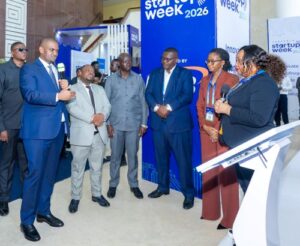
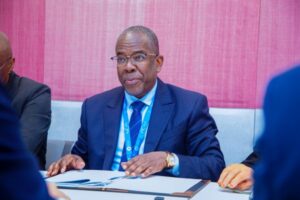
The appeal was made by Finance Minister, Ambassador Khamis Mussa Omar, during high-level talks with an ATIDI delegation led by Board Chairman, Prof. Kelly Kingsly, at the Ministry of Finance offices in Dodoma.
Private sector at the core of Dira 2050
Omar underscored that Tanzania’s forthcoming Dira 2050 places the private sector at the centre of economic transformation, with an ambitious target of contributing 70 percent of the national economy, compared to 30 percent from the public sector.
Achieving this shift, he noted, will require sustained reforms to improve the investment climate, enhance access to finance, and mitigate risks that often deter private capital.
“The success of Dira 2050 will depend on how effectively we empower the private sector. This includes strengthening financial systems, improving the tax framework, and ensuring a predictable policy environment,” Omar said.

He added that under the leadership of President Samia Suluhu Hassan, the government has already initiated tax system reforms aimed at easing the cost of doing business and attracting investment. A presidential commission tasked with reviewing the tax regime has submitted its recommendations, signalling further policy adjustments ahead.
ATIDI’s strategic role in risk mitigation
ATIDI, a pan-African multilateral insurer, plays a critical role in de-risking trade and investment across the continent by providing political risk insurance, credit guarantees, and other financial instruments.
Omar noted that Tanzania has already benefited from ATIDI-backed projects in sectors such as trade and infrastructure, but emphasised the need to scale up collaboration to unlock greater private sector participation.
“Institutions like ATIDI are essential in addressing Africa’s risk perception challenges, which often inflate the cost of capital and limit investment flows,” he said.
Financing inclusive growth
The Finance Minister also highlighted the importance of the financial sector in delivering inclusive growth, stressing that access to finance remains a key constraint for small and medium-sized enterprises (SMEs), which form the backbone of Tanzania’s economy.
Efforts to expand financial inclusion – through digital banking, credit schemes, and regulatory reforms – are expected to play a pivotal role in enabling businesses to scale and compete regionally.
ATIDI commits to deepening engagement
For his part, Prof. Kingsly reaffirmed ATIDI’s commitment to working closely with Tanzania to support domestic enterprises and strengthen institutional capacity.
He said the organisation is prioritising investment facilitation, strategic advisory services, and policy advocacy to create a more enabling business environment across member states.
“Our focus is not only on insuring investments but also on building ecosystems that allow businesses to thrive sustainably,” he said.
ATIDI’s interventions are aligned with the United Nations Sustainable Development Goals (SDGs), particularly those related to economic growth, infrastructure development, and industrialisation.
PPPs and infrastructure development
A key area of focus identified during the discussions was the expansion of Public-Private Partnerships (PPPs) as a mechanism for financing infrastructure and development projects.
Prof. Kingsly emphasised that PPP frameworks can help governments maximise the value of public investments by leveraging private capital, expertise, and innovation.
“Effective use of PPPs not only mobilises additional resources but also enhances efficiency and accelerates project delivery,” he noted.

For Tanzania, which continues to invest heavily in infrastructure – from transport corridors to energy projects – PPPs are increasingly seen as a viable pathway to bridge financing gaps without overburdening public debt.
Broader economic context
The renewed push for private sector-led growth comes at a time when Tanzania is navigating a complex global economic environment marked by tightening financial conditions and shifting development financing patterns.
With external concessional funding becoming less predictable, countries across Africa are being compelled to rely more on domestic resources and private capital to sustain growth.
In this context, partnerships with institutions like ATIDI are gaining strategic importance, as they help reduce investment risks and attract both regional and international investors.
Aligning policy, finance and investment
The engagement between Tanzania and ATIDI reflects a broader policy direction aimed at aligning financial systems, investment frameworks, and development priorities.
If effectively implemented, the collaboration could accelerate Tanzania’s transition toward a private sector-driven economy – unlocking new opportunities in manufacturing, agriculture, services, and infrastructure.
However, analysts caution that success will depend on the pace of reforms, particularly in areas such as regulatory efficiency, contract enforcement, and access to long-term financing. As Tanzania advances toward Dira 2050, the ability to mobilise private capital at scale – while ensuring inclusivity and sustainability – will be critical in determining whether the country can achieve its ambitious economic transformation goals.