By Business Insider Reporter
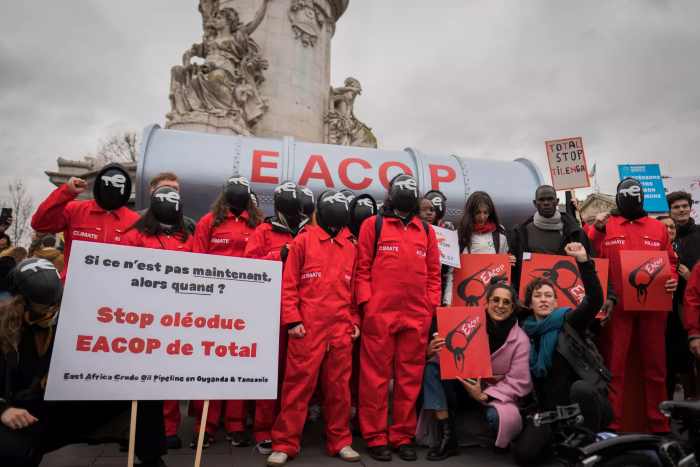
A landmark climate lawsuit against TotalEnergies in France is being closely watched in East Africa, where campaigners and investors alike see potential implications for the East African Crude Oil Pipeline (EACOP) – one of the region’s most ambitious energy infrastructure projects.
Hearings opened on Thursday (February 19, 2026) in what legal experts describe as the first major case seeking to apply France’s “duty of vigilance” law directly to climate change. Judges are being asked to determine whether TotalEnergies must curb its fossil fuel production to rein in greenhouse gas emissions, a ruling that could reshape the company’s global investment strategy.
For East Africa, the stakes are particularly high. TotalEnergies is the lead backer of the East African Crude Oil Pipeline (EACOP), a planned 1,443-kilometre pipeline designed to transport crude oil from Uganda’s Lake Albert region to the Tanzanian port of Tanga. The project is central to Uganda’s strategy to become an oil producer and to Tanzania’s ambition to position itself as a regional energy and logistics hub.
A legal test with commercial consequences
The lawsuit was filed by a coalition of civil society organisations and local authorities under France’s duty of vigilance law, which requires large multinationals to identify and prevent serious human rights abuses and environmental harm linked to their operations and supply chains.
Plaintiffs argue the law obliges TotalEnergies to assess the climate risks of its activities and take concrete steps to reduce emissions.
If the court agrees, analysts say the ruling could force TotalEnergies to reassess capital allocation across its global portfolio – including long-cycle oil projects such as EACOP.
“This is not just a legal question; it’s a business risk issue,” said a Nairobi-based energy economist. “A judgment against Total could increase compliance costs, delay projects, or even make some developments less bankable in the eyes of international lenders.”
TotalEnergies has rejected the claims, arguing that the duty of vigilance law does not apply to climate change. During the hearing, one of the company’s lawyers said that even if Total, which accounts for less than 2 percent of global oil production, were to shut down, global warming would continue.
EACOP already under scrutiny
EACOP is no stranger to legal and reputational challenges. TotalEnergies has previously faced cases under the same French law over its backing of the pipeline, with critics alleging coercion and intimidation of communities along the route.
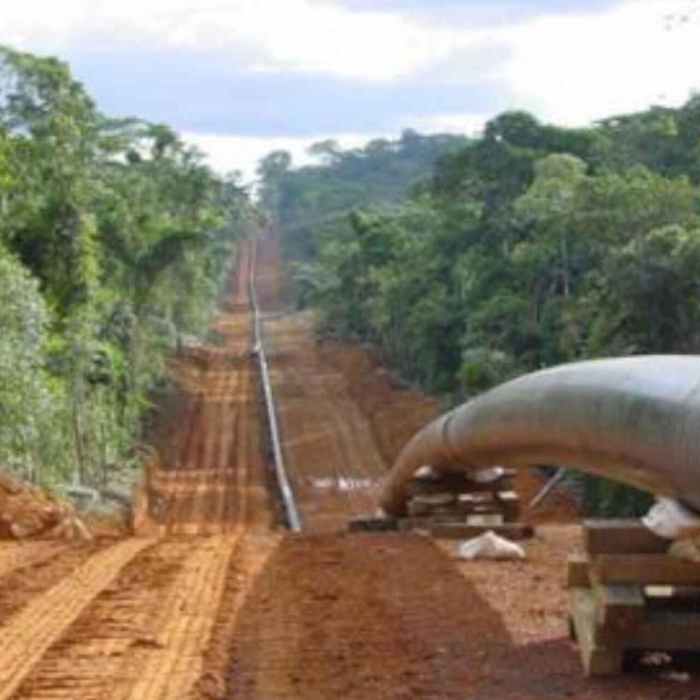
Human rights groups say the project could displace more than 100,000 people across Uganda and Tanzania.
While TotalEnergies and its partners insist that resettlement is being handled in line with national laws and international standards, the controversy has had tangible financial effects. Several international banks and insurers have declined to finance the project, citing environmental, social and governance (ESG) concerns.
A climate-focused ruling in France could deepen those concerns.
“For lenders, this case adds another layer of uncertainty,” said a regional project finance advisor. “Even if EACOP is legally permitted in East Africa, adverse judgments in Europe can influence credit committees and raise the cost of capital.”
Regional growth versus global climate pressure
For Uganda and Tanzania, EACOP promises significant economic gains, including export revenues, infrastructure investment and jobs.
Governments in the region have consistently framed the pipeline as a development project, arguing that Africa should be allowed to exploit its natural resources to support industrialisation.
However, the lawsuit highlights the growing tension between those development ambitions and global climate litigation that increasingly targets multinational corporations at their home bases.
African campaigners opposing EACOP see the French case as a turning point.
“This case matters because it asks whether TotalEnergies can keep expanding oil and gas with no consequences,” said Balach Bakundane, a community organiser with the EACOP Host Communities Organisation. “If there is to be justice, we need to draw a line in the sand.”
What it means for investors and policymakers
For business leaders and policymakers in East Africa, the case underscores a shifting risk landscape.
Large infrastructure projects linked to fossil fuels now face not only local regulatory and political hurdles, but also legal exposure in foreign jurisdictions where project sponsors are headquartered.
Even if EACOP proceeds as planned, observers say future phases of oil and gas development in the region may face tougher scrutiny, longer approval timelines and higher financing costs.
“The era when oil projects were judged purely on reserves and engineering is over,” said the energy economist. “Climate litigation is becoming a material factor – and this case against TotalEnergies could accelerate that shift.” A ruling is expected later this year. Whatever the outcome, the proceedings in France are already sending a clear signal: courtrooms far from East Africa can still shape the region’s energy and business future.