
By Business Insider Reporter
Kenya’s decision to reopen its border with Somalia in April, after nearly 15 years of closure, could reshape trade flows across the wider East African region – if security concerns are effectively managed.
President William Ruto announced that two key crossings, including the Mandera Border Post, will resume operations following extensive security assessments and enhanced deployment of security forces.
The border was shut in October 2011 when Kenya launched a military incursion into Somalia to counter the militant group al-Shabab, whose attacks inside Kenya included the 2013 Westgate shopping centre assault in Nairobi and the 2015 Garissa University attack.
While security remains central to the decision, the economic implications extend well beyond the two neighbouring countries.
Reconnecting a disrupted trade route
The Kenya–Somalia frontier spans approximately 680 kilometres and historically functioned as a vital corridor for livestock, agricultural produce, consumer goods and informal cross-border commerce.
Its prolonged closure disrupted supply chains linking northern Kenya, southern Somalia and, indirectly, markets across the East African Community (EAC).
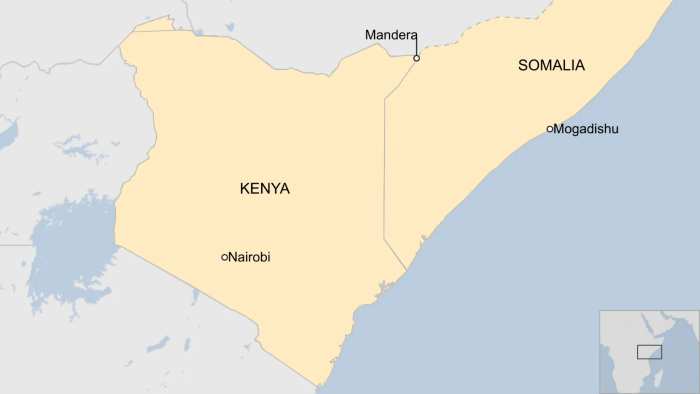
Mandera and surrounding counties, largely populated by ethnic Somali communities with strong commercial ties across the border, have operated below potential for more than a decade.
Reopening formal crossing points could restore legal trade channels, reduce reliance on informal routes and improve customs revenue collection.
For the wider region, this move potentially reconnects Somalia more fully to East Africa’s trade architecture, especially as Somalia deepens economic engagement with regional blocs.
Implications for regional supply chains
Somalia’s economy is heavily dependent on livestock exports, fisheries and remittances. Kenya, by contrast, serves as a logistics hub for East Africa, anchored by the Port of Mombasa and its expanding transport corridors.
Re-establishing structured border trade could enable: increased livestock exports through Kenyan ports, improved movement of food commodities into Somalia, growth in wholesale and retail distribution networks in northern Kenya and greater financial inclusion through formal banking and mobile money channels
For businesses operating in the region, particularly in agribusiness, logistics and fast-moving consumer goods, the reopening presents an opportunity to formalise and scale previously fragmented trade networks.
A gateway to broader regional integration
The decision also carries strategic weight for regional integration. East Africa is pursuing deeper economic cooperation under frameworks such as the East African Community (EAC) and the African Continental Free Trade Area (AfCFTA). Cross-border infrastructure and trade facilitation are central pillars of these ambitions.
If security conditions stabilise, the Kenya–Somalia corridor could evolve into a complementary trade route alongside established links connecting Kenya with Ethiopia, Uganda and Tanzania.
This would diversify transport networks and potentially reduce congestion at other border posts, while strengthening economic ties in the Horn of Africa.
Balancing opportunity with risk
However, the reopening is not without risk. A recent report by the Mogadishu-based Hiraal Institute warned that al-Shabab has regained territory in central Somalia, raising concerns about long-term stability.
Kenya has previously delayed reopening plans due to renewed attacks.
Illicit trade, including weapons and contraband goods, has also been a long-standing concern along the frontier. Effective customs enforcement, digital tracking systems and coordinated intelligence-sharing will be essential to ensure that expanded trade does not compromise security.
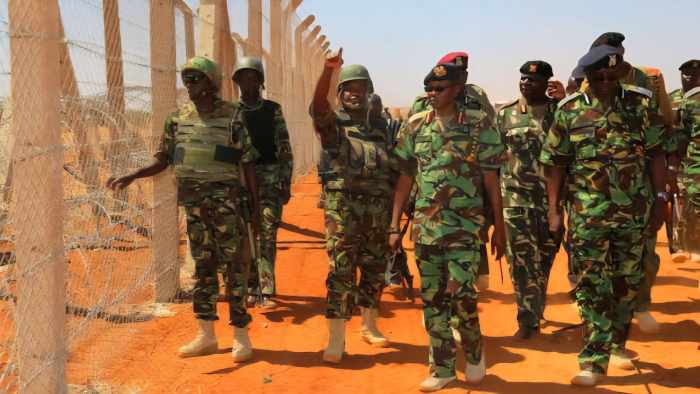
For investors, the key determinant will be predictability. If Kenya demonstrates that enhanced security deployment and monitoring mechanisms can mitigate threats, confidence in northern corridor investments could strengthen.
Economic revitalisation for frontier counties
For Mandera and neighbouring counties, the reopening offers prospects for economic revitalisation. Formal trade routes can stimulate warehousing, transport services, retail expansion and financial services growth. Small and medium-sized enterprises stand to benefit from improved market access and reduced transaction costs.
In the longer term, cross-border economic activity could also help address underlying drivers of instability, including unemployment and economic marginalisation.
A regional test case
The reopening of the Kenya–Somalia border is more than a bilateral decision; it is a test case for how East Africa balances security and commerce in fragile environments.
If managed effectively, the move could unlock new trade flows, integrate Somalia more firmly into regional markets and strengthen East Africa’s position as an interconnected economic bloc.
If mismanaged, it risks reinforcing investor caution in a region already navigating complex geopolitical and security dynamics. For now, the business community will be watching closely – not only for the April reopening, but for evidence that security stabilisation and economic integration can advance together across the Horn of Africa.