By Business Insider Reporter
The appointment of Ahmed Farah as Executive Director of the East African Business Council (EABC) signals a strategic shift for the region’s apex private-sector body at a time when the East African Community (EAC) faces mounting trade, regulatory and competitiveness challenges.
Farah’s appointment, announced on February 10, 2026, by EABC Chairperson John Lual Akol Akol, follows a competitive recruitment process overseen by the Council’s Executive Board. He takes over substantive leadership of the Secretariat at a critical juncture for the regional business bloc.
A technocrat for a complex trade environment
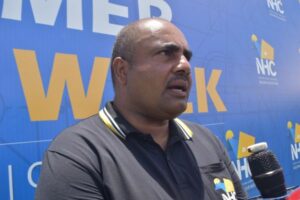
A seasoned trade and investment policy expert, Farah (pictured above) brings over two decades of experience across East Africa’s integration and private-sector landscape.
He previously served as Country Director for Kenya at TradeMark Africa (formerly TradeMark East Africa), where he led programmes on trade facilitation, customs modernisation, corridor efficiency and private-sector competitiveness.
His résumé also includes leadership roles as Chief Executive Officer of the Kenya National Chamber of Commerce and Industry, as well as senior advisory positions at Deloitte East Africa and PwC – giving him both policy and corporate experience.
For EABC members, this combination is significant.
The East African private sector is grappling with persistent non-tariff barriers, high logistics costs, fragmented regulatory regimes and uneven implementation of regional agreements. Despite progress under the EAC Customs Union and Common Market frameworks, cross-border trade remains costly and administratively burdensome.
Farah’s background in trade facilitation and corridor performance directly aligns with these bottlenecks.
Implications for the EAC business community
EABC represents private-sector associations and corporates across the eight EAC member states. Established in 1997, it serves as the official voice of business in the regional integration process.
Farah’s appointment is expected to influence the business community in three key ways:
One, stronger advocacy at the highest levels.
EABC has intensified its push for the removal of non-tariff barriers and the reduction of intra-regional trade costs. With experience engaging donors, governments and multilateral institutions, Farah is well positioned to strengthen high-level advocacy at ministerial and Heads of State levels.
Business leaders are likely to expect more assertive engagement on issues such as harmonisation of standards, digital customs systems, taxation inconsistencies and mobility of labour and capital.
Second, improved public–private dialogue.
One of EABC’s core mandates is facilitating dialogue between the private sector and EAC institutions. Farah’s track record in navigating complex regulatory environments and fostering public–private partnerships suggests a more structured and data-driven engagement model.
At a time when regional policies – ranging from industrialisation strategies to digital trade frameworks – are evolving rapidly, businesses are seeking predictability and consultation before policy shifts are implemented.
Third, resource mobilisation and institutional strengthening.
EABC’s effectiveness depends heavily on sustainable funding and strong institutional capacity. Farah’s experience in donor relations and programme management could unlock new funding streams and technical partnerships, strengthening the Secretariat’s ability to conduct research, advocacy and member services.
For the EAC private sector, a stronger Secretariat translates into more coordinated regional positions and better follow-through on policy commitments.
A critical moment for regional integration
Farah assumes office at a delicate time for the EAC. The bloc has expanded membership in recent years, broadening market size but also increasing regulatory complexity. Meanwhile, global economic volatility, supply chain disruptions and protectionist tendencies are testing the resilience of regional trade frameworks.

Intra-EAC trade still accounts for a modest share of total trade compared to other regional blocs globally, highlighting untapped potential. Businesses across Tanzania, Kenya, Uganda, Rwanda, Burundi, South Sudan, the Democratic Republic of Congo and Somalia are pushing for faster implementation of agreed protocols.
EABC has recently advocated for raising caps on duty-free goods and accelerating the elimination of non-tariff barriers – issues that directly affect manufacturers, traders and logistics operators.
Farah succeeds Adrian Raphael Njau, who had been serving in an acting capacity following the departure of former Executive Director John Bosco Kalisa in 2024.
Towards a borderless East Africa?
In welcoming the appointment, Chairperson Akol said Farah’s technical expertise and leadership capacity would strengthen EABC’s role in promoting regional economic integration.
For businesses operating across East Africa, the expectations are clear: reduced compliance costs, predictable trade rules, efficient border systems and a genuinely integrated common market.
Whether Farah can translate technical expertise into tangible policy wins will shape not only EABC’s credibility but also the pace at which East Africa moves towards its long-standing ambition of a seamless, competitive regional market. For the region’s business community, the appointment represents more than a leadership change – it is a test of whether the private sector’s voice can meaningfully influence the next phase of East African integration.