
By Business Insider Correspondent, Zanzibar
Zanzibar is set to make a major investment in specialised healthcare with plans to begin construction of a Cancer Institute this year, a move expected to ease the financial and social burden of overseas treatment while strengthening the islands’ health economy.
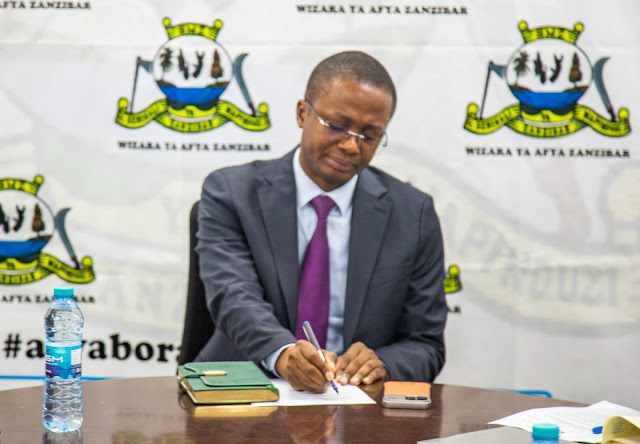
The Permanent Secretary in the Zanzibar Ministry of Health, Dr. Mngereza Mzee Miraji (pictured), said the Revolutionary Government of Zanzibar intends to complete the project within two years.
Once operational, the institute will provide cancer diagnosis and treatment services locally, reducing the need for patients to travel to Mainland Tanzania or abroad – journeys that have long drained household incomes and public health budgets alike.
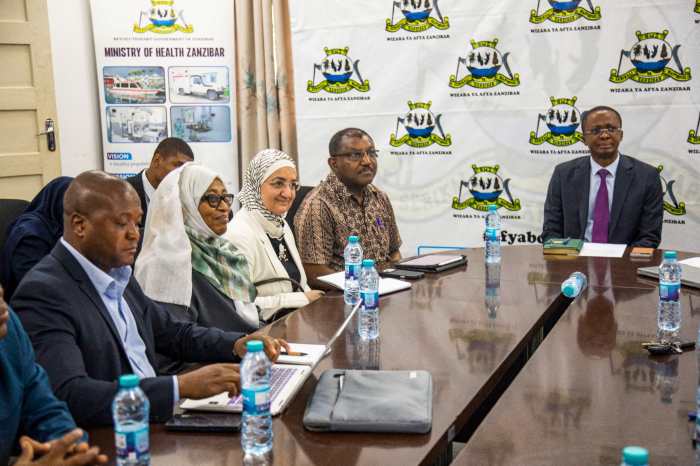
Dr. Miraji made the remarks after receiving a delegation from the International Atomic Energy Agency (IAEA), led by Mr. Gashaw Gebeyehu Wolde, Acting Director of the Division for Technical Cooperation for Africa, accompanied by Ms Azza Kashlan, Programme Management Officer.
The meeting underscored Zanzibar’s growing engagement with international partners as it seeks to modernise its health infrastructure and build local capacity in specialised care.
Cancer treatment has historically been a costly gap in Zanzibar’s health system. Patients requiring radiotherapy or advanced diagnostics have often had to seek care outside the islands, incurring high travel, accommodation and treatment expenses. For government, these referrals have also translated into rising health expenditures.
The planned Cancer Institute is therefore being viewed not only as a public health intervention, but also as a strategic investment with long-term economic returns through cost containment and improved productivity.
IAEA has signalled readiness to support Zanzibar’s ambitions. Mr Wolde said the agency is prepared to facilitate specialised training for health professionals abroad, ensuring that when the institute opens it will be staffed by skilled personnel capable of delivering quality cancer care. Such capacity building is critical, as cancer services require highly trained oncologists, medical physicists, radiographers and technicians.
The initiative aligns with IAEA’s broader mandate of supporting the peaceful use of nuclear science and technology in health, agriculture and industry.
In healthcare, the agency has played a key role across Africa in strengthening radiotherapy services, cancer diagnostics and nuclear medicine, often in partnership with national governments.
Speaking at the same engagement, the Director General of the Tanzania Atomic Energy Commission, Prof Najat Kassim Mohammed, said the IAEA leadership’s visit aimed to assess health and agriculture projects funded by the agency in Tanzania, including Zanzibar. The visit, she noted, provides an opportunity to evaluate progress, share lessons and identify areas where international technical assistance is delivering tangible benefits to citizens.
For Zanzibar, the proposed Cancer Institute fits within a wider push to upgrade health infrastructure and reduce dependence on external treatment referrals. As non-communicable diseases, including cancer, continue to rise across East Africa due to demographic shifts and lifestyle changes, governments are increasingly under pressure to invest in specialised care. If delivered on schedule, the institute could position Zanzibar as a regional centre for cancer treatment within the islands, improving health outcomes while keeping treatment spending within the local economy. For policymakers, the project represents a convergence of public health priorities and prudent economic planning – an investment designed to save lives, reduce costs and strengthen the resilience of the health system over the long term.