
By Business Insider Reporter
The World Health Organization (WHO) has unveiled new guidelines recommending the rollout of rapid, low-cost diagnostic tools aimed at transforming the global fight against Tuberculosis (TB), as countries mark World TB Day 2026.
The new guidance centres on portable, near point-of-care diagnostic tests capable of delivering results in under an hour, a move expected to significantly improve early detection and treatment rates – particularly in low-resource settings.
The WHO Director-General, Dr. Tedros Adhanom Ghebreyesus, described the innovations as potentially transformative, noting that faster and more accessible diagnosis could save lives, reduce transmission, and lower overall healthcare costs.
A shift towards decentralised diagnosis
Unlike conventional laboratory-based testing, the newly recommended diagnostic tools are designed to operate closer to patients, including in primary healthcare facilities and remote areas.

The devices can run on battery power and are priced at less than half the cost of many existing molecular tests.
This decentralised approach addresses one of the most persistent challenges in TB control – delays caused by sample transportation and reliance on centralised laboratories.
Health experts say bringing testing closer to communities could dramatically shorten the time between infection, diagnosis, and treatment initiation, thereby reducing the spread of the disease.
Expanding access through simpler testing methods
In addition to new diagnostic technologies, WHO is recommending innovative sample collection methods, including tongue swabs.
This approach is particularly significant for patients – especially children and vulnerable groups – who are unable to produce sputum samples, a long-standing barrier in TB diagnosis.
The organisation has also endorsed sputum pooling, a cost-saving strategy that allows multiple samples to be tested simultaneously. This method is expected to improve efficiency in resource-constrained settings while reducing laboratory costs and turnaround times.
Beyond TB, the diagnostic platforms have the potential to support testing for other major diseases, including HIV, Mpox, and Human papillomavirus, enhancing integrated, patient-centred healthcare delivery.
Persistent global burden
Despite being preventable and curable, TB remains one of the world’s deadliest infectious diseases. WHO estimates that more than 3,300 people die from TB each day, while over 29,000 new infections are recorded daily.
Although global interventions have saved approximately 83 million lives since 2000, progress is under threat due to declining international health funding and slow adoption of rapid diagnostic technologies.
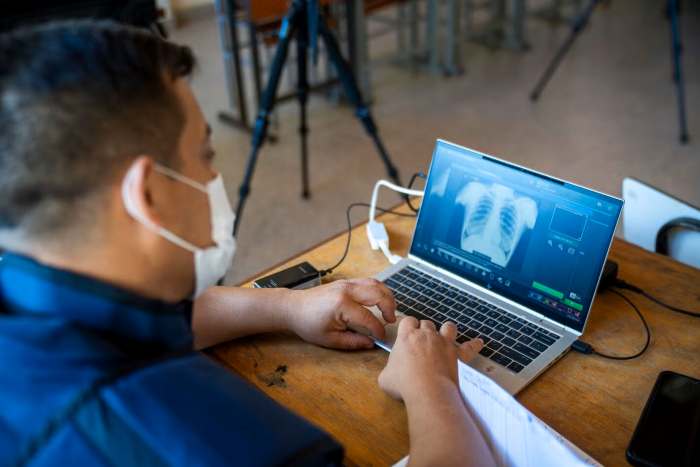
According to WHO’s TB programme, high costs and infrastructure limitations have hindered widespread deployment of advanced diagnostics in many developing countries.
Economic case for investment
Health economists argue that scaling up TB interventions offers substantial returns. Dr Tereza Kasaeva, Director of WHO’s Global Programme on TB and Lung Health, noted that every dollar invested in TB prevention and care yields up to US$43 in economic and health benefits.
She emphasised that accelerating the adoption of new diagnostic tools is not only a public health priority but also a strategic economic decision for governments.
Implications for developing economies
For countries across Africa and Asia, where TB prevalence remains high, the new WHO recommendations could significantly strengthen health systems by improving disease surveillance, reducing treatment delays, and lowering long-term healthcare costs.
The integration of rapid diagnostics into national health systems is also expected to enhance workforce productivity by reducing illness-related disruptions, particularly among economically active populations.
Call for urgent action
Under this year’s theme, “Yes! We can end TB: Led by countries, powered by people,” WHO is urging governments to accelerate the rollout of new diagnostic technologies, strengthen community-based healthcare systems, and protect TB programmes from funding shocks.
The organisation is also calling for increased investment in research and development, noting that current global funding for TB innovation falls well below the estimated US$5 billion required annually. Initiatives such as the TB Vaccine Accelerator Council are being promoted to fast-track the development of new vaccines and ensure equitable access.