
By Business Insider Correspondent, Arusha
The Director General of the National Health Insurance Fund (NHIF), Dr. Irene Isaka, has reaffirmed the Fund’s commitment to working closely with medical professionals and professional associations to ensure the successful implementation of the Universal Health Insurance (UHI) scheme.
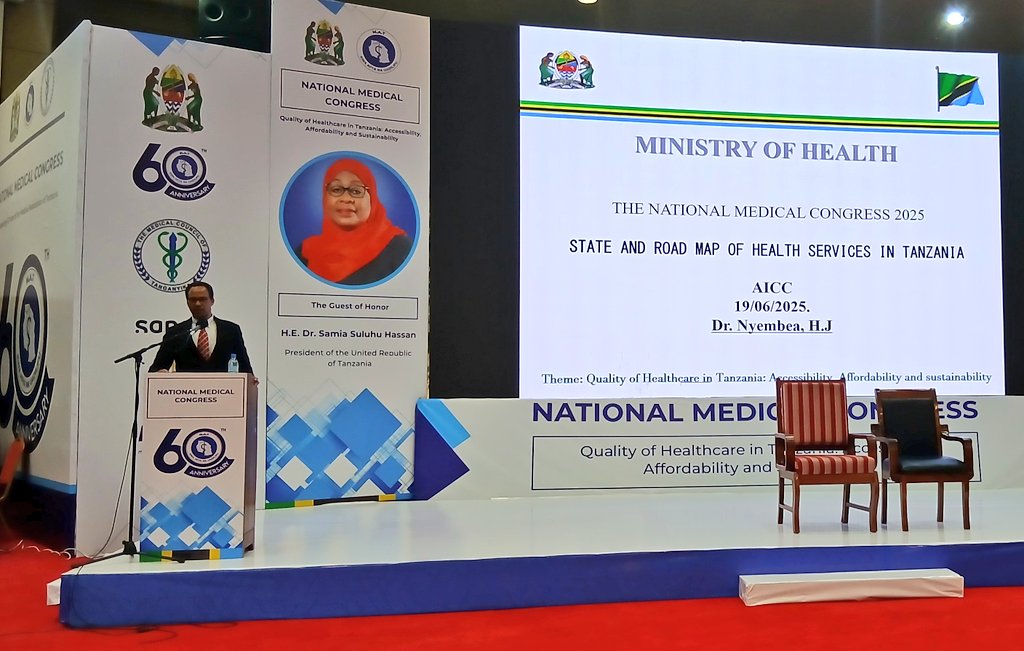
Speaking during the 60th Anniversary Scientific Conference of the Medical Association of Tanzania (MAT) held in Arusha, Dr Isaka said that NHIF recognises the crucial role of healthcare professionals in delivering quality health services and will ensure they remain fully involved in the implementation of the UHI programme.
“One of our most important milestones has been involving stakeholders, especially doctors through their associations. We started by raising awareness, collecting expert feedback on the type and scope of services to be offered, and we will continue to engage with you to make the delivery of health services more efficient and impactful,” she said.
Universal Health Insurance: A national priority
The Universal Health Insurance Act, which was passed by Parliament in 2023 and signed into law by President Samia Suluhu Hassan, makes it mandatory for every Tanzanian to have health insurance, marking a major shift in the country’s approach to healthcare access.
The scheme is designed to ensure equitable access to essential health services regardless of a person’s income level, employment status, or location.
It is being implemented through a multi-tiered system of public and private providers under NHIF coordination.
“UHI is not just about enrolling everyone; it’s about building a resilient, inclusive and responsive health system,” Dr. Isaka told participants. “This is why collaboration with experts like you is fundamental.”
New Tarangire Package
Currently, NHIF is rolling out a refined benefits package called Tarangire, which has been enhanced to include a broader range of essential and specialised services.
The package targets both formal and informal sector workers and is considered a transition towards the full UHI rollout.
Tarangire covers outpatient and inpatient care, maternal and child health services, chronic disease management, diagnostic services, and now includes higher-level services such as specialist referrals, advanced surgeries, and rehabilitation therapies.
Dr. Isaka urged all stakeholders to ensure they deliver services ethically and avoid fraudulent practices that could undermine public trust in the scheme.
Healthcare sector’s role
She encouraged doctors and health institutions to support the UHI agenda not only by providing services but also by educating the public, reporting challenges, and upholding professional standards.
“Our collective efforts will determine the success of Universal Health Insurance. The law is in place, structures are being finalised, and with your input, we can ensure this reform becomes a sustainable legacy for Tanzanians.”
Why UHI matters
Before UHI, less than 20% of Tanzanians had health insurance, leaving the vast majority to pay out-of-pocket, often leading to financial hardship or delayed access to care.
The government’s ambition under Vision 2025 (which ends this year) is to achieve universal health coverage as part of its broader strategy to improve human development and reduce inequality.
The UHI reform aligns with Sustainable Development Goal 3, which calls for universal access to quality healthcare and financial protection.
With regulations and registration processes being finalised, the Ministry of Health is expected to announce timelines for full implementation of UHI in late 2025. Dr Isaka confirmed that NHIF is working around the clock to upgrade systems, accredit providers, and streamline digital platforms for nationwide enrolment.