
By Business Insider Reporter
Tanzania’s economic growth story has long been praised as one of resilience and promise. Yet, beneath the surface of its 6% average annual GDP growth over the past two decades lies a troubling trend: declining productivity and stagnating structural transformation.
The latest IMF Country Report on Tanzania, released Thursday July 3, 2025, points to persistent weaknesses in the business environment as a key factor behind this productivity slump.
The report, which draws on firm-level data from the World Bank Enterprise Surveys, finds that “cumbersome tax administration, limited access to finance, and unreliable transport infrastructure” are significantly associated with lower productivity in Tanzania’s manufacturing sector.
Without urgent structural reforms, the report warns, the country risks undermining its long-term development goals.
“Tanzania’s strong growth has not been matched by gains in productivity, especially in recent years,” the report states. “Improving the business environment is no longer optional – it is essential for inclusive and sustainable growth.”
A growing economy, but not a more efficient one
Between 2000 and 2023, Tanzania saw real GDP grow steadily, driven largely by public sector investment. However, the private sector’s role has shrunk, and foreign direct investment has fallen from 5.7% of GDP in 2010 to just 2% in 2023.
More alarmingly, total factor productivity (TFP) – which measures how efficiently inputs like labor and capital are used – has declined dramatically. In the 2000s, TFP growth added 1.6 percentage points to GDP growth. By the 2020–2023 period, its contribution had dropped to negative 2 percentage points.
According to the IMF, “While the TFP slowdown is a global phenomenon, Tanzania’s decline is notably steeper than peers in East Africa and Sub-Saharan Africa.”
Bureaucracy, tax complexity, and finance bottlenecks
The report pinpoints over-regulation and inefficient tax systems as major constraints. Tanzanian business leaders spend 14% of their time dealing with regulatory issues – nearly double the average for similar economies.
While the government launched its Blueprint for Regulatory Reform in 2018, implementation challenges persist.
“The private sector continues to face overlapping regulations, inconsistent enforcement, and frequent new compliance requirements – especially from local governments,” the report notes.
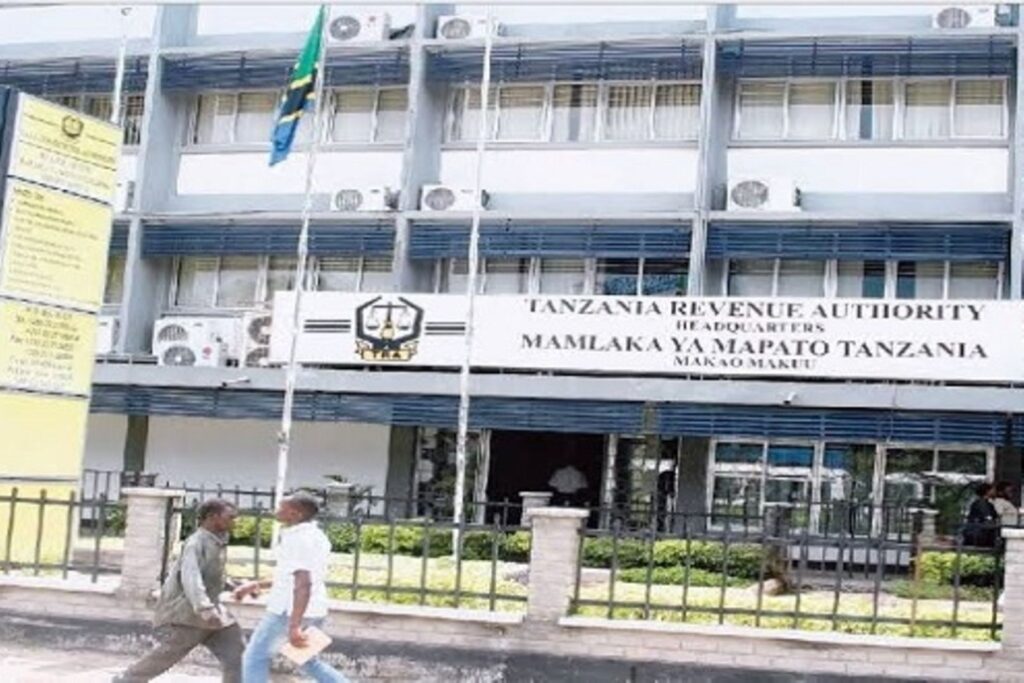
Taxation is another flashpoint. The IMF highlights “high compliance costs, delayed VAT refunds, and aggressive revenue collection tactics” by the Tanzania Revenue Authority (TRA) as key concerns.
The situation became so fraught that domestic traders staged nationwide strikes in mid-2024, drawing concern from the diplomatic community.
“The complexity and unpredictability of the tax system is discouraging investment and hurting firm-level cash flows,” the report warns.
Access to Finance: A Persistent Roadblock
Tanzania’s private sector is also held back by limited access to credit. Domestic credit to the private sector stood at just 16.4% of GDP in 2023, well below Kenya (31.6%) and Rwanda (22.7%). A staggering 84% of firms rely on own funds to purchase fixed assets.
“A shallow and underdeveloped financial sector, dominated by banks and constrained by weak infrastructure, limits the private sector’s ability to grow and innovate,” the report explains.
The IMF recommends accelerating reforms to improve credit information systems, modernize collateral registries, and deepen financial markets beyond commercial banking.
Infrastructure woes: power and transport
While access to electricity has improved, with 48.3% of the population connected in 2023 (up from 14.8% in 2010), service reliability remains poor. Businesses face frequent outages due to overloaded transformers, outdated distribution systems, and inadequate maintenance.
“Unreliable power supply limits production, disrupts operations, and increases costs for businesses,” the IMF stresses.
Transport infrastructure has improved, with the share of firms citing it as a major obstacle falling from 38.2% in 2013 to 9.4% in 2023. But the road network remains thin, especially in rural areas, which restricts market access for small and medium enterprises.
Corruption: Relatively low, but still a risk
Tanzania ranks better than regional peers on corruption indicators. Only 7% of firms reported paying bribes, compared to 21% in Sub-Saharan Africa.
However, the report cautions that corruption vulnerabilities remain, and supports the rollout of the National Anti-Corruption Strategy and Action Plan (NACSAP IV) 2023–2030.
“Continued efforts to improve governance and transparency will be essential to maintaining business confidence,” the report advises.
Reform is the way forward
The IMF report strongly supports the government’s Vision 2050 and the upcoming Blueprint for Regulatory Reforms II, urging authorities to prioritize reforms that simplify regulation, streamline tax administration, and expand access to finance and infrastructure.
“The current business environment is not conducive to private sector-led growth. Structural reforms are urgently needed to reverse the decline in productivity and unlock Tanzania’s potential,” the IMF concludes. For Tanzania, the message is clear: economic growth alone is not enough. It’s time to focus on the quality of that growth – by creating a business environment that empowers firms, attracts investment, and fuels innovation.