
By Business Insider Reporter
A recent high-level engagement between the Tanzania Revenue Authority (TRA) and the Chinese business community could mark a turning point for Tanzanian entrepreneurs, as authorities move to enforce tax compliance and restore competitive balance in key sectors of the economy.
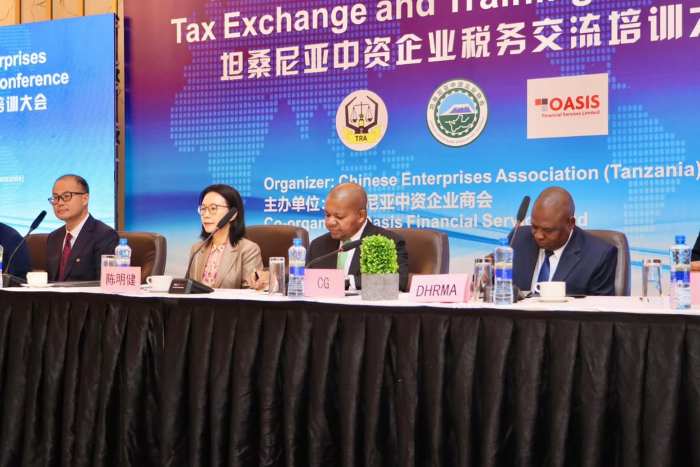
The meeting, led by TRA Commissioner General Yusuph Mwenda and attended by Chinese Ambassador Chen Mingjian, comes amid mounting pressure from local traders who have long complained of being edged out by foreign competitors in retail trade and small-scale mining.
At its core, the government’s approach signals a shift toward formalising business practices and enforcing existing laws – an intervention that could significantly benefit Tanzanian-owned enterprises.
Restoring fair competition in retail trade
For years, local traders – particularly in Kariakoo Market – have argued that foreign merchants, especially those with access to large capital and international supply chains, have distorted pricing structures and squeezed domestic players out of the market.
The TRA’s renewed emphasis on tax compliance and regulatory enforcement is expected to level the playing field. By ensuring that all businesses – local and foreign – operate under the same tax obligations, authorities are effectively reducing the unfair cost advantages previously enjoyed by some foreign operators.
For Tanzanian traders, this could translate into improved market access, more stable pricing dynamics, and a fairer competitive environment in sectors legally reserved for citizens.
Protecting local participation
Beyond retail, the enforcement drive has implications for small-scale mining – an area explicitly protected under Tanzania’s legal framework.
The Mining Act 2019 restricts foreign participation in small-scale mining, yet loopholes such as technical support agreements have enabled foreign investors to gain de facto control of these operations.
Stricter oversight by authorities could help reclaim space for local miners and entrepreneurs, preserving employment and income opportunities within communities.
In regions such as Shinyanga and Geita, where mining is a key economic activity, this shift could revitalise grassroots economic participation and reduce displacement of local labour.
Strengthening domestic enterprise

The government’s commitment to implementing 284 tax reform recommendations – under the leadership of Samia Suluhu Hassan – is another critical pillar of this transition.
For Tanzanian business owners, these reforms promise a more predictable and transparent tax environment. Measures such as digitised tax systems and reduced bureaucratic interaction are expected to lower compliance costs, minimise rent-seeking behaviour, and improve ease of doing business.
A streamlined tax regime not only benefits compliant local businesses but also incentivises informal enterprises to formalise – broadening access to credit, legal protections, and government support programmes.
Unlocking opportunities
While tensions have highlighted competitive imbalances, the government’s calibrated approach – focusing on compliance rather than exclusion – also preserves the benefits of Tanzania’s economic ties with China, its largest trading partner.
This balance is crucial. Chinese firms remain key players in infrastructure, manufacturing, and logistics – sectors that underpin Tanzania’s industrialisation agenda.
For local businesses, stricter regulation of retail and small-scale activities could encourage a shift toward more productive partnerships, including subcontracting, joint ventures, and supply chain integration.
In effect, Tanzanian entrepreneurs stand to benefit not only from reduced competition in protected sectors but also from increased participation in higher-value segments of the economy.
Addressing structural risks
The move also carries broader economic significance. Unregulated foreign participation in restricted sectors has been linked to revenue leakages, job displacement, and environmental risks – particularly in mining areas affected by unsafe practices.
By tightening enforcement, the government can enhance revenue collection, protect domestic employment, and promote sustainable business practices – outcomes that directly support local enterprise development.
A delicate but necessary balance
However, analysts caution that the success of these measures will depend on consistent enforcement and policy clarity. Overly aggressive restrictions could deter foreign investment or trigger retaliatory measures, while weak enforcement would perpetuate existing imbalances.
The government’s current stance – targeting non-compliance rather than nationality – suggests a pragmatic approach aimed at safeguarding both domestic business interests and international economic relations.
Outlook for Tanzanian businesses
For Tanzanian entrepreneurs, the TRA’s intervention represents more than a regulatory adjustment – it is an opportunity to reclaim space in key sectors, operate under fairer conditions, and scale within a more structured economic environment. If sustained, these reforms could mark a shift toward a more balanced business ecosystem – one where local enterprises are not only protected but empowered to compete, grow, and integrate into the country’s broader industrial and trade ambitions.