
By Business Insider Reporter
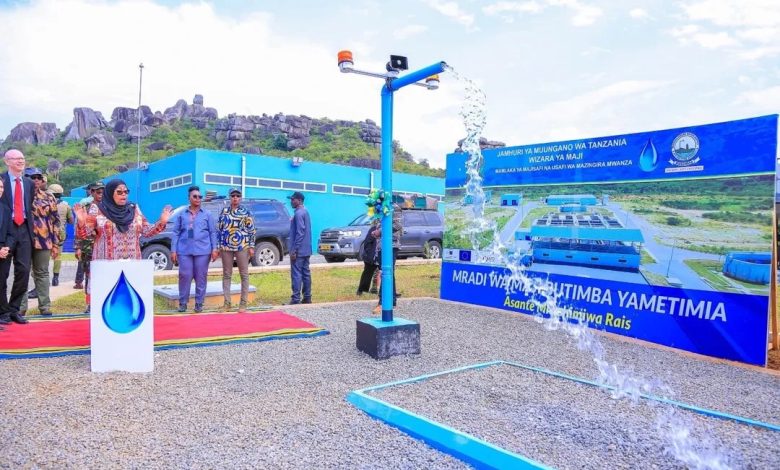
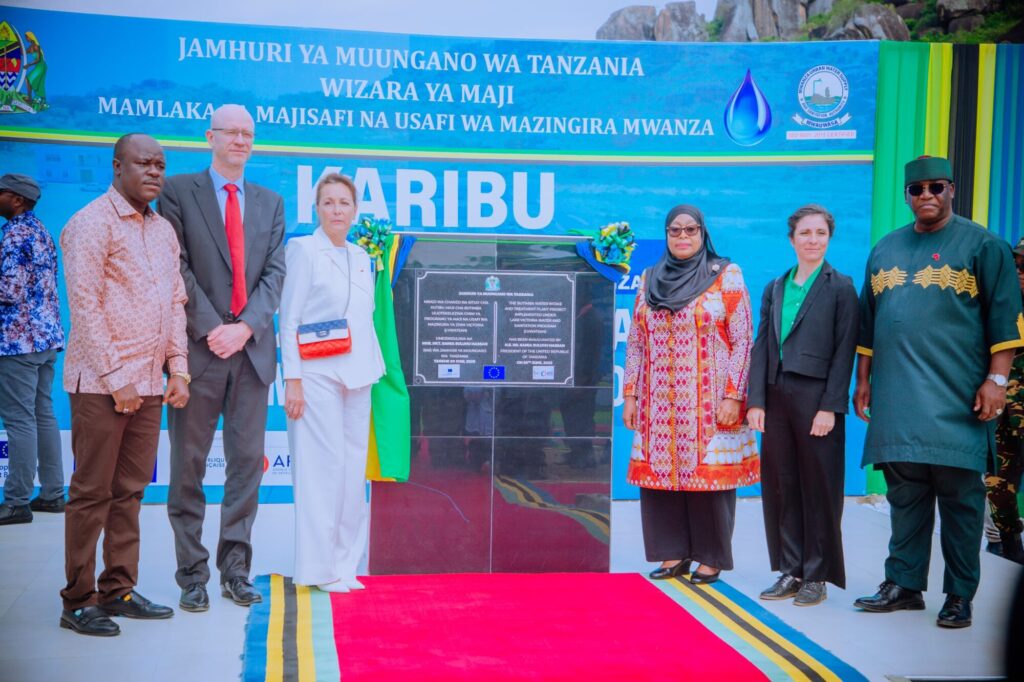
A landmark €150 million water and sanitation project jointly funded by Team Europe and the Government is set to revolutionise access to clean water, public health, and economic resilience across the Lake Zone.
Launched this week in Mwanza, the initiative is expected to directly benefit over 600,000 people and serve as a regional model for sustainable infrastructure investment.
At the core of the initiative is the Butimba Water Treatment Plant, an advanced facility producing 44,000 cubic metres of treated water daily.
Located in Mwanza, the second-largest city in Tanzania, the plant anchors the broader Lake Victoria Water and Sanitation Project (LVWATSAN) – a comprehensive programme that extends services to the satellite towns of Magu, Misungwi, Lamadi, Bukoba, and Musoma.
Impact on public health
The project is a transformative step in tackling water insecurity, improving hygiene, and reducing the burden of waterborne diseases.
Officials estimate that over 150,000 residents now benefit from upgraded sanitation infrastructure, including simplified sewerage systems tailored to Mwanza’s challenging terrain.
Health and education outcomes are expected to improve as a result – especially for women and girls who traditionally bear the brunt of water-fetching responsibilities.
With better water access, girls are more likely to attend school consistently, and communities can expect enhanced productivity and economic participation.
“This project is about improving lives – bringing clean water and better sanitation to families in Mwanza and beyond,” said EU Ambassador to Tanzania and the EAC, Christine Grau.
She added: “It shows what we can achieve when we work together under the Team Europe framework. As we celebrate 50 years of EU–Tanzania partnership, this is the future we’re building – one that invests in people and sustainability.”
Investment breakdown
The funding structure underscores Team Europe’s strategic commitment to infrastructure-led development:
- French Development Agency (AFD): €75 million loan
- European Investment Bank (EIB Global): €45 million loan + €4 million in technical assistance
- European Union: €9.9 million grant through the EU-Africa Infrastructure Trust Fund
- Government of Tanzania: €16 million contribution
Céline Robert, AFD’s Country Director, noted that Phase II of the programme is already in the pipeline, aiming to further scale services and strengthen the capacity of the Mwanza Urban Water Supply and Sanitation Authority (MWAUWASA).
“This is a full-scale transformation, not just a plant. It’s about modernising service delivery across an entire region,” she said.
Regional model
The LVWATSAN initiative is aligned with Sustainable Development Goal 6 (Clean Water and Sanitation), Tanzania’s Vision 2025, and the EU’s Global Gateway Strategy.
It’s part of a broader push to develop climate-resilient, people-centred infrastructure across East Africa.
Edward Claessen, Director of the EIB’s East Africa Regional Hub, stressed the wider significance: “Clean water improves health outcomes, boosts school attendance, and unlocks economic potential. We are proud to back this initiative, which stands as a cornerstone for sustainable development not only in Tanzania but across the region.”
“Maji ni Uhai” – Water is Life
French Ambassador, Anne-Sophie Avé, delivered her speech in Kiswahili, celebrating the cultural and human impact of the initiative: “Maji ni uhai.
This plant will make thousands of people’s lives better. France and the EU have walked this journey with Tanzania for more than 20 years, and we’re proud of the results.”
The Butimba facility is expected to act as a blueprint for regional replication, drawing interest from the private sector in areas like utility digitisation, water metering, pipe and pump manufacturing, and sanitation innovations such as waste-to-energy systems. Moreover, the project enhances Tanzania’s position as a regional leader in sustainable urban planning and water governance, at a time when water stress is a growing concern due to climate change and rapid urbanisation in the Lake Victoria basin.