By Business Insider Reporter and Agencies
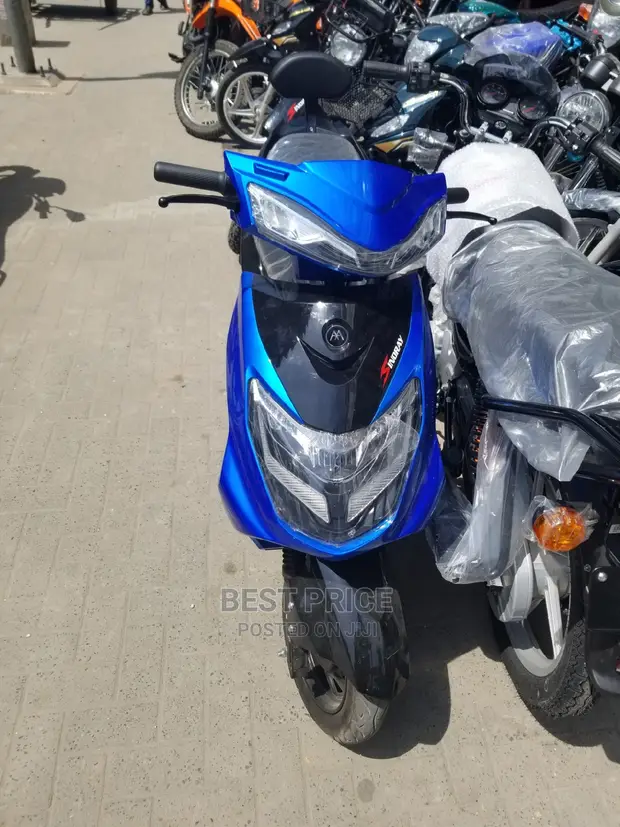
Electric mopeds are very common, not only in Dar es Salaam but also in hinterland.
Business Insider reporter who was in Dodoma was amazed to note that the two wheelers have become a common feature in upgraded Dodoma roads.
This scenario tells a compelling story.
While Tanzania leads East Africa in electric vehicle (EV) adoption with over 5,000 units already in use, the country faces a series of structural and policy-related challenges that threaten to stall progress in this fast-evolving sector.
From high import duties and a weak power grid to the absence of a formal EV policy, stakeholders warn that Tanzania must urgently address its barriers or risk falling behind its regional peers in the e-mobility race.
High costs keep EVs out of reach
One of the most pressing obstacles is affordability. With steep import taxes and limited availability of locally assembled or budget-friendly models, EVs remain out of reach for most Tanzanians.
Currently, electric mopeds benefit from zero excise duty and a 10% import duty, but larger electric motorcycles face levies of up to 25%. For electric cars and buses, costs are even higher.
“Without aggressive fiscal incentives, EVs will remain a luxury product,” says Tom Courtright, Research Director at the Africa E-Mobility Alliance (AfEMA).
Local manufacturing could offer relief, but the sector is still in its infancy, with Tanzanian e-mobility startups having attracted just over US$1 million in investment – far behind Kenya (US$50 million) and Uganda (US$5 million).
Weak infrastructure and unreliable power
Though Tanzania boasts the highest number of EVs in the region, it lacks the infrastructure to support them.
Public charging stations are concentrated in urban areas, leaving rural regions underserved.
Even where charging points exist, inconsistent electricity supply is a major concern.
“The fear of getting stranded due to a blackout discourages many from considering EVs,” says Neema Kaaya, an early EV owner in Dodoma.
To help close the gap, firms like WAGA Motion have begun rolling out pilot charging hubs in cities.
Plans are underway to power some of these with solar energy – a move experts say could offer dual benefits by reducing grid pressure and emissions.
Policy gaps undermine confidence
Tanzania currently lacks a clear regulatory framework governing the EV market.
This has resulted in administrative confusion, especially around registration and licensing of electric vehicles.
The Land Transport Regulatory Authority (LATRA) was planning to introduce a national EV policy by the end of 2024 but todate that promise has not been delivered.
Advocates hope it will standardise tax rates, streamline registration processes and build investor confidence.
“Tanzania still does not have a policy governing electric vehicles,” says Sisty Basil, Executive Director of Energy and Livelihoods for Communities (E-LICO). “We need legal backing to support investment and adoption.”
In contrast, 15 other African countries already have national EV policies in place – giving them a head start in attracting foreign and domestic capital into the sector.
Public awareness still low
Though the mopeds are slowly starting to dominate roads – notably in urban centres, but the public is unaware of these new machines.
Beyond structural and policy challenges, public perception remains a major barrier.
Many Tanzanians are still unaware of the long-term savings and environmental benefits of EVs.
Misinformation about performance, range, and durability adds to the hesitation.
To combat this, platforms like AutoMag.tz have launched awareness campaigns using videos, demonstrations, and social media to showcase EV capabilities and dispel myths.
“Awareness is key,” says journalist and auto expert Hamisi Mwangemi. “We need more grassroots outreach to show that EVs are not just for elites in Dar es Salaam.”
A sector poised for change
Despite the headwinds, optimism remains. Several initiatives – from planned tax reforms to pilot projects in local assembly – aim to create a more favourable environment for EV growth.
The National Policy Working Group (PWG) is pushing for training programs for EV mechanics and national standards for charging stations.
Meanwhile, companies like Greenfoot Africa and TRI are scaling up operations, offering affordable electric three-wheelers with faster charging and longer ranges. “Partnerships between government, the private sector, and the media are critical,” says Courtright of AfEMA. “If Tanzania can get its policy and infrastructure right, it can become a regional leader in sustainable transport.”