By A Special Correspondent
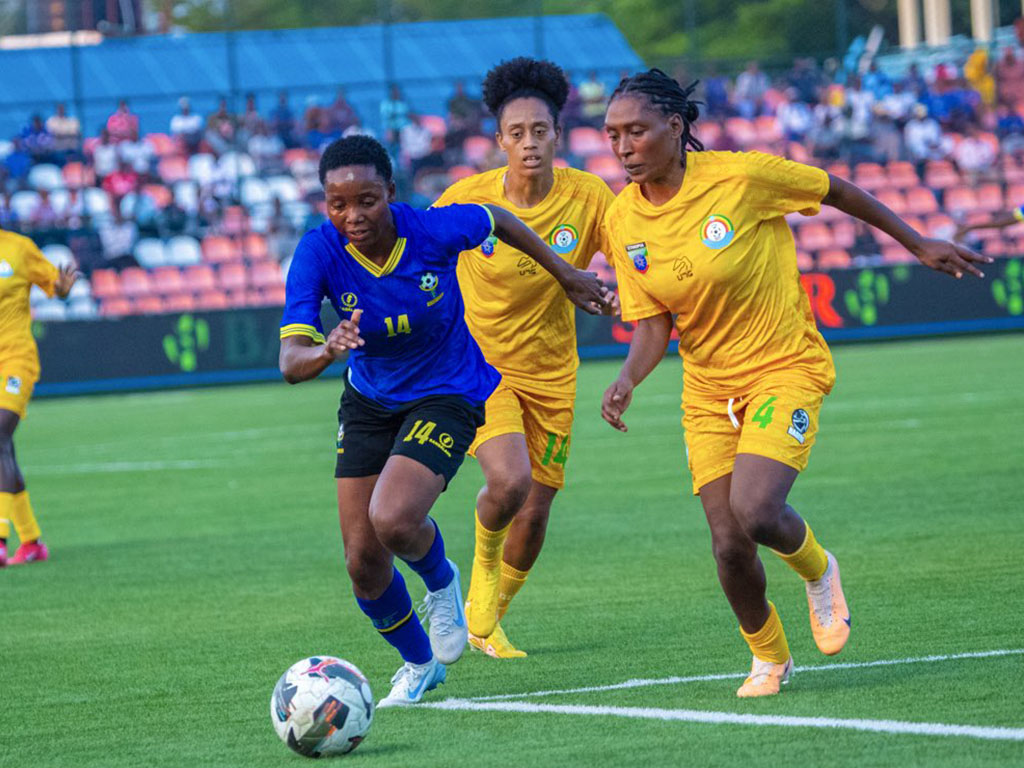
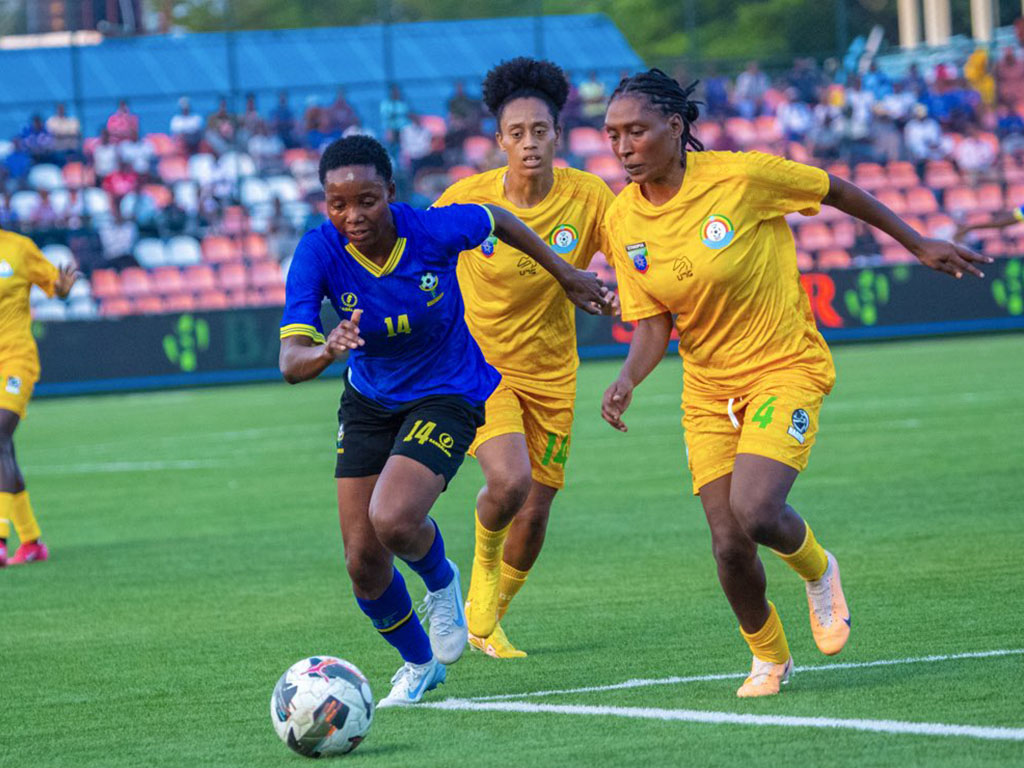
Twiga Stars have taken a commanding step toward qualifying for the 2026 CAF Women’s Africa Cup of Nations (WAFCON) after defeating Ethiopia 2–0 in the first leg of the second-round qualifiers on October 22, 2025, at the Azam Complex Stadium in Chamazi, Dar es Salaam.
Goals from Aisha Mnunka in the 7th minute and Jamila Rajab early in the second half sealed an important victory that showcased Tanzania’s tactical evolution, composure, and growing confidence at the continental level.
From the opening minutes, the Twiga Stars imposed their rhythm on the game.
Head coach Bakari Shime set up his side in a compact 4-2-3-1 formation designed to neutralize Ethiopia’s quick passing and counter-attacking transitions.
Aisha Mnunka’s early goal came from an aggressive high press that forced an Ethiopian defensive error – a clear sign of Tanzania’s intent to dictate play rather than absorb pressure. In midfield, the duo of Enekia Kasonga and Fatuma Issa provided stability, recycling possession and breaking down Ethiopia’s buildup play.
When Ethiopia tried to push forward through Aregash Kalsa and Senaf Wakuma, they found little joy against a disciplined Twiga Stars backline marshalled by Stumai Abdallah.
The defensive coordination and compactness reflected how far the Twiga Stars have come from the disorganised side that struggled to maintain structure in previous WAFCON campaigns.
After the break, Tanzania shifted gears. With Ethiopia chasing the equalizer, Jamila Rajab’s goal in the 54th minute came from a swift counterattack – a hallmark of Shime’s philosophy of vertical, efficient football. The result was a mature performance that combined technical sharpness with tactical intelligence.
From debutants to title contenders
To understand the significance of this win, it’s essential to look at the Twiga Stars’ journey over the past 15 years.
Tanzania made their WAFCON debut in 2010, an appearance that ended at the group stage but planted the seeds for long-term development. For years, the team hovered in regional obscurity, overshadowed by East African rivals such as Uganda and Kenya.
However, consistent participation in CECAFA and COSAFA tournaments has been instrumental in their rise.
The 2021 CECAFA Women’s Championship marked a turning point – the Twiga Stars clinched the title with a youthful squad that blended flair and discipline.
Since then, the team has benefited from improved investment by the Tanzania Football Federation (TFF) in women’s leagues, youth academies, and coaching education.
The emergence of players like Mnunka, Rajab, Opah Clement, and Aisha Masaka has given the team a technical edge, while exposure to international friendlies and regional tournaments has raised the overall football IQ of the squad.
The bigger picture: East Africa’s rising standard
Tanzania’s success is part of a broader trend in East African women’s football. The region – once considered a developmental zone compared to West and Southern Africa – is now producing competitive teams that challenge established powers.
Uganda, Kenya, and Rwanda have all shown growth, but Tanzania stands out for its consistency and structured approach. Their participation in youth competitions like the U17 and U20 World Cup qualifiers has created a steady talent pipeline feeding into the senior team.
The current Twiga Stars are more balanced and technically refined than ever before – capable of both controlling possession and exploiting transitions.
They’ve evolved from a team that relied on physicality to one that now plays with tactical sophistication and confidence.
Looking ahead: The return leg and beyond
With a 2–0 cushion heading into the return leg in Addis Ababa on October 28, Tanzania are in a strong position to progress.
However, Ethiopia’s home advantage and attacking flair mean the tie is far from over. Maintaining defensive discipline and controlling the tempo will be crucial for the Twiga Stars.
If they qualify, it will mark another milestone in Tanzania’s women’s football journey – not only a return to WAFCON but a statement of intent that they are ready to compete among the continent’s elite.
Their performance against Ethiopia wasn’t just a win – it was proof that the Twiga Stars’ steady evolution has transformed them from regional hopefuls into genuine continental contenders.