
By Business Insider Reporter
Amid growing global economic uncertainty, Tanzania has emerged as East Africa’s most assertive player in the regional pivot toward gold reserves, positioning itself as a leader in monetary resilience and financial sovereignty.
With geopolitical tensions escalating – from the ongoing Middle East conflict to the economic fallout of the Russia-Ukraine war – East African nations are intensifying efforts to shield their economies.
Central to this response is gold, which is fast becoming the region’s asset of choice for foreign exchange (FX) reserve diversification and protection against the volatility of the US dollar.
Tanzania’s Strategic Gold Stockpiling Gains Momentum
The Bank of Tanzania (BoT) has taken the region’s most aggressive stance on gold acquisition.
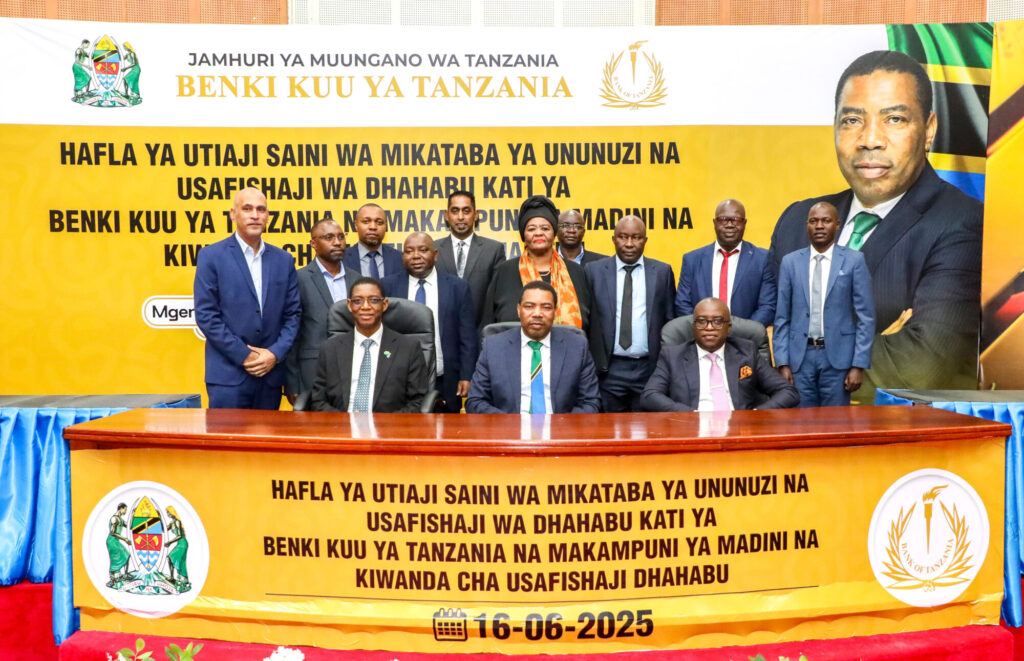
In a move that sets a precedent for other African economies, the BoT has implemented a policy to purchase at least 20% of domestic gold production directly from miners, including Geita Gold Mine, Shanta Gold, Buckreef, and GGR.
As of June 13, 2025, Tanzania had acquired five metric tons of gold worth US$554.28 million, a significant boost to the country’s reserve assets.
This effort aligns with President Samia Suluhu Hassan’s broader economic vision to strengthen the country’s macroeconomic stability while reducing dependency on external currencies and increasing control over strategic mineral resources.
“This is not just about stockpiling gold – it’s about reinforcing Tanzania’s financial independence,” said Dr. Hemed Selemani, a Dar es Salaam-based economist. “Tanzania is setting an example of how resource-rich countries can use their own mineral wealth to stabilise their economies.”
Others follow Tanzania’s lead
While Tanzania is out in front, its neighbours are beginning to follow suit.
In Uganda, the central bank launched a gold purchase programme in 2024 focused on artisanal miners in Karamoja.
Rwanda is expected to begin building its gold reserves this month (July 2025), and Kenya’s Central Bank is reportedly finalising frameworks to enter the gold market as part of broader foreign reserve diversification plans.
Tanzania’s approach has, however, set the regional gold standard, linking domestic mining policy directly to monetary strategy – something that analysts say other countries are likely to emulate as pressure on global reserve currencies intensifies.
Gold as a hedge against dollar dominance
Globally, gold is regaining its shine as the dominance of the US dollar in global reserves continues to decline, now down to 57.8%, from a peak of 72.7% in 2002.
The “de-dollarisation” trend is pushing countries to seek assets that are less vulnerable to US monetary policy shocks and geopolitical manipulation.
In this climate, gold’s appeal as a safe-haven asset has soared. According to the World Gold Council, central banks purchased a net 244 tons of gold in Q1 2025, with projections reaching 1,000 tons for the full year. For Tanzania and its East African peers, gold serves not just as a store of value – but as a tool to bolster monetary policy flexibility, provide liquidity, and signal fiscal prudence to investors and credit markets.

FX reserves: Tanzania holds steady
As of June 2025, Tanzania’s FX reserves stood at US$5.3 billion, providing 4.3 months of import cover, just shy of the East African Community’s macroeconomic convergence target of 4.5 months.
The Tanzanian shilling has remained relatively stable, depreciating only 0.64% year-on-year, an outcome partly credited to the gold accumulation strategy and BoT’s conservative monetary stance.
Comparatively, Kenya holds US$10.9 billion (4.8 months of import cover) with a minor 0.43% depreciation in the shilling, while Uganda and DRC remain more exposed with lower import covers and higher currency volatility.
A long-term resilience strategy
Tanzania’s strategic focus on gold is part of a broader ambition to reduce economic vulnerability to external shocks, increase confidence in the financial system, and build buffers against future crises.
With gold prices soaring – up 9,283% since 1960, reaching USD 3,309.49 per troy ounce as of May 2025 – this metal is no longer a nostalgic relic of the past but a modern policy tool.
As East Africa’s economies become more exposed to global turbulence, Tanzania’s proactive approach places it in a strong position to weather financial storms, while promoting economic sovereignty and trust in its institutions. “If Tanzania continues at this pace,” says financial analyst Rehema Mushi, “it could become the region’s blueprint for sustainable reserve management and a model for leveraging natural wealth in economic policymaking.”