
By Business Insider Reporter
Tanzania’s annual inflation rate held steady at 3.4 percent in September 2025, remaining at its highest level since June 2023, according to data released on October 8 by the National Bureau of Statistics (NBS).
The figure, unchanged from August, reflects a stabilisation in the rate at which consumer prices are rising, though at a level notably higher than seen over the past two years.
The unchanged inflation rate suggests that while prices continued to rise, the pace of increase did not accelerate further between August and September.
The consumer price index (CPI) rose from 115.88 in September 2024 to 119.86 in September 2025, highlighting the cumulative impact of price increases over the past year.
Despite remaining at a two-year high, the inflation rate is well within the Bank of Tanzania’s (BoT) target range of 3–5 percent, and aligns with East African Community (EAC) and Southern African Development Community (SADC) convergence criteria, which set upper limits of 8 percent and 7 percent, respectively.
“BoT projects inflation to remain low and stable, within the target range.
The inflation outlook is bolstered by prudent monetary and fiscal policies, stable food supplies and exchange rate stability,” the central bank notes in the latest Monthly Economic Review (MER).
Key drivers of inflation
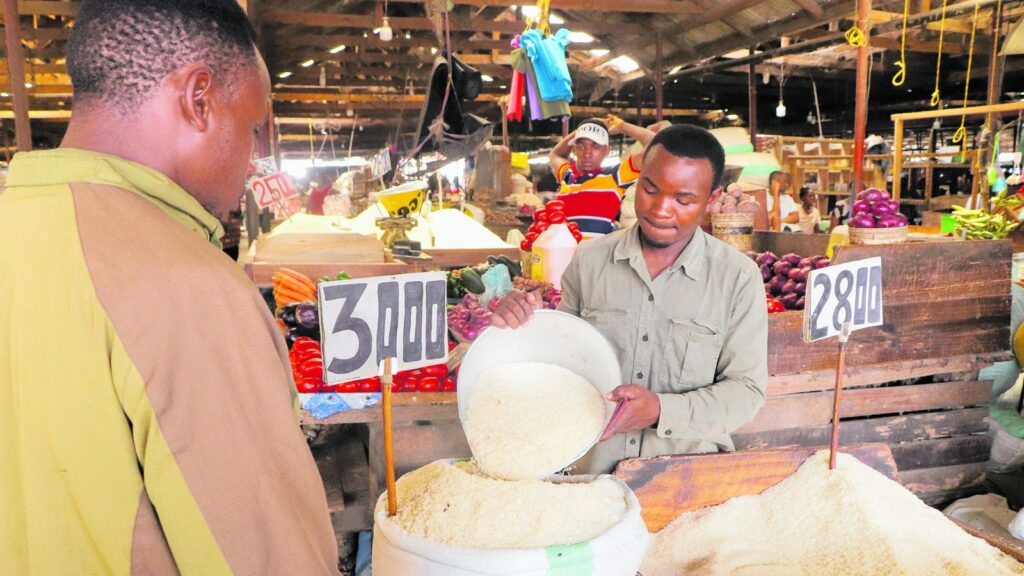
BoT, in its September 2025 MER, noted that unprocessed food continued to be the primary driver of inflation for the third consecutive month. In particular, prices of rice and finger millet saw notable increases, pushing annual food inflation to 7.7 percent in August, up from 7.6 percent in July.
In addition, core inflation – which excludes volatile food and energy prices -edged slightly higher to 2.0 percent in August, reflecting modest increases in costs of household goods, such as electronics and non-alcoholic beverages.
Though up from 1.9 percent in July, core inflation remains relatively subdued.
Inflation for energy, fuel, and utilities rose to 2.6 percent in August, a significant jump from 1 percent in July. However, this remains far below the 11.2 percent recorded in August 2024, as global oil prices have moderated, easing pressure on domestic fuel costs.
Locally, however, charcoal and firewood prices climbed, contributing to the monthly increase in energy inflation.
Regional comparison
In the East African region, Tanzania’s inflation rate of 3.4 percent in September was lower than Kenya’s 4.6 percent and Uganda’s 4 percent, underscoring the relative price stability in the country.
This trend may be attributed to stable food supplies, prudent fiscal and monetary policies, and a stable exchange rate, according to the BoT.
Looking ahead, the Bank of Tanzania projects inflation to remain low and stable within the targeted range. The outlook is supported by continued macroeconomic stability, moderate global oil prices, and effective fiscal discipline.
Although inflation remains under control by regional standards, the sustained rate at 3.4 percent means households continue to face a gradual increase in the cost of living, particularly in essential goods like food and fuel.
While not indicative of runaway inflation, the cumulative effect over time can erode purchasing power, especially for lower-income households. Still, compared to regional peers and historical highs, Tanzania’s inflation environment remains relatively stable – a positive signal for consumers and investors alike, as it suggests a predictable economic climate going forward.