

By Business Insider Correspondent, Dodoma
Tanzania is stepping up efforts to unlock financing for small and medium-sized enterprises (SMEs), rolling out a series of policy measures aimed at reducing borrowing costs, easing collateral requirements and accelerating private sector growth.
The initiative, spearheaded by the Ministry of Finance Tanzania, reflects a broader strategy to strengthen domestic enterprise, expand job creation and stimulate economic activity across key sectors.
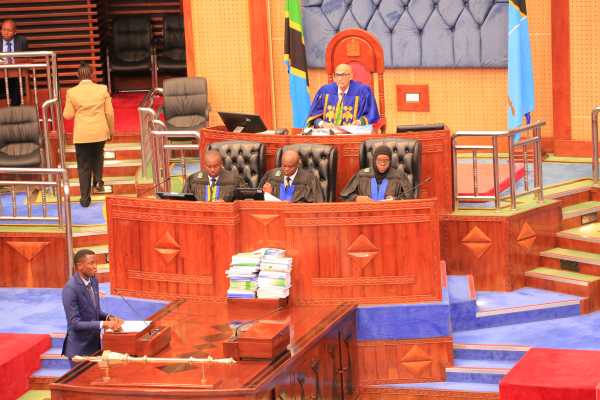
Speaking in Parliament in Dodoma, Deputy Minister for Finance, Laurent Luswetula, said the government has introduced concessional lending frameworks designed to improve access to capital, particularly for SMEs that have historically struggled to secure financing.
Affordable credit as a growth catalyst
At the core of the reforms is a government-backed lending arrangement implemented through NMB Bank, under which small and medium businesses can access loans at an annual interest rate of just 7 percent – significantly below prevailing market rates.
The programme leverages government resources as a form of guarantee, effectively lowering the risk profile for lenders and enabling more businesses to qualify for credit.
“This initiative is aimed at addressing financial constraints facing entrepreneurs while supporting job creation and business expansion,” Luswetula told lawmakers.
From a policy perspective, the move signals a shift towards more active state participation in credit markets – particularly in addressing structural bottlenecks such as high collateral requirements and limited risk appetite among commercial banks.
Tackling the collateral barrier
Access to credit in Tanzania, as in many emerging markets, has long been constrained by collateral requirements that exclude a large segment of entrepreneurs.
To address this, the government has strengthened credit guarantee mechanisms under the supervision of the Bank of Tanzania.
These include dedicated Credit Guarantee Schemes that provide partial guarantees to lenders, enabling businesses with viable projects – but limited collateral – to secure financing.
“The system allows citizens to implement productive projects without being constrained by lack of traditional collateral,” Luswetula noted.
For SMEs, which form the backbone of Tanzania’s economy, this intervention could significantly expand access to formal financing and reduce reliance on informal lending channels.
Targeting exporters and growth sectors
Beyond domestic enterprises, the government is also targeting export-oriented businesses through the Export Credit Guarantee Scheme. This facility is designed to de-risk lending to exporters, particularly those entering new markets or scaling operations.
At the same time, SME-focused guarantee schemes are being expanded to support entrepreneurs across sectors, from agriculture and manufacturing to services.
Together, these instruments are intended to crowd in private sector lending while aligning financial flows with national development priorities.
Implications for the business environment
For investors and market participants, the reforms signal a more supportive financing ecosystem – one that recognises the central role of SMEs in driving inclusive growth.
Lower borrowing costs, combined with reduced collateral barriers, are expected to:
- Improve business survival and expansion rates
- Encourage formalisation of enterprises
- Boost productivity and value addition
- Strengthen domestic supply chains
However, the effectiveness of these measures will depend on implementation – particularly the efficiency of guarantee schemes, risk management frameworks and uptake by financial institutions.
A broader economic strategy
The push to expand access to affordable credit is part of Tanzania’s wider economic agenda to stimulate private sector-led growth.
By linking financing to productive investment, the government aims to increase output across sectors, enhance competitiveness and ultimately expand the country’s GDP base.
“These efforts are geared towards simplifying access to loans, growing economic projects and improving productivity across all sectors of the economy,” Luswetula emphasised.
As Tanzania deepens financial sector reforms, the focus is likely to shift towards scaling these initiatives, improving awareness among entrepreneurs and ensuring that credit flows translate into measurable economic outcomes. If effectively implemented, the combination of concessional lending and credit guarantees could mark a turning point for SMEs – transforming access to finance from a constraint into a catalyst for growth.