By Business Insider Correspondent, Dodoma
Tanzania has intensified its budget preparation process for the 2026/27 financial year, with a renewed focus on productive sectors seen as central to driving economic growth, job creation and export expansion.
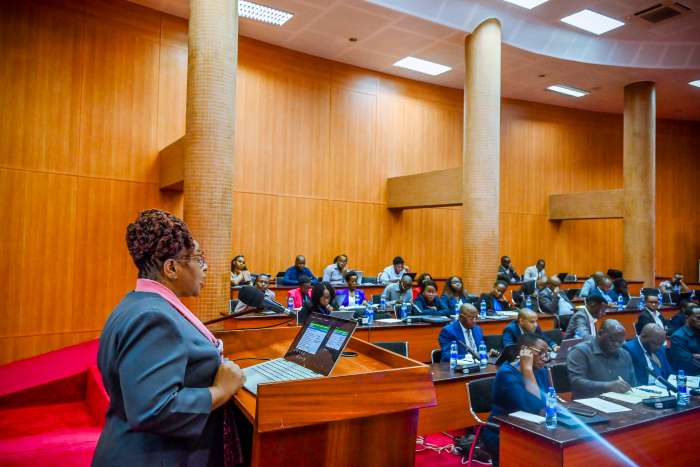
The Ministry of Finance, through its Budget Management Department, is currently undertaking a detailed review of budget proposals from key production ministries, including agriculture, livestock and fisheries, lands, natural resources and tourism, and mining.
The review process, led by Assistant Commissioner Fundi Makama, brings together policy and planning directors alongside technical experts to align sectoral budgets with national priorities, development frameworks and fiscal guidelines.
Officials say the exercise is designed to ensure that resource allocation reflects Tanzania’s broader economic ambitions, particularly under the Tanzania Development Vision 2050 (Dira 2050), which places strong emphasis on industrialisation, productivity and sustainable growth.
Strategic focus on production-led growth
The ongoing discussions, held at Treasury Square in Dodoma, underscore the government’s shift towards production-driven economic planning, where agriculture, mining and tourism are expected to play a catalytic role.
These sectors collectively account for a significant share of Tanzania’s GDP, exports and employment. Agriculture alone employs over 60 percent of the population, while mining – particularly gold – remains a major foreign exchange earner.
By prioritising these sectors in the upcoming budget, policymakers aim to enhance value chains, boost productivity and strengthen linkages with manufacturing and trade.
Budget priorities and fiscal direction
The 2026/27 budget is expected to build on recent fiscal strategies that emphasise domestic revenue mobilisation, expenditure efficiency and targeted investment in growth sectors.

In recent budget cycles, the government has increased allocations to infrastructure, energy and agriculture, while also implementing reforms aimed at improving the business environment and attracting private sector investment.
Analysts anticipate that the upcoming budget will continue to prioritise:
- Expansion of irrigation and mechanisation in agriculture
- Livestock and fisheries value chain development
- Sustainable tourism and conservation financing
- Formalisation and value addition in the mining sector
These priorities are aligned with efforts to reduce reliance on raw exports and instead promote industrial processing and export diversification.
Alignment with long-term development goals
A key focus of the budget review discussions is ensuring that sectoral allocations contribute directly to the targets set under Vision 2050, including higher income levels, increased industrial output and improved livelihoods.
Participants in the Dodoma meeting examined how budget proposals can better support economic resilience, climate adaptation and sustainable resource management, particularly in sectors vulnerable to environmental and global market shocks.
Strengthening planning and coordination

(Photos by the Government Communication Unit, Ministry of Finance – Dodoma)
The review process also highlights the government’s efforts to improve coordination across ministries, ensuring that policies and investments are mutually reinforcing.
For instance, investments in agriculture are being linked with land use planning, water resource management and rural infrastructure development, while mining sector plans are being aligned with industrialisation and export strategies.
Experts note that such integrated planning is critical for maximising the impact of public spending, especially as Tanzania seeks to accelerate its transition to a middle-income, semi-industrialised economy.
As Tanzania moves closer to tabling the 2026/27 budget in Parliament, the emphasis on productive sectors signals a clear policy direction: growth must be anchored in real economic activity that generates jobs, exports and long-term value.
The effectiveness of this approach will depend on execution – particularly the timely disbursement of funds, policy consistency and the ability to crowd in private investment. If successfully implemented, the upcoming budget could reinforce Tanzania’s position as one of East Africa’s more resilient and diversified economies, with production sectors at the core of its development trajectory.