By Special Correspondent, Addis Ababa
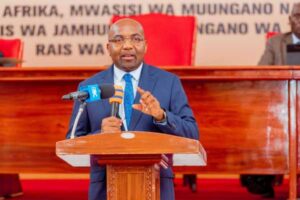
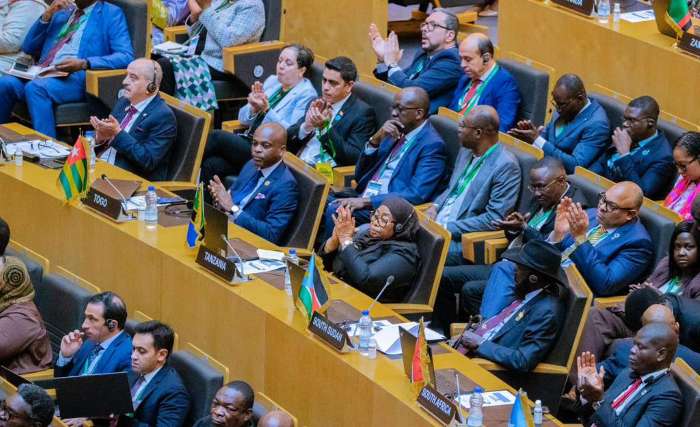
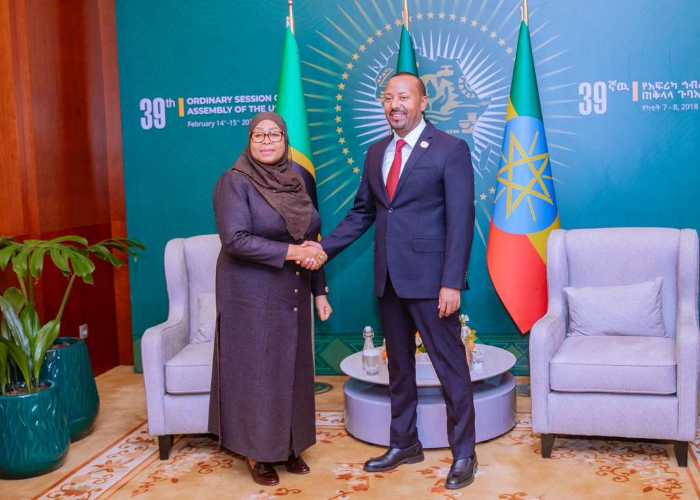
President Dr. Samia Suluhu Hassan has underscored Africa’s growing role in shaping global economic governance, following her participation in an African Union (AU) session reviewing the outcomes of the 2025 G20 Leaders’ Summit.
The meeting received a report from President Cyril Ramaphosa of South Africa, who hosted and chaired the first-ever G20 Summit held on African soil on 22–23 November 2025 – a milestone widely described as historic for the continent.
President Samia congratulated President Ramaphosa, describing the summit as a moment of continental pride and a clear signal of Africa’s expanding influence in global decision-making.
“This historic step is a source of pride for Africa and demonstrates our continent’s growing voice in shaping international discourse and contributing solutions to global challenges,” she said.
Strategic priorities for Tanzania and Africa
In her address, President Samia emphasised key priorities emerging from the G20 Declaration that carry direct implications for Tanzania and the wider African economy. These included disaster resilience, debt sustainability, a just energy transition, value addition in critical minerals and food security.
On disaster resilience, she welcomed the G20’s commitment to strengthening climate action and reducing disaster risks, noting that African countries continue to bear a disproportionate burden from climate shocks despite contributing minimally to global emissions.
For Tanzania, improved access to climate finance and risk mitigation mechanisms could strengthen infrastructure planning, agricultural productivity and long-term macroeconomic stability.
Debt sustainability and fiscal space
Addressing debt sustainability, President Samia stressed the importance of strengthening debt management frameworks to enable African economies to invest in infrastructure, healthcare and social protection without undermining fiscal stability.
With many developing nations facing elevated borrowing costs and tightening global liquidity conditions, enhanced G20 support mechanisms could ease refinancing pressures and expand fiscal space for productive investment across Africa.
Energy transition and industrial opportunity
President Samia also welcomed the G20’s commitment to expanding renewable energy, reaffirming her role as Africa’s Clean Cooking Energy Champion.
She noted that access to affordable and sustainable energy is fundamental to public health, gender equality and inclusive development.
The clean energy transition, she argued, must be just and equitable – ensuring that African economies can industrialise while meeting global climate commitments.
In particular, she highlighted the adoption of the G20 Framework on Critical Minerals as a major opportunity for African countries to increase local value addition. Tanzania, she noted, is endowed with significant reserves of nickel, graphite and lithium — minerals essential to the global energy transition.
By shifting from raw mineral exports to domestic processing and beneficiation, Tanzania and other African states could accelerate industrial transformation, enhance export revenues and create skilled employment.
Strengthening food security systems
Food security was another central theme of her intervention. President Samia reiterated Tanzania’s readiness to collaborate in building resilient food systems and supporting smallholder farmers, who remain the backbone of agricultural production across the continent.
For East Africa in particular, improved food system resilience is critical to cushioning economies against climate variability, commodity price volatility and supply chain disruptions.
Africa’s full G20 membership
President Samia concluded by welcoming Africa’s full membership in the G20 and the launch of the Africa Partnership Framework under the G20 Finance Track, describing these developments as significant steps towards deeper cooperation and more inclusive global economic governance.
The AU session reinforced the continent’s determination to engage proactively in shaping solutions to shared global challenges, from climate change and energy access to debt reform and sustainable growth.
For Tanzania and the wider African business community, the message was clear: Africa is no longer on the periphery of global economic dialogue. With full G20 representation and increasing policy coherence, the continent is positioning itself not merely as a recipient of international decisions, but as an active architect of the global economic agenda.