By Business Insider Reporter
The Tanzanian beer market could face significant shifts following global beverage giant Diageo Plc’s strategic review of its East African arm, East African Breweries Ltd (EABL) – a move that may lead to the partial or full sale of its beer business in the region.
According to sources familiar with the matter, Diageo has engaged Bank of America Corp. and Goldman Sachs Group Inc. to advise on the future of EABL.
While no final decisions have been made, options under consideration reportedly include selling EABL’s beer division, which could fetch an estimated US$2 billion. EABL, which is listed on the Nairobi Securities Exchange, currently has a market value of around US$1.2 billion, with Diageo holding a 65% stake.
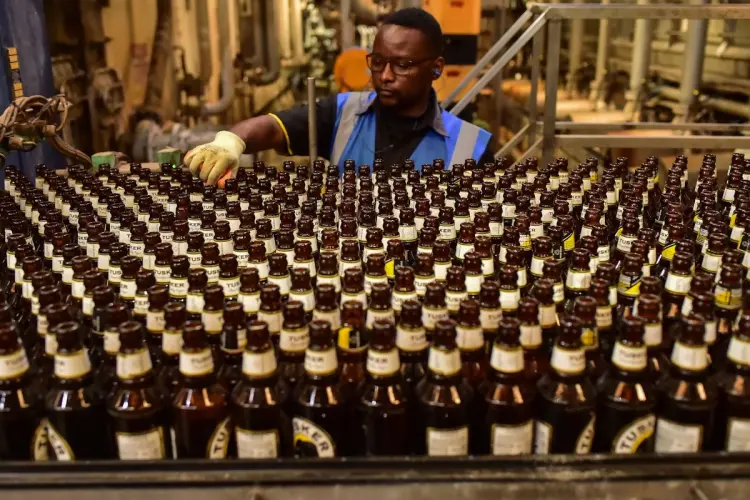
EABL’s operations span three core markets – Kenya, Uganda and Tanzania – with its brands, including Tusker, Serengeti, Bell, and Kenya Cane, widely recognised across East Africa. In Tanzania, Serengeti Breweries Limited (SBL), an EABL subsidiary, commands a significant portion of the market and is one of the top two beer producers, competing closely with Tanzania Breweries Limited (TBL), a unit of Anheuser-Busch InBev.
Implications for the Tanzanian beer market
The potential divestment by Diageo could usher in a new wave of competition, consolidation or reorganisation in Tanzania’s beverage sector.
Market watchers suggest that global players like Heineken NV, Castel Group, and AB InBev may be interested in acquiring all or part of EABL, a move that could disrupt the current market balance.
For consumers, this could result in new product innovations or pricing strategies, depending on the operational model of any incoming investor.
However, for employees and local suppliers, the uncertainty surrounding a possible change in ownership might bring concern over restructuring, job security, and continuity in local sourcing strategies.
The Tanzanian government may also closely monitor the development, as the beer sector contributes significantly to tax revenue, employment, and local agricultural value chains, particularly barley and sorghum farming.
A wider Diageo strategy in Africa
Diageo’s move comes amid a broader shift in strategy to pursue an “asset-light” model – freeing up capital by selling off production assets and focusing on brand-building and distribution.
The company has already exited several African markets. It sold its 80.4% stake in Guinness Ghana Breweries earlier this year to Castel Group, and previously divested from Cameroon, Nigeria, Ethiopia and Seychelles.
This strategic retreat is also linked to Diageo’s corporate shake-up, including the replacement of CEO Debra Crew following a turbulent tenure marked by profit warnings and falling global sales. Diageo’s share price has slumped more than 40% since 2023, prompting a rethink of its global expansion strategy.
Outlook for Tanzania
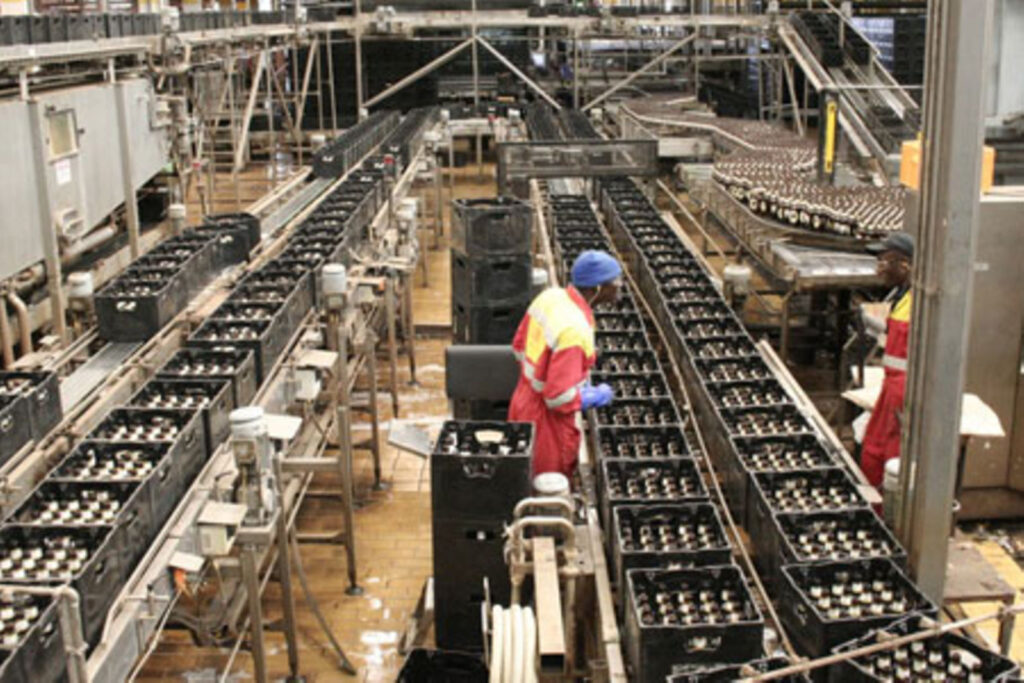
Should Diageo offload its Tanzanian operations, it could redefine the competitive landscape for alcoholic beverages. While TBL has long maintained a lead through its portfolio of brands such as Safari Lager, Kilimanjaro, and Castle Lite, SBL’s growth over the past decade has intensified rivalry and innovation.
A new entrant – particularly one with deep pockets and established African networks – may either double down on local production and innovation or streamline operations in favour of high-margin brands, potentially shifting the market dynamics again. In the meantime, local stakeholders including regulators, investors, distributors, and farmers will be watching developments closely, as the outcome of Diageo’s review may very well determine who pours the next round in East Africa’s beer industry.