

By Business Insider Reporter
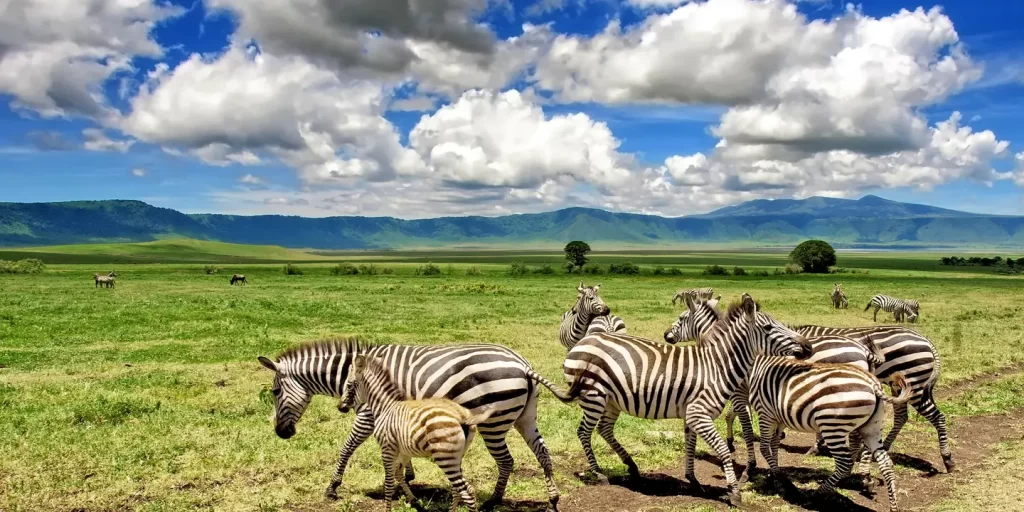
Tanzania’s tourism industry has scored a major win: the Ngorongoro Conservation Area has reclaimed the coveted title of Africa’s Leading Tourist Attraction, awarded at the prestigious World Travel Awards (WTA) held last weekend in Dar es Salaam.
The victory, while celebrated with national pride, carries weight beyond accolades. It signals Tanzania’s growing status as a premier destination for sustainable and cultural tourism, bolstering the country’s global tourism brand and economic competitiveness in a region crowded with iconic attractions.
A crown regained
Ngorongoro had previously secured the title in 2023, only to cede it to Kilimanjaro National Park in 2024. Its return to the top spot at the 32nd edition of the World Travel Awards for Africa and the Indian Ocean is a powerful affirmation of Tanzania’s rich and diverse tourism assets – and its strategic efforts to conserve and promote them.
Despite stiff competition from high-profile South African landmarks like Table Mountain and Robben Island, Ngorongoro emerged victorious, underscoring the area’s global appeal rooted in natural beauty, biodiversity, and cultural heritage.
“Ngorongoro’s recognition reflects our deliberate efforts to promote geotourism and protect natural heritage in a way that also uplifts local communities,” said a Ministry of Natural Resources and Tourism official.
More than a park
What sets Ngorongoro apart is its classification as the only UNESCO-recognised geopark in sub-Saharan Africa. Unlike a typical conservation area, a geopark integrates geological wonders with ecological, cultural, and intangible heritage, aligning with UN Sustainable Development Goals.
This elevates Ngorongoro from a wildlife viewing destination to an educational and cultural tourism site, where visitors engage not only with animals and landscapes but also with indigenous lifestyles, archaeology, and environmental science.
For Tanzania, this reinforces the importance of heritage-based tourism, a growing niche that can command higher yields and longer visitor stays.
Economic implications
Winning Africa’s top tourism title is more than a symbolic gesture – it has direct economic value.
Tourism is Tanzania’s second-largest foreign exchange earner after gold, and recognition at the World Travel Awards is likely to trigger increased global bookings and visibility across international travel platforms, renewed investor interest in the country’s tourism and hospitality sectors and higher spending per visitor, particularly among eco-conscious, high-value tourists.
The government is already leveraging these gains. The Tanzania Tourist Board (TTB) is ramping up its global campaigns in Europe, North America, and Asia, with Ngorongoro as a central pillar.
Balancing conservation and community
However, the accolade also shines a light on one of Ngorongoro’s most complex challenges: human-wildlife coexistence. Ongoing debates about pastoralist communities, livestock pressure, and ecological sustainability have put the geopark model to the test.
The award serves as a reminder that for Tanzania to maintain its leadership, it must strike a balance between conservation and local livelihoods – a challenge also now playing out in Ruaha National Park, where similar tensions are emerging.
“Being a leading attraction comes with expectations,” says Dr. Esther Lwilla, a tourism policy analyst. “We must ensure that communities are not marginalised in the name of conservation, or this global recognition will be short-lived.”

Tanzania’s tourism edge in Africa
Ngorongoro’s triumph caps off a strong performance for Tanzania at the WTA gala.
With Kilimanjaro National Park also competing at the highest levels, the country is proving itself as a dual-destination powerhouse in East Africa.
This dominance also puts pressure on regional competitors like South Africa and Egypt, which were once dominant in the category but have now slipped. Notably, the Pyramids of Egypt, which won only in 2012, have since disappeared from the top of the list – a reflection, perhaps, of the awards’ shift toward emerging destinations and sustainable travel.